
 E-Paper



S. Kumars: How a textile company built its brand thread by thread
It’s possible that S. Kumars – founded in 1948 – may never have come to be without an association with Kohinoor Mills, let alone grow into the conglomerate it became. By 2008, when the family business was divided, the group had interests in power, real estate, and entertainment, alongside textiles.


MUMBAI: In the aftermath of India’s World Cup disappointment and ensuing discussions about the lack of sportsmanship – marked by our compatriots’ boos and muted applause for Travis Head’s century at the crease – we present a story that harkens to an era of very different values. This is the story of Shambhu Kumar Kasliwal, the force behind the textile brand S.Kumars, now told by acclaimed biographer Sathya Saran in ‘Thread by Thread’. The book was launched on Friday by the legendary Kapil Dev who was the brand ambassador for S.Kumars for several years.

Seated at a table in his Pedder Road apartment, he is engulfed in an ambiance marked by the passage of time, amidst furnishings that hint at a once-lavish lifestyle now mellowed with age. “I was blessed to receive guidance from Bhausaheb Apte of Kohinoor Mills. His support was a turning point,” reminisces Kasliwal whose father originally sold textiles in Indore.
It’s possible that S. Kumars – founded in 1948 – may never have come to be without an association with Kohinoor Mills, let alone grow into the conglomerate it became.
By 2008, when the family business was divided, the group had interests in power, real estate, and entertainment, alongside textiles.
Although Saran’s story is about the man, not about the business, the narrative gains depth through discussions with the company’s long-standing employees as well as family members. The most personal insights have, of course, come from Kasliwal’s wife, Rajkumari.
“She remembers every date and every detail,” says Saran, who unearthed a treasure trove of memories, carefully preserved in diaries Rajkumari has painstakingly maintained since her marriage in 1955. Penned in neat Hindi script, these notes capture everything from small, everyday moments – “Aaj baby bed se gir gayi” (referring to a time when their daughter Neerja—now, the wife of Kumaramangalam Birla, rolled off the bed as an infant) – to casual interactions such as one between Vikas and his father’s older brother, the now-deceased Abhay Kumar – who co-founded S. Kumars along with Shambhu Kumar in 1948. Beyond painting a picture of a family intertwined in life and business, the diaries also suggest the 14- or 15-year-old bride may have had an almost prescient awareness that the experiences she was living through would one day be of great interest.
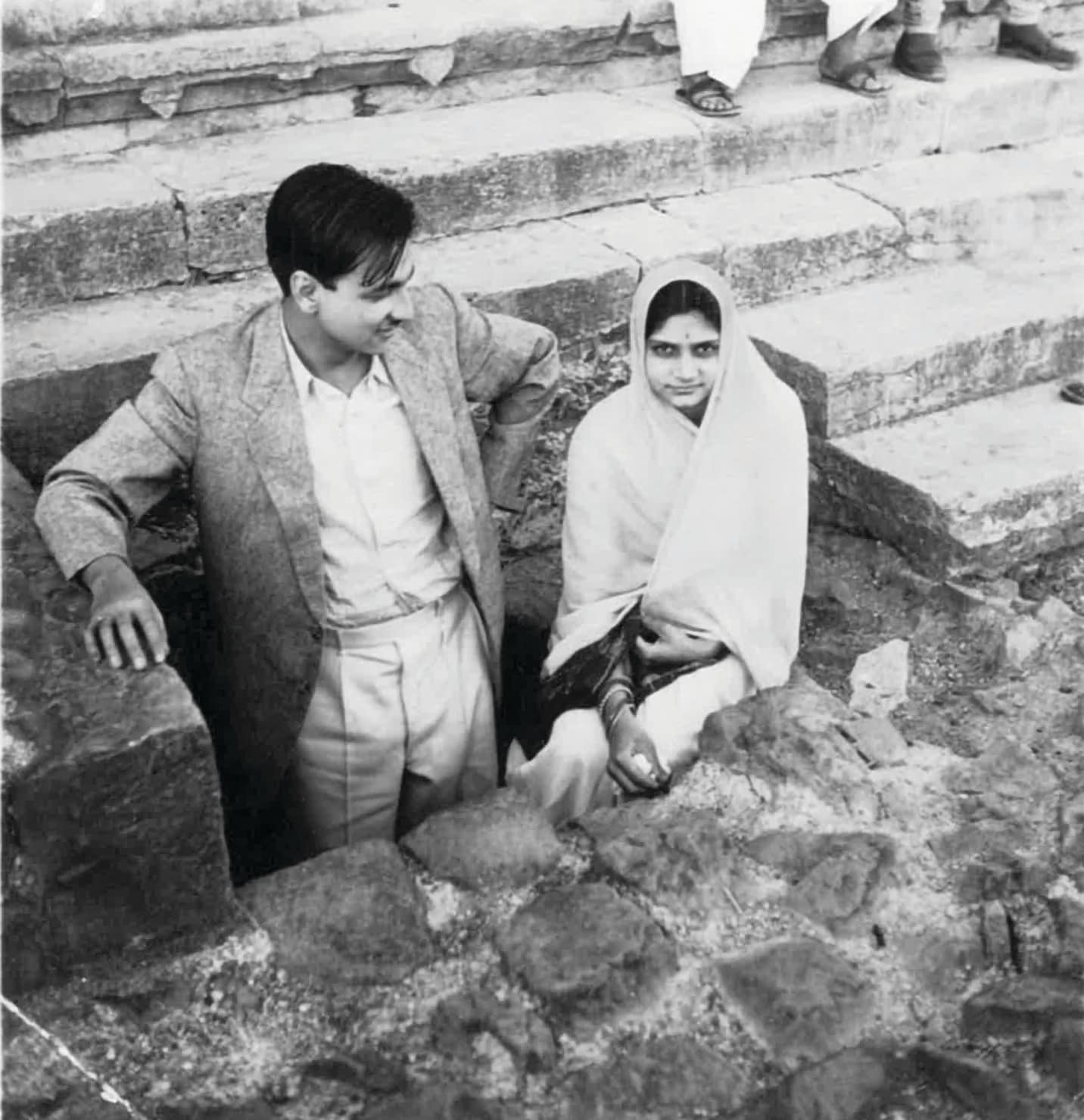
“At one point, there were 16 people living in their family home,” says Saran, “Many people I interviewed commented on how, in the Kasliwal residence, in the old days, it was difficult to tell which children belonged to whom.” Seated beside his father during the HT interview, Kasliwal’s son, Vikas, laughs: “It’s absolutely true. I still refer to my parents as ‘Kaka’ (uncle) and ‘Kaki’ (aunt).”
If Shambhu Kumar was the business strategist, Abhay Kumar enjoyed being the public persona. “My brother was the Chairman of FICCI (Federation of Indian Chambers of Commerce & Industry) and led numerous key trade and industry organisations,” Kasliwal notes with a touch of pride. His voice quivers occasionally and his hands tremble, but there’s an air of calm resolve about him, a contentment that has, perhaps, been shaped by a life full of rich experiences.
Rajkumari leans across and gently smoothens his hair, preparing him for a photograph – a simple action that conveys the depth of their enduring bond, nurtured over 68 years of the shared highs and lows of life. She is noticeably more reserved than him.
Those who know them call the Kasliwals, ‘love birds,’ Saran writes in her book, and it’s evident why. “Both of us never felt the need for a wide social circle – we had each other, and that was enough,” Rajkumari says.
The bedrock of their relationship is cemented by mutual interests: family is paramount, with business a close second (Rajkumari has played a key role since the 1990s and continues to manage a production unit in Indore), followed by their shared passion for travel – “We embarked on 100 tirths after Neerja’s wedding,” says Rajkumari. It’s likely these shared joys and the unwavering support fortified Kasliwal, enabling him to navigate through the challenging times that lay ahead. The 2000s marked a rocky period, as the group was saddled with significant debt and some of their projects were unsuccessful.
At its prime, however, S.Kumars led the way in many ways. Saran talks about the grand fashion shows the brand hosted, not just in the big cities but in smaller towns, home of their target audience. “S. Kumars broke norms by featuring women on the ramp in men’s textiles, a strategic move to broaden their clientele.” Notable models such as Anna Bredemeyer and Salim Fatehi were featured in their events. By the 1980s, the company was a household name. “Shows they sponsored, like ‘S. Kumars ka Filmi Muqaddama’ and ‘Chitrahaar’ on Doordarshan, became cultural mainstays, etching the brand into the hearts of millions,” Saran says.
In recent years, the family’s narrative has taken on darker hues. Kasliwal’s sons, Nitin and Vikas, have been embroiled in legal struggles; setbacks cast a shadow over the family’s legacy. While not entirely unfazed by all this, Kasliwal exhibits no signs of bitterness.
“It’s been a journey of contrasts,” he says, in a matter-of-fact way. “It’s okay. We will rise again.” He has passed on the leadership of his uniforms business to his granddaughters, Vidhi Kasliwal and Dhvani Kaul, and he’s confident they have the potential to surpass his own achievements.
As he speaks, his fingers gently trace over his inscription in the first copy of the coffee table book – which was gifted to him by Vidhi. “Vidhi, I did not know I was so good,” he reads, his voice warm with affection. “For her, there’s nothing I wouldn’t do,” he says, pulling up a picture of Vidhi, Vikas’s daughter and the head of a film production company. It was Vidhi who encouraged her grandfather to narrate the S. Kumars story. Perhaps, as a filmmaker, she saw in their family’s history a narrative teeming with dramatic richness and intrigue.
Vikas recounts the labour issues during the time of Datta Samant, a union leader known for his contentious strategies, and he shares a particularly intense memory from his mid-twenties when he and his younger brother, Mukul, faced a daunting ‘gherao’ at one of their factories. In striking contrast to contemporary stories of instant fame, Shambhu Kasliwal’s story, like an exciting cricket match, reminds us that true contentment and joy are found not in mere victories, but in the elegance and moral integrity with which we play the game of life.

Stay updated with all the Breaking News and Latest News from Mumbai. Click here for comprehensive coverage of top Cities including Bengaluru, Delhi, Hyderabad, and more across India along with Stay informed on the latest happenings in World News.


