
 E-Paper



State introduces double check screening system to tackle malnutrition
The initiative, termed growth monitoring, will be conducted using Growth Monitoring Devices (GMDs) through scientifically standardised methods, with data recorded on the Nutrition Tracker app. Children identified with severe acute malnutrition (SAM) will receive necessary treatment, including referrals to health facilities or nutrition rehabilitation centres

 Prefer HTon Google


MUMBAI: The Maharashtra government has decided to introduce a “double-check” system to curb malnutrition by conducting joint screenings of children aged 0 to 6 years at anganwadi centres every six months, in collaboration with the state public health department.
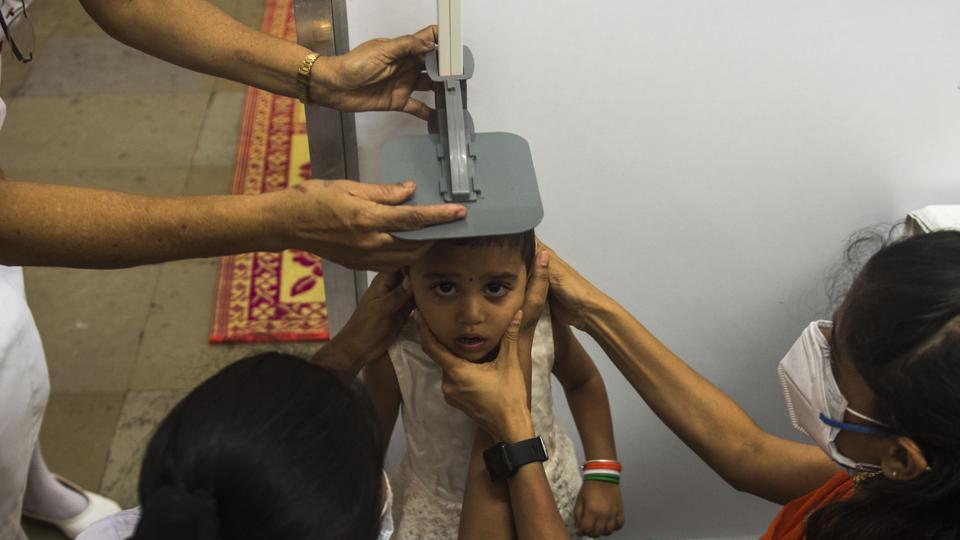
The move marks the first time the health department will be formally roped in for large-scale growth monitoring alongside the Integrated Child Development Services (ICDS). The joint exercise will supplement the existing monthly check-ups carried out by anganwadi workers.
The initiative, termed growth monitoring, will be conducted using Growth Monitoring Devices (GMDs) through scientifically standardised methods, with data recorded on the Nutrition Tracker app. Children identified with severe acute malnutrition (SAM) will receive necessary treatment, including referrals to health facilities or nutrition rehabilitation centres.
“Approval has been granted to conduct joint screening once every six months, in collaboration with the state public health department for growth monitoring and health check-ups of children aged 0 to 6 years at anganwadi centres under the Integrated Child Development Services (ICDS) scheme,” states a government order issued by the women and child development department on March 12.
Officials said the screenings will help identify vulnerable anganwadi centres and regions requiring targeted intervention. An action plan will be prepared for such areas and implemented in coordination with the ICDS commissionerate.
“The screening will determine Severely Acute Malnourished (SAM) children and appropriate interventions should be carried out. Those requiring treatment will be provided with referral services, and counselling on health and nutrition will also be provided,” the order stated.
Each screening team will comprise a medical officer, a supervisor, and a health worker, either male or female. At the village level, anganwadi workers, ASHA workers, and anganwadi helpers will assist the team and will be trained to improve the precision of screenings, an official from the women and child development department said.
To ensure maximum coverage, authorities will prepare schedules based on the location of anganwadi centres. A day before the check-up, ASHA and anganwadi workers will conduct door-to-door visits to inform families and ensure attendance.
“To avoid overcrowding, beneficiaries will be given specific time slots at intervals of half an hour based on their numbers and instructed to come accordingly,” the official said.
If a child is absent, the department will conduct a home visit to ensure participation. “However, if beneficiaries are migrated, their details will be recorded in the Migration Tracking System and their joint screening will be conducted at their place of migration,” the official added.
The intervention comes against the backdrop of concerns about malnutrition indicators in the state. A recent study by the Indian Institute of Population Sciences (IIPS), Mumbai, found that Maharashtra continues to lag on child nutrition.
The study reported that 35% of children under five are stunted, 35% are underweight, and 26% are wasted, figures comparable to states such as Uttar Pradesh and West Bengal.
Published on August 7, 2025, in the Journal of Health, Population and Nutrition, the research draws on data from the National Family Health Survey-5 (NFHS-5) and surveyed 8,007 children aged 6–59 months across Maharashtra. The study was supported by the Union Ministry of Health and Family Welfare.
Regionally, north Maharashtra emerged as the worst-affected, with 44% of children underweight, a trend researchers attribute to lower household incomes. The Konkan region performed relatively better, with 30% underweight children, though still above acceptable levels.


Stay updated with all the Breaking News and Latest News from Mumbai. Click here for comprehensive coverage of top Cities including Bengaluru, Delhi, Hyderabad, and more across India along with Stay informed on the latest happenings in World News.


