
 E-Paper



Supreme Court stays OBC reservation Ordinance
Supreme Court on Monday stayed an Ordinance that would have permitted up to 27% political reservation to candidates from Other Backward Class (OBC) communities

 Prefer HTon Google


Mumbai: A fortnight before the district council elections in Bhandara and Gondia as well as the bypolls in 4,500 gram panchayats across the state, the Supreme Court on Monday stayed an Ordinance that would have permitted up to 27% political reservation to candidates from Other Backward Class (OBC) communities.
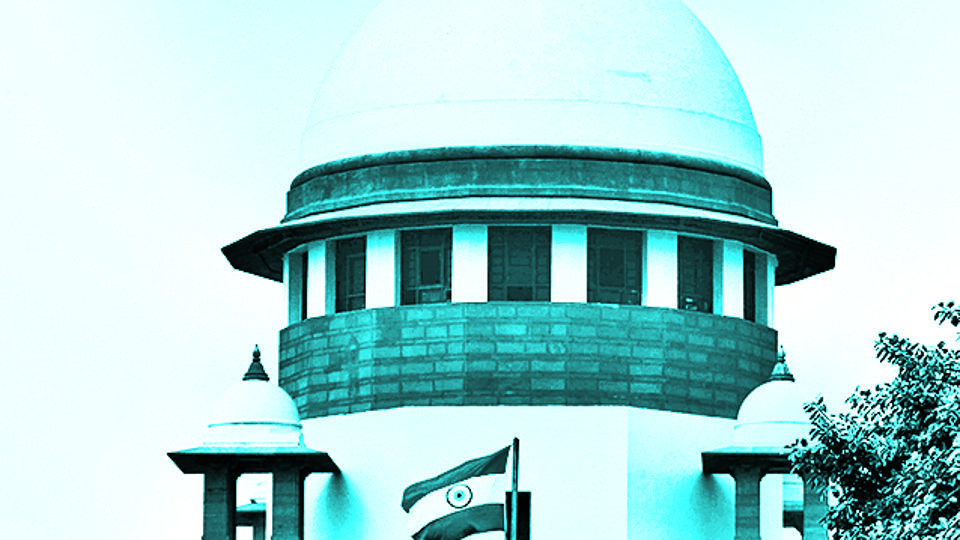
The top court passed the order while hearing two pleas, including one assailing the provisions of an Ordinance that permitted political reservation to OBC candidates uniformly throughout Maharashtra in the concerned local bodies.
“The State Election Commission shall desist from proceeding with the Election Programme already notified in respect of reserved seats for ‘OBC category only’, in the concerned local bodies,” a bench of Justices A M Khanwilkar and C T Ravikumar said, but made it clear that the election process for the other seats would continue.
On September 21, the Maharashtra Vikas Aghadi (MVA) government passed an Ordinance amending two laws that govern rural and municipal local bodies, after the SC in March struck down a section that granted 27% political reservation for OBC candidates in local body elections. Since the state also provides reservation to Scheduled Caste and Scheduled Tribe (SC and ST) candidates, the 50% cap on reservation was often breached. The SC had held that this was unconstitutional and directed the state to conduct an empirical study on the socio-economic backwardness of OBC communities before deciding on the quantum of reservation.
The SC bench on Monday observed that the reservation granted by the Ordinance could not be implemented unless a Commission was set up, and data was collected regarding the adequacy of representation in each local body. “That is the first step which ought to have been done,” the bench observed.
The state set up a 10-member Maharashtra State Backward Class Commission (MSBCC) in June to conduct the survey, but the survey is yet to begin. In July, MSBCC sent a letter to government listing out manpower, infrastructure and budgetary needs to conduct the survey, estimating that a budget of ₹435 crore (subject to revision) be permitted.
OBC communities form a crucial chunk of the electorate for all three ruling parties — Shiv Sena, Congress and Nationalist Congress Party (NCP) — and the MVA coalition government cleared the Ordinance with an eye on upcoming local body elections slated for December 21 and between February and December 2022.
Ruling party leaders said that they would need to find a way out of the conundrum. NCP leader and state minister Nawab Malik said that the state government will study the ruling. “We are of the opinion that the elections should not be held without the quota to OBCs. The Ordinance was issued with intent of keeping it intact. We will study the order and take steps required. The (Opposition, Bharatiya Janata Party) who are basically against the reservation in the country are fuelling the entire dispute to keep the issue burning. They are pretending to be in support of the backward classes, but are actually against reservation.”
“The state government is not serious about OBCs or Marathas. The MVA government did not provide adequate resources to the Maharashtra State Commission for Backward Classes (MSCBC) to collate the empirical data as ruled by the apex court. Had the government begun the process of empirical data, the SC perhaps would not have stayed the Ordinance. This is a conspiracy of the ruling parties to keep the OBC away from the political reservation for next five years. BJP would not allow the elections to the local bodies to be held without the quota,” said Maharashtra BJP chief Chandrakant Patil.
Chandrakant Bavkar, president, OBC Sangharsh Samanvay Samiti, said that the MVA government should take the responsibility of the ruling. “The MVA government and its leaders are entirely responsible for the ruling. The MVA government constituted MSCBC in March but did not provide it resources, manpower or funds in last six months. The commission is currently defunct for various reasons.”
The top court on Monday stayed the notifications issued by the State Election Commission (SEC) in November reserving up to 27% of the seats for OBC candidates in district council, nagar panchayat and gram panchayat elections.
“Ten out of 53 and 13 out of 52 seats in Gondia and Bhandara councils respectively are reserved for OBC candidates. We will have to stay the elections only for those seats until the final order given by the apex court next week. The bodies can be formed in these district councils without holding polls for OBC seats as the required number of members to elect their chairman is two third of the total strength,” an official from the SEC said.
The apex court observed that the state government brought the Ordinance without following the triple test laid down in Vikas Gawli versus State of Maharashtra case.
The counsel appearing for Maharashtra told the bench that the provision in the Ordinance is in conformity with the decision of the apex court and it is only providing for reservation to the category of backward class citizen up to 27 per cent.
Observing that it is “not impressed” by this argument, the bench said that without setting up the commission and collating contemporaneous empirical data to ascertain the extent of reservation required to be provided local body-wise, it is not open for the SEC to provide reservation for OBC category despite the statutory provision in that regard.
“That is only an enabling provision, but to be given effect to only on complying the triple test. The first step of collating empirical data has not been completed so far,” it said.
The triple tests are: establish a Commission to conduct rigorous empirical inquiry; specify proportion of reservation in light of the Commission’s recommendations; ensure reservation does not exceed 50 per cent of the total seats with SCs/STs/OBC quotas taken together.
On March 4, the SC struck down the 27% reservation to OBC candidates under the Zilla Parishads and Panchayat Samitis Act (1961) on the grounds that it resulted in a breach of the 50% cap on reservation.
Amid the uproar by the OBC communities over the quashing of the quota, the MVA government amended the legislation alongside another — the Maharashtra Village Panchayat Act for Zilla Parishads, Panchayat Samiti and Gram Panchayats — to ensure up to 27% reservation in the forthcoming elections.
Between February and December 2022, the state will see elections in 23 municipal corporations, 27 district councils, 298 panchayat samitis, 320 nagar panchayats and nagar councils.


