
 E-Paper



In Maharashtra, the moot question is still unanswered
SC delivered its judgment in the Shiv Sena case relating to the rift between Eknath Shinde and Uddhav Thackeray factions


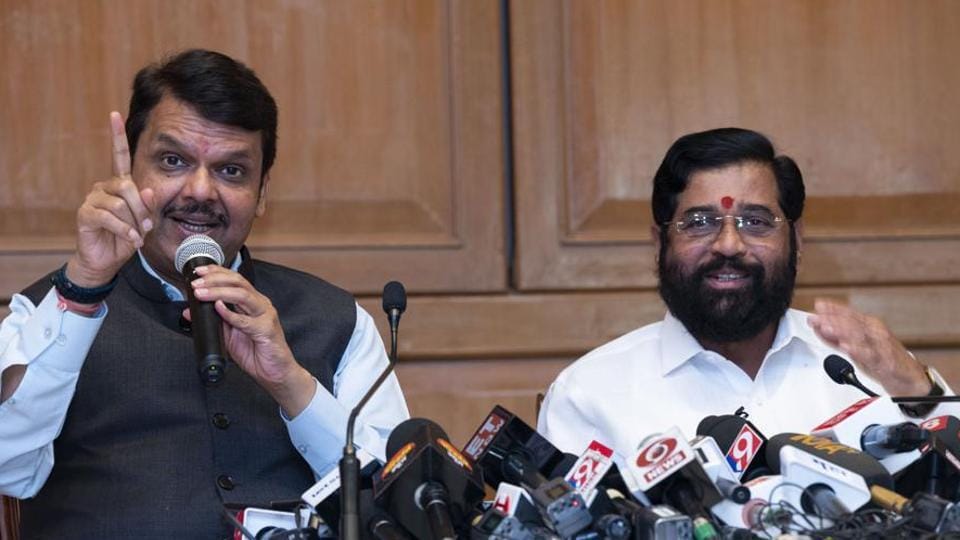
The Supreme Court’s verdict in the case regarding disqualification of Shiv Sena MLAs who quit along with Eknath Shinde has rendered Uddhav Thackeray’s resignation on moral grounds political hara-kiri. Had he not resigned from the chief minister’s post, we could have restored status-quo-ante, the bench said. The current order came almost a year after Thackeray resigned from the chief minister’s post.
However, the moot political question in Maharashtra remains as unsettled as it was when Uddhav Thackeray became the chief minister in an alliance with the Nationalist Congress Party (NCP) and the Shiv Sena (SS) in 2019.
Here is why.
Shiv Sena’s break with the BJP was territorial not ideological
The Shiv Sena and the Bharatiya Janata Party (BJP) have been allies in every national and state election in Maharashtra since the 1989 Lok Sabha election. While the Sena’s Hindutva posturing was a change from its earlier politics of nativism, the 1990s saw it being completely identified with Hindutva, an agenda the BJP had mainstreamed at the national level.
The terms of the alliance, in terms of seat sharing, were such that the Shiv Sena used to play the senior partner in the state while the BJP would contest more seats in Lok Sabha elections. This arrangement came under strain after the BJP’s landslide victory in the 2014 general elections.
The long-time allies fought separately in the 2014 assembly elections in the state. The BJP finished with a much bigger seat tally than the Sena and a post-poll alliance with a BJP chief minister was formed. While the BJP was careful to placate the Sena by offering it more seats in the 2019 Lok Sabha elections than in 2014, it became the senior partner in the alliance in the 2019 assembly elections.
This would have laid to rest Sena’s claim to the chief minister’s post and by extension its dominance in the state’s politics.
The 2019 assembly elections also came on the back of the 2017 municipal elections in Mumbai – the metropolis where the Sena cut its teeth in politics – where the BJP managed 82 seats, just two less than what the Sena . Uddhav Thackeray was not wrong in concluding that the Sena’s future as the BJP’s junior partner would reduce it to nothing but a satellite of the BJP in the state.
It is this fear which forced his hand in breaking an old ideological and pre-poll alliance , and ally with the Congress and the NCP.
Seat share contested for BJP and Shiv Sena in LS and AE since 1989
But an adjustment in the MVA would have forced the Sena to cede even more territory
Questions of ideology apart, even a seat sharing arrangement in the Maharashtra Vikas Angadi (MVA) comprising the Congress, NCP and the Shiv Sena, assuming such a pre-poll alliance were to happen, say in the 2024 state elections, could be more damaging to the Sena. Let us assume that any such alliance negotiations were to happen on the following formula: every party gets to keep the assembly constituencies (AC) it won and also those where it came second to the BJP. Depending on whether one is looking at 2014 or 2019 performance, the Sena would see the biggest decline in its share. This power dynamic (not the calculation) may well have preyed on the mind of Eknath Shinde and his supporters. If the NCP were to become a bigger legislative party than the Shiv Sena, it is eminently possible that the former will stake claim to the chief minister’s post. Such an eventuality would have defeated the very purpose of Sena’s break with the BJP.
Potential seat sharing
This is where the NCP holds the key to the Maharashtra puzzle
Results of 2014 and 2019 make it clear that the Congress and the NCP, on their own, cannot pose an effective challenge to the BJP and Shiv Sena. This is where Uddhav Thackeray bring an X-factor to the elections. With even the Mumbai municipal elections having been delayed, it is difficult to say with certainty how much of Sena’s actual support base has moved to the pro and anti-BJP factions. But if the primary beneficiary of an MVA alliance in Maharashtra will be the Congress at the national level (greater numbers for a UPA like alliance) and the Sena at the state level (chief minister’s post for Thackeray) then what does the alliance bring for the NCP? Ideological purists might find this scandalous, but Sharad Pawar and his party have been master practitioners of self-preservation rather than ideology. In the absence of any worthwhile returns, the NCP may continue to vacillate and efforts to keep the MVA grouping going could come to nought.


Stay updated with all the Breaking News and Latest News from Mumbai. Click here for comprehensive coverage of top Cities including Bengaluru, Delhi, Hyderabad, and more across India along with Stay informed on the latest happenings in World News.


