
 E-Paper



Thane village faces dry wells contaminated with sewage
THANE: Fugale village faces a severe water crisis, with contaminated wells and insufficient supply, as residents struggle to meet basic needs.


THANE: Since the beginning of this year, a village situated on a hillock in Shahapur has been grappling with a severe water crisis. Fugale, located 120 km from Mumbai and home to 1,600 residents, has seen its wells run dry, some even contaminated with sewage.
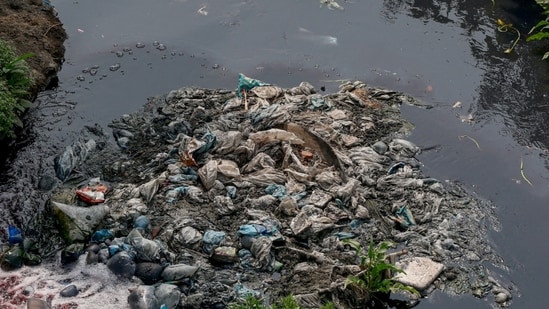
Villagers alleged that the bathrooms for labourers working on the Samruddhi highway had poorly constructed sewage lines, which caused the waste matter to seep into the ground and then the wells. Although the tehsildar arranged for a team to investigate the water contamination issue, villagers said they were still waiting for an effective solution.
Every day, women from the village walk down 1.5 km to fill up two 10-litre water containers from small springs and trudge back up to their homes on the hillock with heavy buckets. For an average family with six to seven members, the water was barely enough to meet their drinking and basic household needs, they said.
Despite repeatedly sending letters to the tahsildar of Shahapur, the residents have been receiving only one tanker of water which, they said, was not just insufficient but also dirty and thus unusable.
Laxman Wagh, a villager, said that the toilets constructed for thousands of labourers working on the Samruddhi highway’s eight-km tunnel, had caused significant problems. “The improperly built sewage lines have led to waste water mixing with the ground water, contaminating our wells,” he said. “Every year, we face water shortages, but since last year the problems have been starting as early as December, whereas previously they began around late February or March. “The water that is made available has become undrinkable and unusable. This issue needs to be urgently investigated and resolved by the authorities.”
Wagh added that during months of water scarcity, the women of the village spent all their time collecting water, leaving them with little time for work. “This further impacts our livelihood,” he pointed out.
The women have been relying on a small spring down the hillock with a very thin flow of water. They sit by the spring patiently, waiting for the trickle to fill up their containers—a painfully slow process as it takes five minutes to fill a mug. After the large amount of time taken to fill two large pots, the women walk another 20 minutes to return home and continue with their other household chores.
Kantibai Bhagat, 27, who travels 1.5 km at least thrice a day to fetch two buckets of water each time for her family of seven, said she was left with barely any time to care for her children or feed them. “We were sent a tanker recently, but the water was so contaminated that we had to give it all to the cattle to drink,” she said. “The contaminated wells stink terribly. We’ve always kept our village clean but because of the foul smell, we constantly feel nauseous.”
A frustrated Chimnibai Bhalla, 35, who lives with her family of five, said, “What is the government thinking? At the very least, our daughters and daughters-in-law should not have to face this situation in this century when the focus is on education and improving lifestyles. But here we are, stuck spending long hours collecting water.”
The tahsildar of the area, Parmeshwar Kasule, said he was addressing the villagers’ problems step by step. “We have planned to send more water tankers to the village,” he said. “If they are receiving contaminated water, we will change the source of supply. Their problem will be resolved soon.”
Kasule said that the issue of alleged contamination of wells due to the sewage lines would be taken up. “We plan to collect water samples and conduct a thorough investigation of the area within the next week,” he said. “Blaming the Samruddhi highway authorities without proper investigation is not the solution. This process will help us understand the cause of the contamination, and we will take prompt action to resolve the issue. I have completed the paperwork and forwarded the matter to the pollution control department, requesting them to investigate thoroughly.”
Hindustan Times reached out to officials of the Maharashtra State Road Development Corporation, which is constructing the Samruddhi highway, to gather details of the issues arising from the labour camp. However, the officials did not respond to the queries.

Stay updated with all the Breaking News and Latest News from Mumbai. Click here for comprehensive coverage of top Cities including Bengaluru, Delhi, Hyderabad, and more across India along with Stay informed on the latest happenings in World News.


