
 E-Paper



Two accidents, a year apart, shed light on BEST, BMC woes
The two eerily similar accidents in two successive Decembers involving the public utility, once the pride of Mumbai, go to the heart of the troubles plaguing BEST and the public infrastructure outside suburban stations

 Prefer HTon Google


Mumbai: Kurla resident Rahimunisa Khan watched, almost compulsively, videos of Monday night’s accident at Bhandup in which a BEST bus ploughed into a queue of passengers, killing 4. With each watch, the 30-year-old, revived her own trauma from last December when another BEST bus had similarly rammed into a throng of pedestrians at Kurla, killing 9, including her father and injuring her, her mother and her daughter.
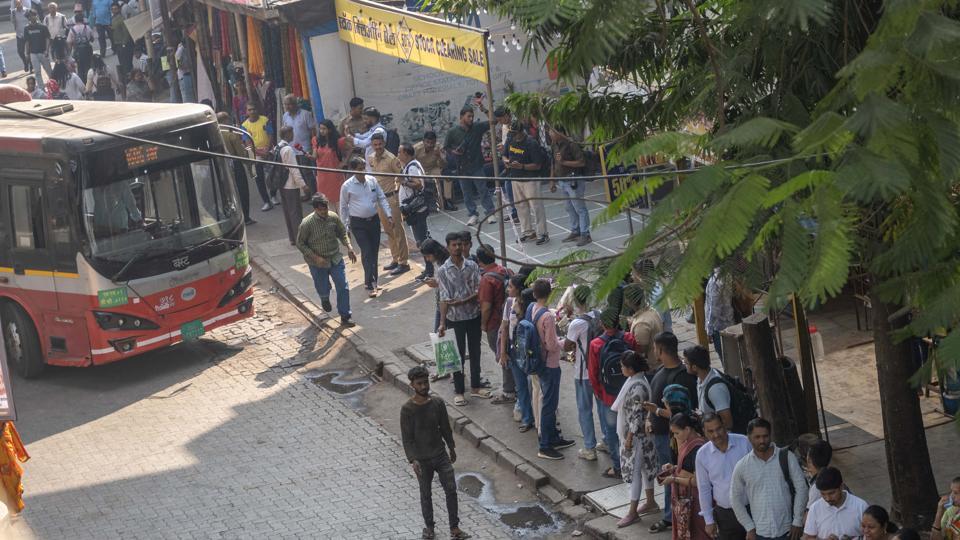
Like Khan’s father, the victims of Monday night’s accidents were also from Mumbai’s working class, men and women who were their family’s providers. Varsha Sawant, 25, worked was a nurse at the Sion Municipal Hospital. On Monday, she returned from her cousin’s wedding at her village in Satara ahead of the rest of the family as she had to be back at the nursing station for an early morning shift the next day. The bus from Satara dropped Varsha at Sion on Monday from where she took a train to Bhandup station. She was standing in the queue for a bus when she was run over. “She had an early morning shift,” said a doctor from Sion Hospital. “She was part of our team and it was devastating when we heard about what happened to her. These people put in so much effort to come to work and save lives, but their own lives are always at risk.”
The civic hospital at Sion which serves a large part of Mumbai’s working class, lost another nurse in the same accident. Mansi Meghshyan Gurav, 49, was a senior nurse there, and she was returning home after her shift. It was a routine she had followed for years, her brother Kamlesh Gurav told HT. He was informed of his sister’s death after the police recovered her phone. “She has two daughters, one in Class 12 and the other in Class 11. They were waiting for her at home. Her husband is in a state of shock,” Kamlesh said. “My sister was just taking her usual bus route home.”
“We spent the entire night moving from one hospital to another, waiting for her body. There was no help at all. The government must be held accountable,” Kamlesh said.
Like Gurav, Prashant Shinde, a traffic warden, had also just got off his shift at Ghatkopar and was going back home. He boarded a train from Ghatkopar to Bhandup and queued up to catch the bus. At home, his wife and 10-year-old son were waiting to have dinner with him.
The fourth victim, Pranita Rasam was a 35-year-old homemaker returning home after picking up her 12-year-old daughter, Purva, from her dance class at Dadar. Her daughter too has been injured. In the melee that followed the accident, Rasam and her daughter were moved to different hospitals, leaving the family frantically searching for them from one hospital to another.
The two eerily similar accidents in two successive Decembers involving the public utility, once the pride of Mumbai, go to the heart of the troubles plaguing BEST and the public infrastructure outside suburban stations.
“For more than seven decades, BEST has been the backbone of Mumbai’s public transport system, providing affordable, reliable and flexible mobility to millions of commuters every day. Even today, despite a shrinking fleet, service cuts and rising fares, BEST continues to carry lakhs of passengers, clearly showing that Mumbaikars still depend on and need a strong public bus service,” said Hussain Indorewala, the co-convenor, of Aamchi Mumbai Aamchi BEST.
Indorewala, who teaches at Kamla Raheja School of Architecture, said the Brihanmumbai Municipal Corporation, as the owner of BEST, must take direct responsibility for its revival. “BEST must be fully integrated into the BMC budget, adequately subsidised and planned as part of the city’s transport and traffic policy. Without coordinated action by the BMC and the BEST through funding support, bus-priority lanes Mumbai will continue to suffer from congestion, pollution and declining mobility for ordinary citizens,” he added. From a fleet of 4800 buses in 2010, the BEST fleet has shrunk to 2743 in 2025 with most of them now on wet lease from private operators. Most of these buses are maintained and staffed by private operators. As a consequence the BEST has no control neither over their training nor over the quality of buses put on the roads. While the report on Monday’s accident has yet to come out, in last year;s accident at Kurla it had emerged that the driver had received just three days of training to move from manually operated to an automatic electric vehicle which was deemed insufficient
But successive administrations see BEST merely as a transport utility bemoaning its lack of profitability. “Instead, it has to be seen as a public service essential to the social and economic life of the city,” said Indorewala, calling for greater accountability from the BMC.
Conversely though, even as Mumbai enters poll season, the shoddy running of the BEST, is not a talking point for any of the political parties, and neither is the proliferation of hawkers outside stations that eat into footpaths and road space. In both the Kurla and the Bhandup accidents there was little space for the buses to manoeuvre on the road.
“The hawkers outside railway stations have to go. People walk on the road because the footpaths are occupied by hawkers. Only those who have experienced the kind of pain that we have will know why I am saying this,” said Rahimunisa Khan. After last year’s accident Khan, then two months pregnant, developed a blood clot and had to take multiple injections and prolonged medical treatment to resolve the issue and save her pregnancy.
However, for Mumbai north-east MP Sanjay Dina Patil, Monday’s accident at Bhandup was entirely on account of “a malfunctioning bus.” Speaking to HT, Patil who spent the night helping the relatives of the deceased and the injured, hawkers crowding public space outside the railway station were not to blame for the accident. “Earlier this used to be an acute problem but the BMC has since been taking action and it has controlled the problem by 70 percent,” Patil said, adding that it was unlikely to become an issue in the BMC election of January 15.

Stay updated with all the Breaking News and Latest News from Mumbai. Click here for comprehensive coverage of top Cities including Bengaluru, Delhi, Hyderabad, and more across India along with Stay informed on the latest happenings in World News.


