
 E-Paper



Understanding a reclusive Gaitonde and what shaped his art
Gaitonde’, in Marathi, comprising essays and memoirs on the artist, launched in 2007, has been translated by litterateur and Sahitya Akademi awardee Shanta Gokhale in English, titled ‘Gaitonde: Between Two Mirrors’, which will be released in the city next week


MUMBAI: In the annals of Indian art, few names evoke as much reverence as Vasudev S Gaitonde, a pioneer of abstract expressionism in India. Now, nearly 25 years since his passing, Chinha, a prominent art magazine and publishing house, is offering a tribute to the artist’s legacy through a compilation in English.
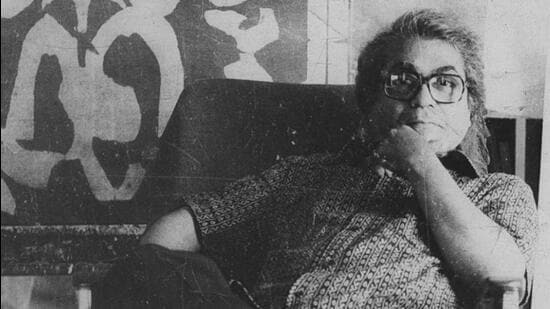
‘Gaitonde’, in Marathi, comprising essays and memoirs on the artist, launched in 2007, has been translated by litterateur and Sahitya Akademi awardee Shanta Gokhale in English, titled ‘Gaitonde: Between Two Mirrors’, which will be released in the city next week.
The Gaitonde project grew in volume since the time it was incubated after his death in 2001. That year Chinha published a first full edition on the artist; by 2007 the publishing house had managed to unearth more material on him in Marathi, which warranted another edition and a book. Years of research and meticulous curation which poured into the book, offers a never-before-seen insight into Gaitonde’s artistic and spiritual journey, deeply influenced by Zen Buddhism. More than a collection of words and images, it is a window into the mind of a reclusive visionary.
Satish Naik, editor of Chinha and driving force behind ‘Gaitonde’ believes the artist deserves far greater recognition than what has come his way. “Despite his great contribution to art, there is a dearth of literature on him, owing to a lack of research and documentation,” Naik said. This realisation had propelled him to create a book “that is both a reference and tribute”.
After the success of the Marathi edition, the decision to bring Gaitonde’s story to a global audience was inevitable. English was the natural choice, and finding the right translator was crucial. “Shanta Gokhale was the only expert I knew who could do justice to the translation,” said Naik. “With her deep understanding of both art and literature, she was the perfect bridge between the two linguistic worlds.”
Gokhale said after much persuasion by the publishing house, she was captivated as soon as she laid eyes on the original Marathi edition. “I looked at the cover, flipped through the pages, browsed through the reproductions, and said, ‘I will do it, time or no time,’” said Gokhale.
Thus, began a rigorous journey, which required eight-hour workdays of relentless translation.
After the first reading, Gokhale translated in a single stretch to maintain the book’s rhythm. A series of refinements followed, ensuring accuracy, authenticity and fidelity to the original voices that contributed to the book. “Given the diverse nature of the text—including formal essays, personal memoirs, and interviews—my task was to preserve the unique tone of each piece,” she said. The result is a translation that captures not just the facts, but the spirit of Gaitonde’s world.
One of the greatest challenges, she noted, was translating the emotional depth of Marathi into English, a language less inclined towards sentimentality. “Emotion is always a stumbling block in translating from Marathi to English. We tend to be sentimental; but sentimentality goes against the grain of the culture and spirit of the people whose language English is,” she explained. Her solution was to maintain the emotional truth of the text while restraining overt sentimentality—a balance she achieved with masterful subtlety.
Gaitonde’s work is a testament to meditation and introspection. His commitment to Zen philosophy found expression in his art—minimalist yet profound, silent yet evocative. For Gokhale, the challenge lay in articulating the abstract and the philosophical.
Reading the essays, she uncovered new layers of Gaitonde’s creative process, from his early figurative works to his ultimate abstraction. “The writings in the book were a total revelation to me,” she admitted. The artist, who shunned publicity and sought refuge in solitude, left behind a body of work that continues to inspire and intrigue. The book seeks to bridge the gap between the artist and the world, offering a glimpse into his reclusive existence and the profound philosophy that shaped his art.
Gaitonde’s category-defying art is neither wholly Indian nor entirely global—it is universal. While he may not have actively sought international fame, his work finds resonance in galleries and collections across the world. “Few artists from any country are truly globally relevant, whatever that might mean,” said Gokhale. “Yet, relevance is not the point. The true value of Gaitonde’s work lies in its ability to move, to provoke and to transcend.”
The book also has 120 paintings, rare sketches, 74 archival photographs, exclusive portraits, apart from personal memoirs that celebrate, reflect and pay homage to the artist.
(‘Gaitonde: Between Two Mirrors’ will be unveiled on February 27 at the Chhatrapati Shivaji Maharaj Vastu Sangrahalaya.)
Stay updated with all the Breaking News and Latest News from Mumbai. Click here for comprehensive coverage of top Cities including Bengaluru, Delhi, Hyderabad, and more across India along with Stay informed on the latest happenings in World News.


