
 E-Paper



No playgrounds, students settle for indoor games in many schools
As many as 71 government schools do not have functional playgrounds, stated a recent affidavit submitted by the directorate of education (DoE) in the Delhi High Court in response to a contempt petition filed by Ashok Agarwal of Social Jurist, a non-governmental organisation (NGO).


Usman, a Class 8 student of a government boys’ senior secondary school in the Walled City’s Jama Masjid neighbourhood, aspires to become a football player. The 12-year-old, however, gets a chance to practise the sport only once in a week. In the absence of a playground at his school, he has to settle for indoor activities during the sport classes.
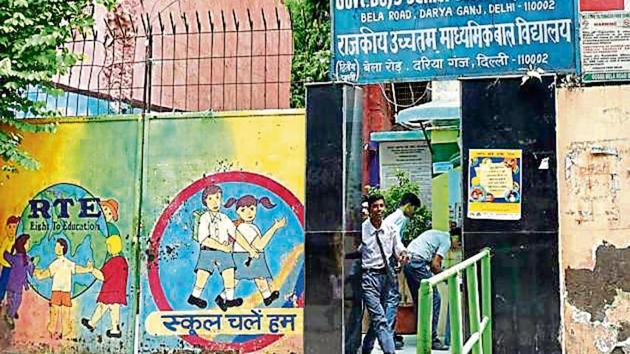
Every Sunday, Usman and his classmates gather at an empty ground near Red Fort and play football. “That’s the highest point of our week. We do not have open areas near our houses in old Delhi to play after school hours. I wish we had a playground like other schools,” he said.
Usman’s is not an isolated case. As many as 71 government schools do not have functional playgrounds, stated a recent affidavit submitted by the directorate of education (DoE) in the Delhi High Court in response to a contempt petition filed by Ashok Agarwal of Social Jurist, a non-governmental organisation (NGO).
The DoE gave two reasons — schools constructed on small plots and ongoing construction for the expansion of classrooms.
Officials at schools where playgrounds are unavailable because of construction hope to get the space back once work is complete, while those with limited space go for makeshift arrangements. Some schools take students to nearby parks and grounds and some organise regular trips to auditoriums.
Ghyoor Ahmed, vice-principal at Usman’s school, said their campus does not have enough space for a playground. “We can never have a playground at our school and that’s why we provide facilities for indoor games such as carrom, chess and table tennis. Most students in our school are from financially challenged families and cannot afford any private arrangements for sport activities. Sometimes, we take them to government stadiums so that the students can get a chance to play,” he said.
Many other schools in old Delhi, north and north-east Delhi face a similar problem. DoE’s affidavit names congested neighbourhoods such as Jama Masjid, Najafgarh, Raghubir Nagar, Bhalaswa Dairy and Model town where schools do not have playgrounds due to lack of space.
At a government girls’ school in Ballimaran, situated atop a maze of shops, students sometimes play at a park near the old Delhi railway station. Rajesh, head of the school (HoS), said half of sports class is wasted in taking students to the park and bringing them back. “I avoid sending students there because they do not get enough time. This year, we started yoga to engage girls in some physical activity,” she said.
The girls, sometimes, use the school’s terrace to play during recess. “But it is only possible in good weather. We are not allowed to play on the roof in extreme summers and winters,” said Shabnam, a class 8 student.
A boys’ school in GTB Nagar has a small “concretised” play area. “We cannot play there because there is always a fear of falling down and getting hurt. It’s always better to have dirt ground in schools,” said Ajeet Kumar, a class 9 student. The school only offers indoor activities.
Central Board of Secondary Education (CBSE) norms make it mandatory for all its affiliated schools to have functional playgrounds on premises.
Binay Bhushan, director, said Delhi government schools get special relaxation in CBSE norms. “There is a lack of space in the city and hence our primary goal is to make more schools and classrooms available first. The government plans to bring a system in place wherein students can go and participate in any sport of their choice at other schools with functional playgrounds. It’s impossible to expand infrastructure,” he said.
Sudeshna Chatterjee, a board member of the International Play Association, termed it as an “urban issue”. “In this scenario, the only options available are to provide the terrace to students to play and to take them out to nearby parks and grounds regularly. It’s highly appreciable that some schools are making these efforts. Physical activities of students should not be compromised,” she said.


