
 E-Paper



Air-quality, waste management figure among ₹173 cr approved by Ghaziabad
Ghaziabad, once ranked as the world’s second-most polluted city in 2021 by the Switzerland-based IQAir, experienced a notable improvement


The Ghaziabad municipal corporation has allocated approximately ₹173 crore for various civic infrastructure projects, air quality enhancement, and solid waste management initiatives within the city for the ongoing financial year, officials said.
In a meeting convened on Thursday, officials decided to utilize ₹126 crore from the Centre’s Fifteenth Finance Commission Fund, alongside ₹33 crore from infrastructure development funds, and the remainder from funds designated for air quality enhancement.
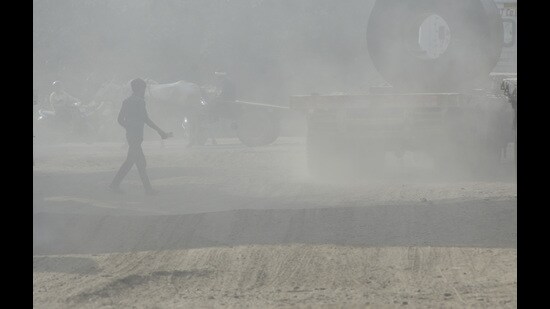
Nitin Gaur, the municipal commissioner, said, “The air quality improvements encompass vital road repairs, particularly crucial considering the Commission for Air Quality Management’s (CAQM) directive to promptly rectify deteriorating roads that contribute to pollutant dispersion, such as PM10. Additionally, some air quality initiatives will adopt the Miyawaki approach, emphasizing greenery.”
Ghaziabad, once ranked as the world’s second-most polluted city in 2021 by the Switzerland-based IQAir, experienced a notable improvement, ascending to the 11th position in 2022.
The comprehensive road repair initiative spans 18 distinct road sections across the city, forming a significant component of the allocated funds. Notably, a substantial portion, totalling ₹106 crore, is earmarked for enhancing solid waste management measures. This allocation encompasses ₹48.53 crore designated for the establishment of four transfer stations at Sahibabad, Jhandapur, Vasundhara, and Madhuban Bapudham. Designed as secondary waste collection hubs, these stations will have a collective capacity of 200-300 metric tonnes of daily solid waste.
The initiative extends further, encompassing mechanized road sweeping for 148km of major city roads, enhancing cleanliness and upkeep. An additional ₹6.3 crore is allocated for night sweeping activities within significant commercial markets, and ₹23.4 crore is designated for solid waste processing operations.
“The Swachh Bharat Mission will play a pivotal role in augmenting door-to-door collection of daily solid waste. Approximately 350 CNG-based new vehicles will be introduced, with the SBM covering capital expenditures, and provisions made for maintenance. The vehicles are anticipated to arrive within two months after the procurement process concludes,” Gaud added.
Ghaziabad, generating around 1400 metric tonnes of daily solid waste, currently lacks a comprehensive scientific waste management facility. While the proposed waste-to-energy plant in Galand, Hapur district, remains on the horizon, construction activities are yet to commence.

Stay updated with all the Breaking News and Latest News from Mumbai. Click here for comprehensive coverage of top Cities including Bengaluru, Delhi, Hyderabad, and more across India along with Stay informed on the latest happenings in World News.


