
 E-Paper



Ghaziabad: Officials focus on animal birth-control centres, feeding points
Ghaziabad at present has a functional ABC centre near the river Hindon, which has a daily capacity to sterilise 15 dogs

 Prefer HTon Google


After the Supreme Court on Friday modified its August 11 directions on the mass capture of stray dogs in Delhi, Noida, Ghaziabad, Gurugram and Faridabad, the Ghaziabad municipal corporation said that the city’s second animal birth-control (ABC) centre will start functioning this week, while a third is likely to become operational by the end of November.
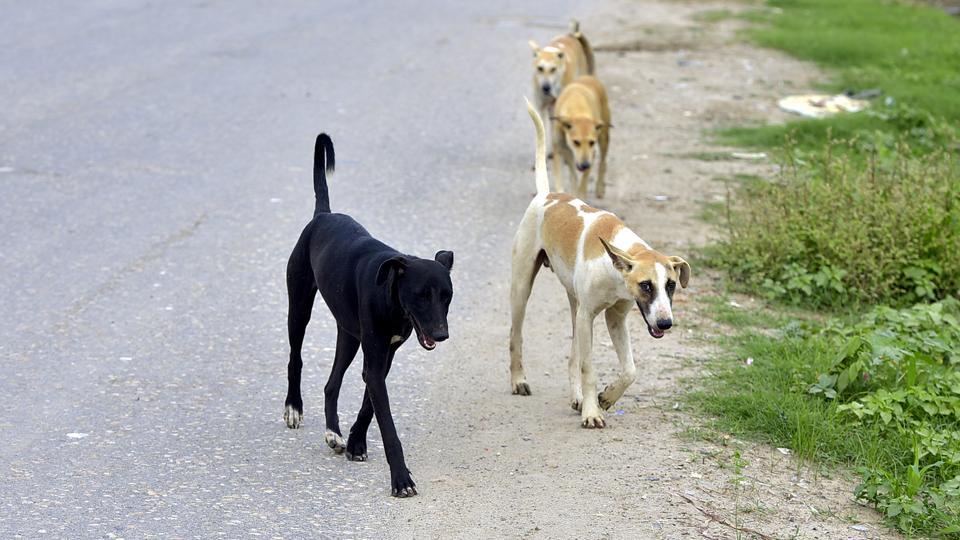
The civic body said that more feeding points will also be a focus area besides the construction of shelters for stray dogs displaying aggressive behaviour and those affected by rabies. Officials said that a survey was conducted through an NGO in 2021, and the stray dog population is estimated at 48,000 in the corporation area, which has 100 residential wards.
“Of these, about 30,000 have been sterilised so far, but we estimate that the population of stray dogs has increased and could be around 50,000 to 60,000 at present. So, this is why we are focusing on ABC centres,” said Dr Anuj Singh, the corporation’s chief veterinary and social welfare officer.
Ghaziabad at present has a functional ABC centre near the river Hindon, which has a daily capacity to sterilise 15 dogs. The second upcoming centre near New Bus Adda will have a daily capacity to sterilise 30-35 dogs, while the third near Siddharth Vihar will have a daily capacity of about 45-50, officials said.
“Once the two ABCs become operational, we will have a capacity to sterilise about 100-115 dogs per day. We will also try to enhance the capacity. However, we need to expedite works for the construction of shelters to house the dogs affected by rabies or displaying aggressive behaviour,” said Singh.
“For housing the affected strays, we need to have shelters. Once we get the copy of the order, we will work as directed. Further, we will soon hold meetings with RWAs/AOAs and animal activists and others to work in a cordial manner and identify the feeding points,” Dr Singh added.
The bench of the Supreme Court stressed that no individual or organisation should obstruct the functioning of municipal bodies in capturing stray dogs. Public servants facing obstruction will be free to initiate proceedings against those responsible, and each NGO or animal lover found creating hindrance may be directed to pay ₹25,000.
“The authorities need to act fast on the orders given by the court and should come up with shelters to separate the dogs affected by rabies and also those showing aggressive behaviour towards residents. If these cases get shifted to shelters, a lot of dog bite cases could be avoided. Further, the corporation should provide a dedicated number so that residents can report such cases directly,” said BK Pandey, resident of Vaishali Sector 5.
“It will be a challenge to implement the directions at ground level as it requires funds, resources, manpower, and a will to implement these. The city faces the massive issue of a growing population of stray dogs and also the instances of dog bites,” said Vikrant Sharma, a resident of Raj Nagar Extension.
According to official figures from the district health department, government healthcare facilities in FY 2024-25 administered 102,507 anti-rabies vaccines (ARVs) while 39,370 vaccines were administered during the months of April, May, June, and July this year.
“90% of these ARVs were given by the government healthcare facilities in dog bite cases. An average of three ARVs is given to a patient,” said Dr Rakesh Gupta, district surveillance officer.
According to civic officials, the feeding points are slowly progressing for stray dogs, and many have come up in different high-rises in areas like Raj Nagar Extension, Indirapuram, Sanjay Nagar. Activists said that feeding points are still not sufficient in the city, while the ABC centre capacity also needs to be enhanced.
“Now, we will pursue the corporation for the creation of feeding points, and we will hold meetings with the officials and also write to them. Aggressive dogs should be identified on the basis of findings like instances of bites, extent of damage, etc. There has to be a standard to ascertain whether the dog is aggressive or not. Dog bite cases should also be monitored. The shelter homes should also come up fast,” said Surbhi Rawat, president of People for Animals, an NGO.
“A proper survey should be conducted to know the population of street dogs, and the feeding points should be made according to the territory of the dogs,” Rawat added.

Stay updated with all the Breaking News and Latest News from Mumbai. Click here for comprehensive coverage of top Cities including Bengaluru, Delhi, Hyderabad, and more across India along with Stay informed on the latest happenings in World News.


