
 E-Paper



Groundwater level in Ghaziabad declined 5.3 metres in four years: Report
The report said the water level in the 27 localities declined sharply from an average of 24.79mbgl during the post-monsoon period in 2017 to an average of 30.08mbgl during the post-monsoon period in 2021


The groundwater level in 27 localities in the city, a majority of which are situated in the trans-Hindon area, has witnessed an alarming decline of 5.3 metres below ground level (mbgl) in the past four years, according to an Uttar Pradesh groundwater department report
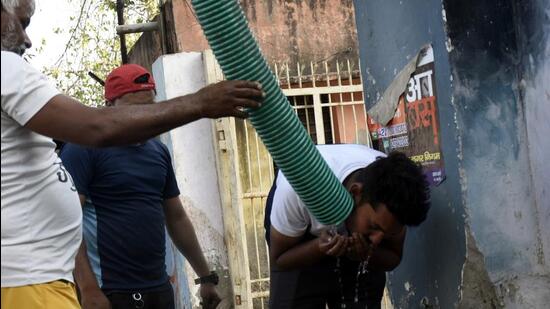
The report said the water level in the 27 localities declined sharply from an average of 24.79mbgl during the post-monsoon period in 2017 to an average of 30.08mbgl during the post-monsoon period in 2021. The maximum dip in groundwater levels was recorded in Vijay Nagar (7.9mbgl), Pratap Vihar (7.32mbgl), Vaishali (6.43mbgl), Arthala (6.01mbgl), Lajpat Nagar (5.93mbgl) and Sahibabad (5.72mbgl).
According to environmentalists, the depletion is the result of several factors, including encroachment of water bodies and illegal extraction of groundwater.
“Several water bodies such as ponds have been encroached upon in the past few decades and need to be freed up. Further, the existing water bodies need to be rejuvenated and revived to increase groundwater recharge. There has to be strict enforcement otherwise the city could face a severe water crisis in the future,” said Sushil Raghav, a city-based environmentalist.
“Water levels have dipped sharply due to illegal extraction of groundwater. There is less reliance on recycling and reuse of treated water. This has impacted the groundwater resources. In many localities, households have installed submersible pumps to draw water for daily use,” said Akash Vashishtha, a city-based environmentalist.
In localities such as Indirapuram, officials of the Ghaziabad Development Authority (GDA) said that they had to rebore three of their major water pumps last year.
“These pumps were installed about 15 years ago when water was found at 200 feet. Since the discharge of these pumps declined over a period of time, we got them re-bored at 500 feet last year. This was due to a decline in water levels. At present, the demand for drinking water in Indirapuram is about 40,000 kilolitres per day and we are ensuring we meet it by getting about 45,000 kilolitres per day of Ganga water supply,” said AK Chaudhary, executive engineer of GDA.
In December last year, the Ghaziabad municipal corporation took up a survey and found that 63 of 100 residential wards in the city do not receive enough water while the other 37 wards are supplied surplus water.
The survey stated that the 63 residential wards face a deficit of about 107.02MLD (million litres per day), while the daily demand is 371.78 MLD. It also stated that 45 of the 63 water-deficit wards are in the trans-Hindon area, which includes 22 wards in the Vasundhara zone--comprising localities such as Indirapuram, Vasundhara and Vaishali--and 23 wards in the Mohan Nagar zone.
To bridge the deficit supply in the wards, the corporation has prepared the City Water Balance Plan which estimates how much water can be supplied from natural sources to meet the city’s demand by 2025. The plan shows that the city has to bridge a shortfall of 457.741 million litres per day which will occur in the 2025-26 fiscal.
“To tackle the decline in groundwater levels, we have prepared a water balance plan and are reusing recycled water from sewage treatment plants. We have started rejuvenating over 30 water bodies and are installing over 200 rainwater harvesting units in parks. We are also relying more on the use of surface water/STP water instead of groundwater,” said MS Tanwar, municipal commissioner.

Stay updated with all the Breaking News and Latest News from Mumbai. Click here for comprehensive coverage of top Cities including Bengaluru, Delhi, Hyderabad, and more across India along with Stay informed on the latest happenings in World News.


