
 E-Paper



Noida residents, experts blame lack of serious year-round effort for high pollution levels
The city’s air quality index (AQI) of 339 on Wednesday was the third highest in the country after Delhi and Faridabad, triggering concerns among the citizenry and air quality experts, who said Wednesday was the seventh consecutive day when air quality in Noida and other National Capital Region (NCR) cities has remained in the ”very poor“to “severe” category, according to the data kept by the Central Pollution Control Board (CPCB)


The city’s air quality index (AQI) of 339 on Wednesday was the third highest in the country after Delhi and Faridabad, triggering concerns among the citizenry and air quality experts, who said Wednesday was the seventh consecutive day when air quality in Noida and other National Capital Region (NCR) cities has remained in the ”very poor“to “severe” category, according to the data kept by the Central Pollution Control Board (CPCB).
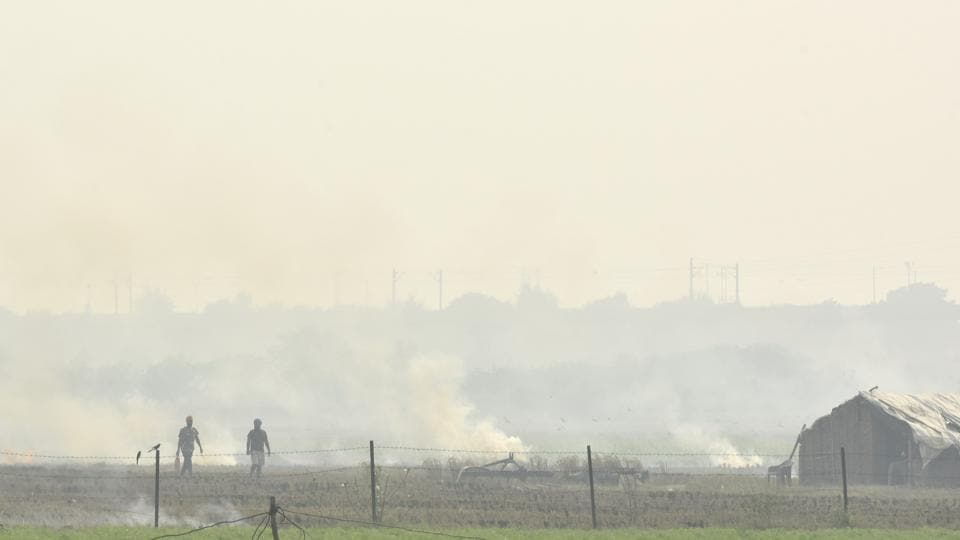
On Wednesday, the AQI of Greater Noida was 336 and Ghaziabad was 332; while both readings were marginally better than those recorded over the past two days, they still remained in the “very poor” category.
An AQI between zero and 50 is classified as “good”, 51 and 100 is “satisfactory”, 101 and 200 “moderate”, 201 and 300 “poor”, 301 and 400 “very poor”, and 401 and 500 is “severe as per the CPCB.
While authorities claim to be “strictly implementing” the graded response action plan (Grap), residents as well as environmental experts said this yearly crisis was the result of lack of coordinated action throughout the year.
Residents said trucks carrying construction material uncovered is a common sight in several parts of Noida and Greater Noida.
“I post pictures on social media daily of dumpers and trucks carrying construction waste and materials without any covering. They leave a huge trail of dust behind them. No action is ever taken against these polluting vehicles and they continue flouting the rules with impunity. Around all 7x sectors, residents are used to seeing these polluting trucks. Added to that, there is hardly any sprinkling of water or mechanical sweeping of roads,” said Amit Gupta, a resident of Sector 77.
While Grap measures suggests ditching private vehicles and relying on public transport once the AQI dips to “very poor” levels, residents say that is impossible in Noida, which has a glaring lack of public transport.
“If I had a good public transport network with last-mile connectivity, why would I use a car and drive to Gurugram every day? There is also no good bus service. The only mode that even remotely comes close to using a public transport is taking the shared cabs or carpooling, but these are also individual effort,” said Namita Relan, a resident of Sector 39.
The Parthala Chowk flyover construction that was supposed to be completed in 22 months has already taken nearly two years and no completion date in sight. While the work itself is causing dust to fly, the traffic chaos due to the ongoing work is another pollution source, said residents. A similar situation exists at all sites where underpasses are being built along the Noida-Greater Noida Expressway, they said.
“There needs to be coordinated effort so that big construction work is completed before the onset of winter. All authorities know that pollution levels increase during winter. The orders also mention that all private construction work needs to stop during such time, but there are many areas within Noida where construction is still going on,” said Sanjeev Kumar, president of Sector 51 residents’ welfare association.
Residents also said there should be a traffic management plan for Sector 50 where a major hospital is being constructed.
“A large private hospital is expected to be functional by early next year in Sector 50 and footfall will increase manifold. There has to be a traffic and public transport plan or there will be huge traffic, leading to more pollution,” said Rajiva Singh, president of Noida Federation of Apartment Owners Associations.
“Noida has wide roads and it once even had cycle tracks in some areas. To move towards being an international city, the focus must be on good quality footpaths and cycle tracks that can promote non-motorised transport and reduce dependence on fuel guzzling vehicles. Sadly, the authorities seem to think these are unnecessary,” said Singh.
Experts also said all these problems can be resolved with year-round coordination. However, in most cases, action is taken only temporarily when pollution levels go off the charts.
“Air is not one city’s problem. All cities in the region have to coordinate with each other and work on reducing their local contributions to pollution. Construction activities are a problem in Noida and the local authorities have to tackle it. This can only be done if efforts are taken throughout the year and a schedule is made so that maximum work is done before pollution levels start rising,” said Vikrant Tongad, Noida-based environmentalist.
Uttar Pradesh Pollution Control Board (UPPCB) regional officer for Noida, Praveen Kumar, said checking and enforcement throughout the year is difficult as the department only has two officials to do the job. However, action is taken whenever a complaint is made to the UPPCB.
DCP traffic, Ganesh Prasad Saha, said, “The traffic police has already identified pollution hot spots and we try to ensure that there is no snarls in these hot spots. Additionally, we are taking action against polluting vehicles carrying waste or those older than 15 years.”
Stay updated with all the Breaking News and Latest News from Mumbai. Click here for comprehensive coverage of top Cities including Bengaluru, Delhi, Hyderabad, and more across India along with Stay informed on the latest happenings in World News.


