
 E-Paper



One-District, One-Product Pavilion at centre of Noida int’l trade show
According to the organisers, UPITS 2025 features over 2,500 exhibitors and 550 buyers from 80 countries

 Prefer HTon Google


Greater Noida
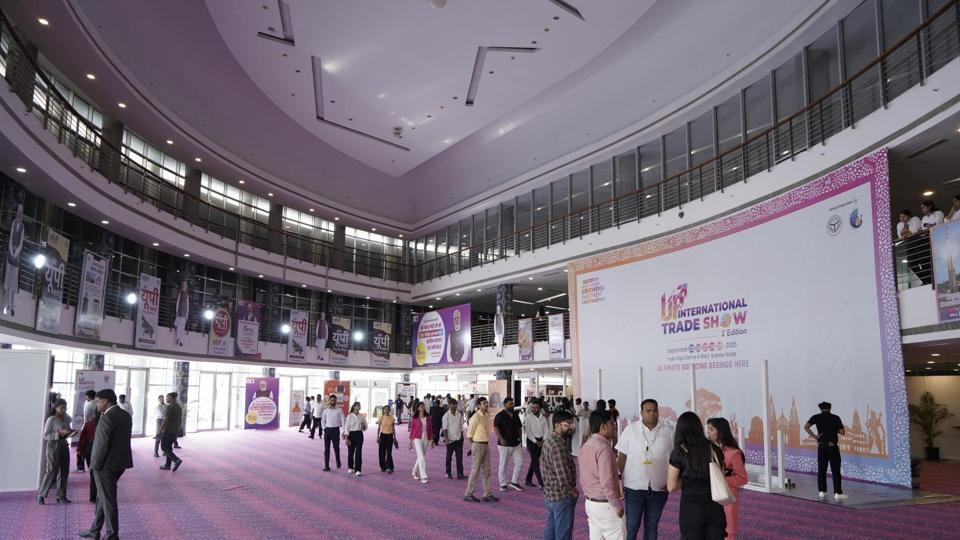
The third edition of the Uttar Pradesh International Trade Show (UPITS) opened on Thursday at the India Expo Centre & Mart in Greater Noida, with the One-District-One-Product (ODOP) Pavilion at its heart, highlighting the culture of Uttar Pradesh’s 75 districts across 343 stalls.
The event was inaugurated by Prime Minister Narendra Modi in the morning. The five-day event, under the theme “Ultimate Sourcing Begins Here”, aims to showcase the state’s industrial, cultural and agricultural strengths—from Bhadohi carpets and Firozabad glasswork, to Moradabad’s lesser-known pinewood artefacts and Pratapgarh’s gooseberry-based snacks.
According to the organisers, UPITS 2025 features over 2,500 exhibitors and 550 buyers from 80 countries. Spread over five days, it is expected to draw more than 125,000 business visitors and over 450,000 consumers. Also, 150 stalls have been set up under the CM Yuva initiative, and 25 under the “Swad Uttar Pradesh” theme.
First-time participant Vandana, 35, who came from Gorakhpur, said, “We make eco-friendly bangles and necklaces from cotton thread. They’re lightweight, starting from just ₹100, and the most-detailed necklaces at ₹2,000. Around 20 women work with me.”
Nearby, Renu Marwah, 41, was showcased handmade home decor, toys, and blankets Ghazipur. “A blanket takes 10-13 days to weave, while smaller items like diyas or key rings are made in a few hours. Prices start at ₹80 and go up to ₹3,000, while bags are priced from ₹1,500. We’re a team of 10-15 artisans keeping this craft alive.”
At Saharanpur’s Nirmal Crafts stall, Naved, 32, admitted that the opening day was quiet but he is hopeful. “The response has been a little slow so far, but I’m sure it will pick up. We’ve brought ‘kandiyas’made of mango wood for fruits and vegetables, ‘sheesham kandiyas’ for dry fruits, and other decorative pieces,” he said.
Banarasi weaver Waseem Alam, 28, was more concerned about the duration of the show. “Our sarees start at ₹1,500 and go up to ₹15,000. Suits are between ₹3,500 and ₹4,500. For a trade show of this scale, five days are too short. It should be at least 10 days,” he said.
From Najibabad, Mohammad Suleman’s stall selling sustainable wooden toys and household items stood out. “This is our first time here. We make baby tethers, chopping boards and other items from kikar wood. They’re safe, non-toxic, and eco-friendly. We were inspired by the Prime Minister’s Mann Ki Baat where he spoke about wooden toys,” Suleman said.
Kannauj’s centuries-old perfume tradition was also on display. “We’ve brought non-alcoholic attars in fragrances like chandan, gulab, jasmine, mogra and shamama, along with car and regular perfumes. It’s exciting to present Kannauj’s scents to a wider audience,” said Harsha, 36,whohad set up her stall for the first time.
For Moradabad-based artisan Minakshi, 35, experimenting with pinewood was a way to move beyond the city’s brassware legacy. “Moradabad is known for brass but I wanted to try something different. I work with pine wood to create decorative flowers, lamps and other items. Last year, the response was lukewarm, but this year we’ve executed better and hope to see more buyers,” she said.
Pratapgarh entrepreneur Sanskriti Agarwal, putting on a show of healthy consumables, offered amla-based snacks in flavours such as guava, bael and aam-papad. “After Covid-19 (pandemic struck), people are more aware of vitamin C and immunity. We’ve developed products like amla candy, priced at ₹250 for 250 grams. Since Pratapgarh is known for amla, it felt natural to bring these here,” she said.
Many visitors said the scale of the exhibition itself was a draw, with the ODOP pavilion in particular giving them a rare chance to experience the diversity of Uttar Pradesh in one place. “It feels like a mini-Uttar Pradesh here - carpets, woodwork, perfumes, food, everything in one hall. I didn’t expect the stalls to be this detailed, and it makes you realise how much is being produced in our districts,” said Rashmi Verma, a visitor from Lucknow.
Others said the international presence added another dimension to the trade show, alongside the state’s local crafts. “I came mainly to see what international buyers are looking at, and the Russian participation is interesting. But it’s also fun. You can buy a Banarasi saree on one side and taste petha or paan on the other. It’s like business and culture together,” said Vikas Singh, a trader from Meerut.
While the pavilions bustled with crafts and innovations, visitors could also sample traditional foods, such as Panchhi petha from Agra, Banarasi paan, Jain shikanji, and Moradabadi dal, adding a local flavour to the international trade platform.
Police said more than 2,000 personnel were deployed across seven zones and 20 sectors, with the venue declared a no-flying zone in the 48 hours leading up to the event.
As the five-day event progresses, organisers expect footfall to increase, with more business-to-business meetings, cultural exchanges, and networking opportunities shaping the trade show’s outcome.


Stay updated with all the Breaking News and Latest News from Mumbai. Click here for comprehensive coverage of top Cities including Bengaluru, Delhi, Hyderabad, and more across India along with Stay informed on the latest happenings in World News.


