
 E-Paper



Bodies donated, buried by road as villages in Karnataka lack burial grounds
7,064 Karnataka villages don’t have a burial ground, says govt


Two days after returning from a pilgrimage to Tirupati, Lakshmikant Kandugal’s mother passed away. Since his village, Bankur in north Karnataka’s Kalaburagi district, did not have a burial ground, Kandugal donated his mother’s body to the district medical college.
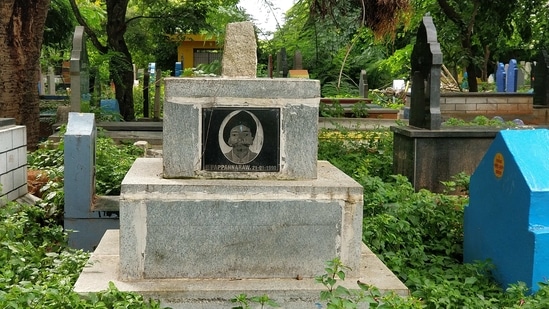
“I was a panchayat member and since 2011, I have been writing to various government authorities about unavailability of burial ground in my village. Two people in our village donated bodies of their family members as they couldn’t find land to bury them. So, I decided to do the same. I have also pledged my body to the medical college as nothing seems to change anytime soon,” Kandugal said.
According to the state revenue department, Bankur is among 7,069 villages in Karnataka that do not have a burial ground. Unlike many other states in the country, a majority from the Hindu community in Karnataka bury the dead, instead of cremating them. Among them are the Lingayats — the largest community in the state — and a large section of the Vokkaligas, another dominant caste in the state.
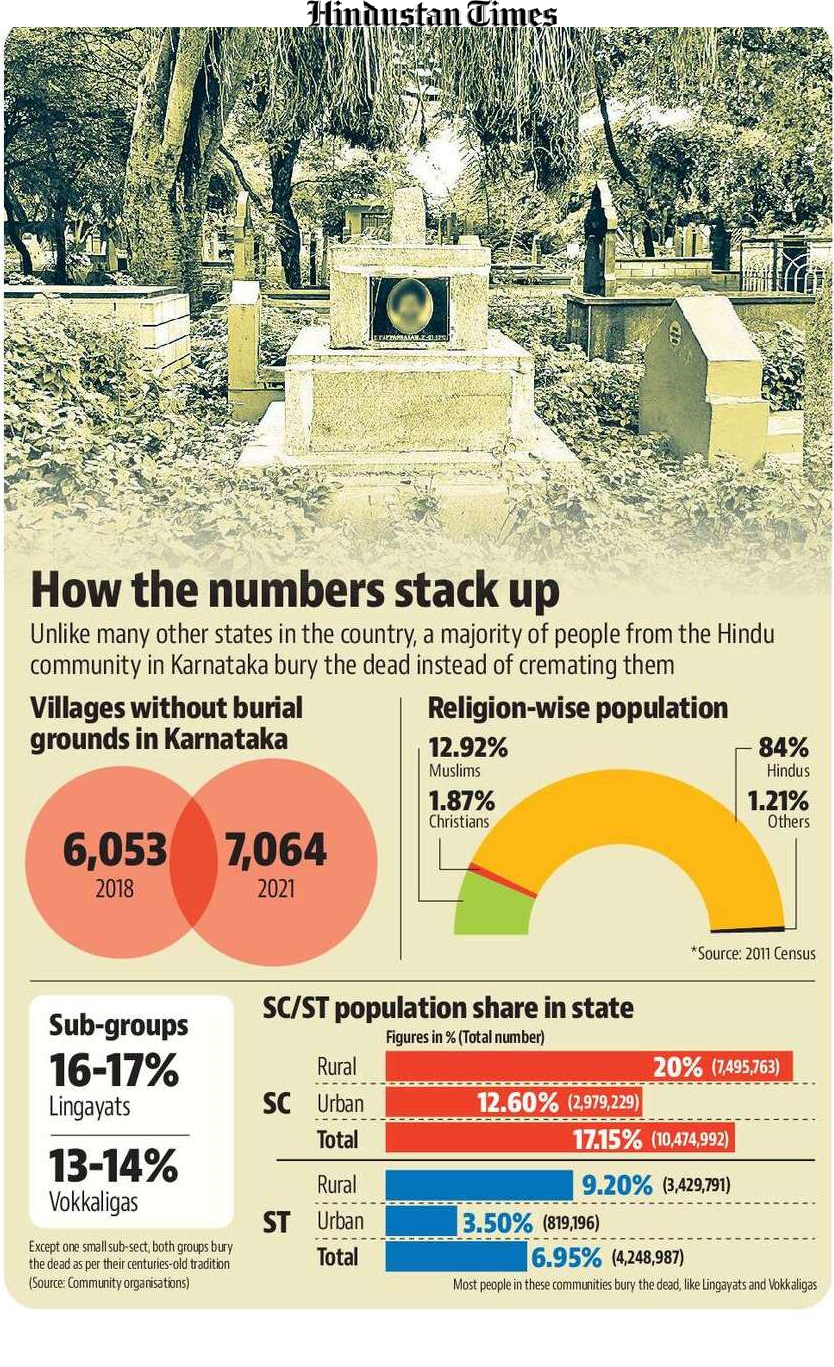
According to C.S Dwarakanath, former chairman of the backward classes commission, burial has been a cultural practice in Karnataka for centuries. “In the Lingayat community, even before Basavanna (the founder of the Lingayat way of life), the communities that converted to Lingayat faith had been burying their dead,” he said.
Though the lack of burial ground remains a problem across communities, it is the marginalised communities that feel maximum brunt of the problem. According to an activist, there have been several instances of people burying their loved ones by the side of the road after facing discrimination at the hands of dominant communities.
Dwarakanath said the lack of burial grounds, especially in a state where burying the dead is a common practice, was a matter of concern. “Those suffering the most are the ones from the backward classes. As the upper castes started to find it difficult to get land for burial, denial of land to Dalits increased. In several places in north Karnataka and even on the outskirts of Bengaluru, funeral processions are not allowed inside the village and people have to circumvent the village,” he said.
K.A Obalesh, an RTI activist from Davangere district, said there were instances of people burying their dead by the roadside. “As you pass through Kadajji, one can find several graves along the roads. In these villages, Dalits were neither allowed to enter the burial ground nor did they own any piece of land,” he added.
According to R Mohanraj, state convenor of Dalit Sangharsha Samithi, two Dalits were murdered in a case of discrimination in Hoskote on Bengaluru’s outskirts. “The incident took place around six years ago in Yemandahalli village, where Dalits were not allowed to use the common burial ground. They were forced to bury bodies of their loved ones in private properties. When a funeral procession passed through the burial ground of upper castes, violence erupted in the village and two people from the Dalit community were killed,” he said.
Mohanraj added that his organisation led protests in front of the district headquarters in Tumkur and Hassan districts, highlighting the demand for burial grounds. “The government has the fund land that can be set aside for this purpose. But over the years, several governments have only been making statements in the legislative Assembly without taking any meaningful step on the issue,” he said.
However, Karnataka revenue secretary Mahendra Jain said the government has allocated funds in the budget to provide burial grounds. “We have asked senior officials in every district to convert government land into burial grounds. Strict instructions have been given to them,” he said.
“In many villages, there is a shortage of government land. In such cases, we have given orders to district administrations to purchase private properties. But many villagers are not ready to part with their agricultural land or in some cases they don’t want a burial ground to set up on their properties. At a village in Kalaburagi, where several people donated bodies to the medical college, a government land was provided but the quality of the land was an issue and private land was not available,” Jain said.


Stay updated Bengaluru Weather Live and with all the Breaking News and Latest News from Bengaluru. Click here for comprehensive coverage of top cities including Delhi, Mumbai, Hyderabad, and more across India . Stay informed on the latest happenings in World News.


