
 E-Paper



Assam cabinet approves eco-sensitive zone, animal corridors in Kaziranga
The Assam government approved the creation of an integrated eco-sensitive zone and delineation of nine animal corridors in and around Kaziranga National Park and Tiger Reserve.

 Prefer HTon Google


GUWAHATI: The Assam cabinet on Wednesday approved the creation of an integrated eco-sensitive zone and delineation of nine animal corridors in and around Kaziranga National Park and Tiger Reserve (KNPTR).
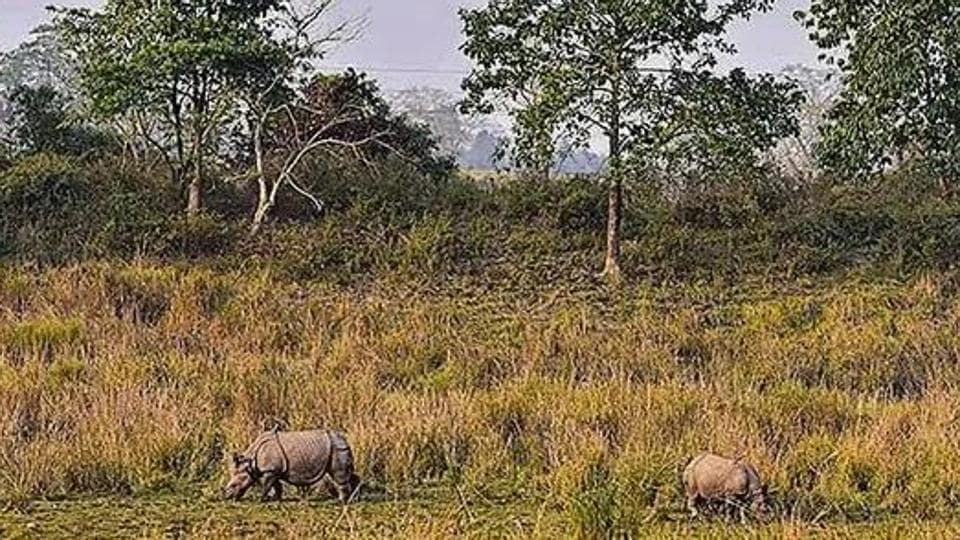
The government decision came after the Supreme Court-appointed central empowered committee (CEC) pulled up the Assam government earlier this month over slackness in protecting the animal corridors.
Information minister Pijush Hazarika said that the state cabinet has approved draft notification for creation of integrated eco-sensitive zone of KNPTR and adjoining seven protected areas and 11 reserve forests.
“Non-demarcation of eco-sensitive zone around national parks and wildlife sanctuaries leads to confusion about whether development activities can take place in those areas or not. Therefore, it is very essential to demarcate such zones close to wildlife areas,” the minister said.
Besides 11 reserve forests, the seven protected areas which will fall under the eco-sensitive zone are KNPTR and seven wildlife sancturaries- Burhachapori, Laokhuwa, Garampani, Nambor Doigrung, East Karbi Anglong and North Karbi Anglong, the minister said.
“The state cabinet also approved the draft notification for delineation and recognition of nine animal corridors to the south of KNPTR. The move will ensure safe passage of animals residing in KNPTR. This is being done as per Supreme Court guidelines,” he said.
In April 2019, acting on a letter by environment activist Rohit Choudhury, the Supreme Court banned construction of any kind on private lands which form part of the corridors. But subsequent studies detected 22 illegal constructions of which only one has been removed till date.
In March this year, CEC observed that while the nine corridors have been identified long back, the state government was yet to delineate their boundaries (spread over a total length of 44.20 km), which is a prerequisite for implementing the Supreme Court’s April 2019 order.
In December 2018, the Supreme Court passed an order directing 21 national parks including KNPTR and wildlife sanctuaries to have a 10-km area around them declared as eco-sensitive zone.



