E-Paper



Breaking a two-decade ban, Kuki group to screen Hindi movies in Manipur on I-Day
A ban on Hindi movies was imposed on September 12, 2000, following a diktat by the Revolutionary Peoples’ Front, the political wing of Peoples’ Liberation Army, an Imphal Valley-based Meitei militant outfit.

 Prefer HTon Google


When Mary Kom, a biographical Hindi movie on India’s most decorated women boxer MC Mary Kom who is from Manipur was released in 2014, it wasn’t screened in her home state because of a blanket ban imposed on Bollywood films by a militant outfit.
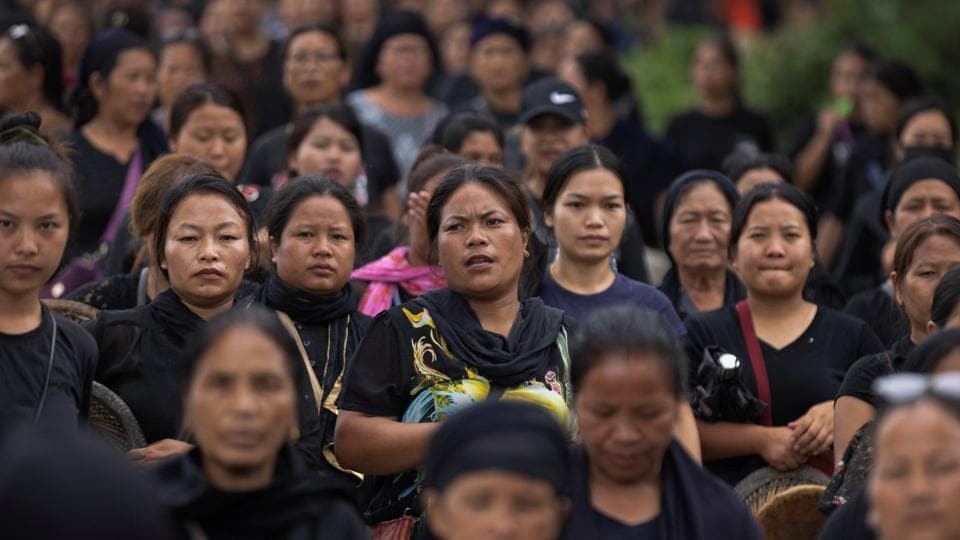
The illegal ban might still be in place but on Tuesday as the nation celebrated Independence Day, a Kuki organisation was getting ready to screen a few Hindi movies in the trouble-torn state as mark of defiance, and as a showcase of patriotism, amid ethnic clashes between Meitei and tribal Kuki communities, the latter comprising Zomi-Kuki-Hmar tribes.
“This is to show our defiance and opposition to Meitei terror groups and the pro-Meitei Manipur state government which have subjugated the tribals for decades,” a press statement issued by Hmar Students Association (HSA) said on Monday.
An office bearer of the association said the screenings on Tuesday will take place at the HSA campus at Rengkai in Kuki-dominated Churachandpur district. The screenings will begin at 7 pm, and one of the films selected to be shown is the 2019 hit ‘Uri: The Surgical Strike’.
Deadly ethnic clashes, which have so far claimed nearly 160 lives and displaced over 50,000 in the state , started on May 3 with both communities not only violently clashing but also hurling allegations against each other.
Also Read: Unpacking gender-based violence and trauma voyeurism in the Manipur conflict
Given that the history of the ban goes back more than two decades, it was unexpected that mainstream Hindi movies would come to play a part in the ongoing conflict that has deeply divided the northeastern state along ethnic lines,
A ban on Hindi movies, both in theatres and by cable TV operators, was imposed on September 12, 2000, following a diktat by the Revolutionary Peoples’ Front (RPF), the political wing of Peoples’ Liberation Army (PLA), an Imphal Valley-based Meitei militant outfit.
The outfit never gave any specific reason for the ban but the primary reason behind the move, it was believed at the time, was to protect the Manipuri culture and identity. Soon after imposing the ban, cadres of the outfit seized thousands of audio and video cassettes and CDs -- comprising Hindi movies and songs -- from outlets and publicly burnt them.
The last Hindi movie to be screened publicly in Manipur was the Shahrukh Khan starrer ‘Kuch Kuch Hota Hai’, released in 1998. Though English, Manipuri and Korean movies are screened in movie theatres in Imphal, the capital city, Hindi movies have been kept out since then.
“The time for this reign of terror is coming to an end. Every Indian citizen deserves its freedom to enjoy diverse cinema and cultural expressions. Let’s expose this oppressive narrative and demand justice,” mentioned a statement by the Indigenous Tribal Leaders Forum (ITLF), a conglomerate of Kuki groups in Churachandpur.