E-Paper



Delhi govt tables new set of rules for school fee regulation framework
New Delhi:The Delhi government on Friday tabled a new set of rules effectively extending the timeline for implementing the school fee regulation framework by giving private schools until the 2026-27 academic session to constitute and operationalise their School-Level Fee Regulation Committees (SLFRCs)

 Prefer HTon Google


New Delhi:
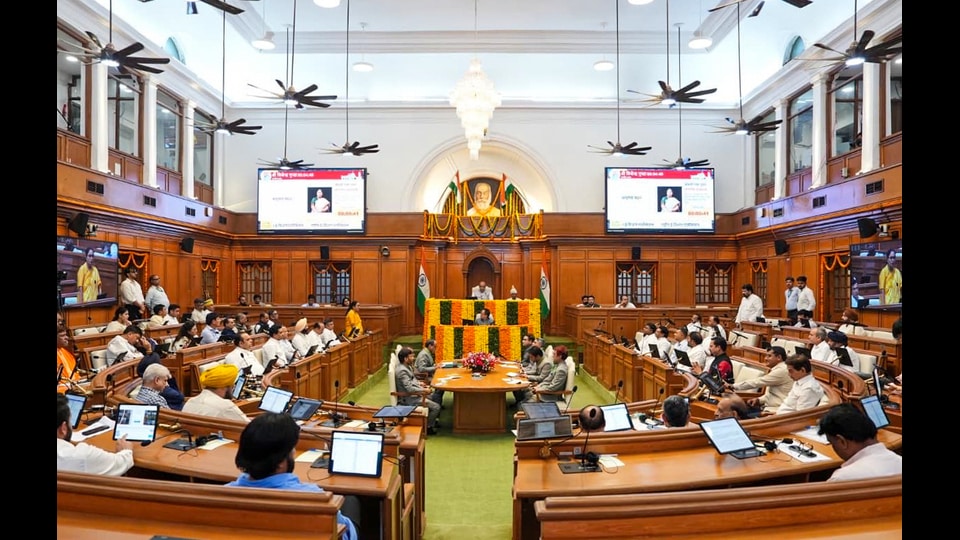
The Delhi government on Friday tabled a new set of rules effectively extending the timeline for implementing the school fee regulation framework by giving private schools until the 2026-27 academic session to constitute and operationalise their School-Level Fee Regulation Committees (SLFRCs).
The Delhi School Education (Removal of Difficulties) Order, 2026 – tabled in the Legislative Assembly – also directs schools to constitute SLFRCs within 10 days of the order being published in the Delhi Gazette.
The order was issued by invoking Section 21 of the Delhi School Education (Transparency in Fixation and Regulation of Fees) Act, 2025, which empowers the government to address practical difficulties that emerge during implementation of the law.
The Act was notified on December 10, 2025, even though it required schools to constitute SLFRCs by July 15 of the academic year, making compliance impossible for the 2025-26 session. The government said the new order seeks to address these difficulties, give effect to the legislative intent of the Act and establish workable timelines for the three-year academic block beginning 2026-27.
Delhi education minister Ashish Sood explained that the provision was invoked to ensure that fee regulation committees are constituted before the admission process for the next academic year is completed.
“We had foreseen that by the time implementation starts and the fee regulatory committees are formed, it would be June-July, admissions happened around April. To ensure that schools do not impose exorbitant fee hikes, we have now invoked our power to remove difficulties from the Act and have fixed timelines for this academic year,” said Sood.
According to the notification, the order is also intended to resolve issues relating to fee collection during the transition between two three-year fee blocks. It prescribes timelines for constituting SLFRCs and District Fee Appellate Committees (DFACs), besides specifying how schools should collect fees until fresh fee structures are approved under the Act.
Under the order, every private school covered under the Act must constitute its School-Level Fee Regulation Committee within 10 days of publication of the notification in the Delhi Gazette. However, committees that had already been constituted under the government’s earlier order dated December 24, 2025, will be deemed to have been constituted under the new order and will not have to be reconstituted.
Once the committees are constituted, school managements will have 14 days to submit details of their proposed fee structure for the next three academic years. The committees will then examine the proposals and determine fees in accordance with the Act.
The order also directs the Director of Education to constitute DFACs for every education district within 30 days.
Importantly, the notification makes it clear that until fees for the new three-year block are approved, schools cannot increase fees beyond the amount they were charging from April 1, 2025. “Till the fee is fixed for the next block of three years... the schools shall not charge any fees over and above the fee already being charged w.e.f. 01.04.2025,” the order states.
It further clarifies that after a three-year fee block ends, schools cannot levy fees above the fee approved for the final year of the previous block until a fresh fee structure is determined under the Act. Any amount collected during this intervening period will have to be adjusted against the fee eventually approved by the committees.
The government has also addressed complaints regarding fee hikes during the previous academic session. The notification states that any exorbitant fee charged by schools for the academic year 2025-26 will be regulated and dealt with in accordance with law. However, it adds that such action will remain subject to the final outcome of the petitions challenging the constitutional validity of the Act and the accompanying Rules, which are currently pending before the Delhi High Court and the Supreme Court.