
 E-Paper



DTR launches intensive patrolling on eve of Global Tiger Day
The patrolling will cover the entire length and breadth of Dudhwa National Park (DNP), Kishanpur Wildlife Sanctuary and areas of the buffer zone including the border areas adjoining Pilibhit, Bahraich and Nepal


Dudhwa Tiger Reserve (DTR) officials set out on a long route-relay-patrolling (LRP) on Friday on the eve of Global Tiger Day.
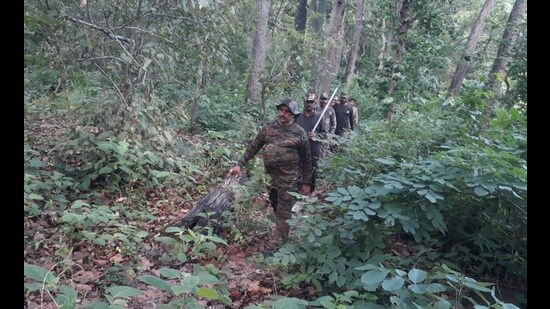
The LRP will cover the entire length and breadth of Dudhwa National Park (DNP), Kishanpur Wildlife Sanctuary and areas of the buffer zone including the border areas adjoining Pilibhit, Bahraich and Nepal, said Rengaraju Tamilselvan, deputy director, DTR.
He said that the 24-hour-long patrolling was flagged off from Dudhwa tourists’ premises on Friday morning by field director Lalit Verma, who himself is part of a patrolling team.
He added that the LRP will culminate on Saturday into a tiger awareness programme to mark the Global Tiger Day.
Rengaraju T said 30 teams comprising three officials in a team were formed to cover all the 10 forest ranges of Dudhwa. He added that each team will cover eight km and pass over the patrolling assignment to a new team.
He further said that the patrolling teams will take stern action in case any unlawful activity was noticed.
DTR to focus on grassland management
DTR officials have focussed upon grassland management to strengthen and conserve the ecological pyramid in which grasslands play a vital role.
Dudhwa enjoys around 21% of grasslands, around 66% of woodlands and 13% of wetlands, making an ideal habitat for all wild species including carnivores like tigers, leopards, wild bear; herbivores like swamp deer, wild elephants, wild boar, avian and amphibian species, reptiles, etc.
Rengaraju said that a team of experts from Madhya Pradesh had suggested five models of grassland management in order to promote the growth of palatable grasses and to weed out and control the unpalatable grasses in Dudhwa grasslands.
He said to study the effectiveness of all these models, six grassland areas measuring two hectare each were being engaged in Sathiayana range, Belrayan range and south Sonaripur range. He added the experiment on the ground would endorse which of the five models helped to maintain and promote the growth of grasslands.


