
 E-Paper



Facing critical shortage of teachers, govt schools in Prayagraj awaiting recruitment for 11 years
According to the RTE Act of 2009, it is mandatory to have one teacher for every 30 children enrolled in Classes I to V and one teacher for every 35 students from Classes VI to VIII.


PRAYAGRAJ: A clinical shortage of teachers in government-run primary, upper primary and composite schools is impacting the quality of education being provided to students in Prayagraj. This is despite the guidelines on teacher-to-student ratio issued in the Right of Children to Free and Compulsory Education Act (RTE) of 2009.
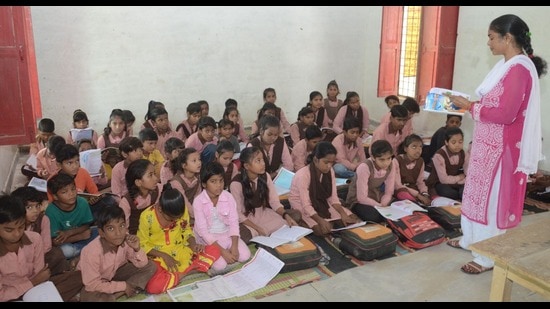
At present, there is only one teacher each in around two dozen of these schools while three government schools in the city are running without a single permanent teacher, prompting the Uttar Pradesh education board to attach teachers of other schools to these institutions.
In the government-run composite school of Kanshi Ram Awas Yojna housing scheme, Jhalwa, there is just one teacher to teach 177 children enrolled in Classes from I to VIII. Similarly, in the composite school of Rajapur, only one teacher is looking after 151 students of Classes I to VIII. The government primary school of Gyasuddinpur is facing a similar crisis with only one teacher on 106 students of Classes I to V. The situation is even more deplorable in the primary schools of Bakshi Bazaar, Katghar and Old Lukerganj as they have no teachers at all. The board is attaching teachers of other schools to teach the 84 students enrolled in these three schools.
According to the RTE Act of 2009, it is mandatory to have one teacher for every 30 children enrolled in Classes I to V and one teacher for every 35 students from Classes VI to VIII. However, about a quarter of the total posts are lying vacant in city-based government schools due to non-deployment of teachers since 2011.
This acute shortage has forced teachers to carry out the responsibility of teaching all subjects -- from English to Mathematics and from Science to Social Studies. They also supervise mid-day-meal preparation and oversee transfer of money to the bank accounts of parents through direct benefit transfer for free school uniforms, books, shoes and socks. These teachers even have to undertake household surveys due to lack of staff.
When queried on the matter, basic education department officials conceded to the shortage of teachers but remained tight-lipped on the issue of recruiting teachers as the decision is taken at the state government level. The officials, however, pointed out that not just Prayagraj, several other cities in the state are facing a similar shortage.
In Uttar Pradesh, 77% of teacher posts are lying vacant in primary schools and there are 40% vacant posts in secondary schools (Classes VI to VIII). According to RTE Act standards, there should be 14,939 teachers in 3,906 primary schools situated in cities across the state but only 3,390 teachers are working in these schools. Therefore, about 11,549 teacher posts are currently vacant. The upper primary schools are no different. Only 2,630 teachers are working in 1,198 upper primary schools against the sanctioned posts of 4,430 teachers. This leaves a vacancy of 1,800 (more than 40%) teachers.
Speaking on the issue, Suresh Kumar Tripathi, a teacher and member of legislative council from Prayagraj-Jhansi region, said, “The failure of the state government to fill up vacant posts of teachers in state-run schools and colleges is sad and a clear failure on its part. Government primary and upper primary schools have always been neglected in this regard.”
Echoing a similar opinion, Devendra Kumar Srivastava, district president, Prathmik Shikshak Sangh, Prayagraj, said, “The delay in filling up the vacant posts of teachers in government school and colleges is overburdening available teachers. On the other hand, the enrolled students are not receiving good quality education. Filling vacant teacher positions should be the government’s priority.”


