
 E-Paper



‘Gurugram has half of Haryana’s effluent monitoring non-compliant GPIs’
Most effluent monitoring non-compliant grossly-polluting industries (GPIs) of Haryana are located in the NCR, especially in Gurugram, Faridabad, and Sonepat, shows data provided by the Haryana State Pollution Control Board (HSPCB) officials


Most effluent monitoring non-compliant grossly-polluting industries (GPIs) of Haryana are located in the NCR, especially in Gurugram, Faridabad, and Sonepat, shows data provided by the Haryana State Pollution Control Board (HSPCB) officials.
Of these, more than 50% of the total non-complying units (380) are located in Gurugram alone. Officials said most of these GPIs are textile units, distilleries, and food and beverages units.
As per the letter issued by the chairman of the Central Pollution Control Board to the chairman of HSPCB, the local board has been directed to ensure that all GPIs in Haryana have online continuous effluent monitoring systems (OCEMS) installed and they should submit an action-taken report within a month.
This was after data revealed that only 285 of the 1,631 GPIs identified in the Yamuna river basin (in Haryana, Delhi, Uttar Pradesh and Uttarakhand) have installed OCEMS and provided its connectivity to the CPCB.
Of the 1,346 GPIs identified without OCEMS, 661 are operating in Haryana and are immediately required to install the system and give its connectivity to the HSPCB and CPCB for real-time monitoring of pollution being caused by the effluents discharged from these units.
In the letter, HSPCB has been asked to issue directions to owners of the 661 GPIs to install OCEMS within three months. The system has to be set up at the outlet of the effluent treatment plants for measurement parameters set up to monitor pollution.
The GPIs will also need to connect and upload online continuous effluent monitoring data at HSPCB and CPCB in a time-bound manner to ensure regular maintenance, calibration and operation of OCEMS for round-the-clock monitoring.
Haryana has also been asked to submit action-taken report within a month. S Narayanan, member secretary of the HSPCB, said, “Soon after getting directions from the CPCB, we have issued directions to all regional officers to ensure compliance of orders and have sought detailed reports on action taken in this regard.”
On whether this online monitoring system will help the pollution control board to take immediate action against the erring industries, he said, “Since the units will be connected with the servers of HSPCB and CPCB we will be able to monitor the real-time values. We have established a special cell at our headquarters for the same.”
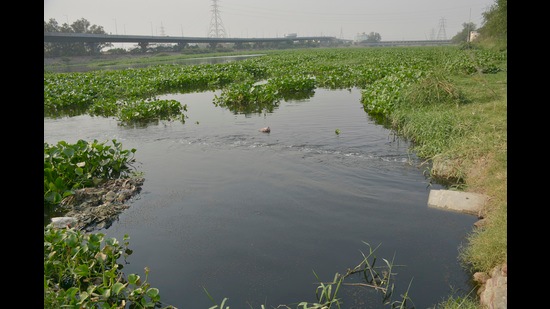
Untreated effluents from industrial units are a major cause of pollution in Yamuna and have affected the groundwater in multiple districts.
As per the recent monthly progress report by the Ghaggar and Yamuna Action Plan of the Haryana government, water quality of groundwater is being monitored at 78 locations in the catchment area of Ghaggar by the HSPCB.
Of total 78 locations, groundwater was found unfit at 38 locations. In the Yamuna belt, groundwater quality was monitored at 50 locations and was found non-complying at 10 locations.
Maximum four such locations were found in Ballabgarh and three each in Panipat and Palwal districts.


