
 E-Paper



Gujarat’s ‘prostitute village’: Why families engage girls as young as 7
In Vadia village, girls face the grim choice between child engagement and a life of prostitution, as tradition binds families to a cycle of sex work.

 Prefer HTon Google


Vadia , Child 'engagement' or prostitution. That is the stark choice facing girls in this 'prostitute village', the disparaging moniker not a throwback to a shackled past but a lived present where their weddings are fixed when as young as seven to escape the dragnet their mothers and grandmothers could not.
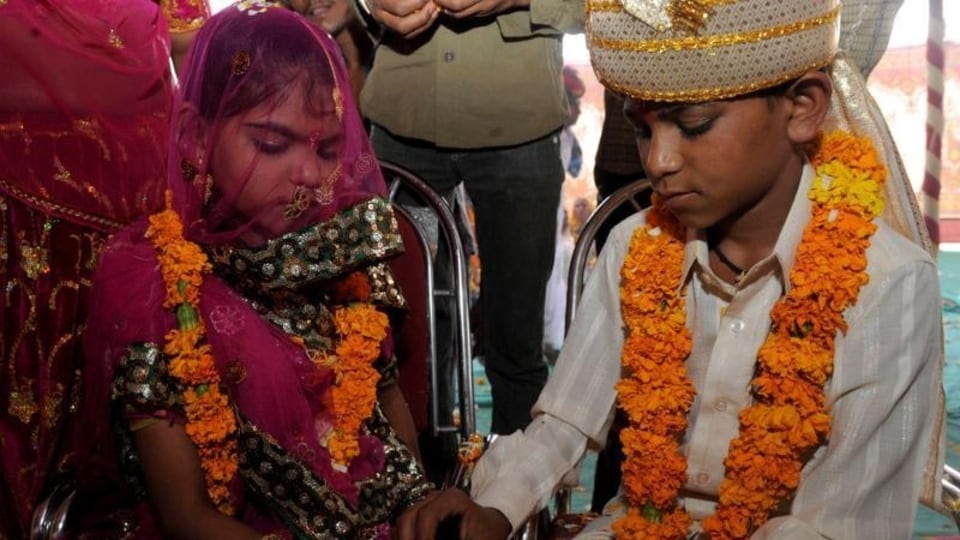
Vadia village, 200 km from Gujarat's bustling main city Ahmedabad and a world away from the aspirational India of gender equality, is where women are struggling to break free from the roles forced on them by history.
For generations, women in the traditionally nomadic tribe village have been forced into sex trade while the men acted as their agents.
It continues to this day.
In a discomfiting ritual, men from the village of 750 in Banaskantha district head to the Palanpur Tharad highway each morning. They queue up on the highway not in search of work but to solicit truck drivers, passers-by and men from neighbouring villages and cities as customers for women of their village.
And so while child marriages are banned in India, Vadia is still in a time warp, the past impinging on the present. Getting their girl children engaged is seen as a shield, a chance to marry out of the village before they are forced into sex work.
Also Read | Delhi: 3 held for forcing women into prostitution at G B Road brothel
The ironies are clear, change is making its way through the back door, navigating patriarchal pathways by opting for child marriage or rather engagement as a way out.
For several families in Vadia, which has a population of about 750, it is the only way of keeping their daughters away from the flesh trade that has long sustained the community.
A 19-year-old girl who grew up in the village is emblematic of this conflict. Her mother and grandmother are both sex workers. Studying to be a nurse in a far off college, a dream that seemed impossible, she is already married, the choice of her groom decided when she was 11.
"I grew up seeing my father and uncle getting men for both my mother and grandmother till they became 'unfit' to be serve the visitor's desires. My mother told me that it wasn't that she was forced into it but it just felt like the norm which everyone followed due to poverty. My mother was not even sure if my father was my biological father because of this," she told PTI on condition of anonymity.
"But my mother decided that she will not let me be pushed into this… I was engaged at 11 in a collective ceremony and married at 18," she added.
She is one of many.
Also Read | Govt ends segregation of sex workers, brothel-keepers from female prisoners
Led by social workers and few families, formal engagements are arranged for girls as young as seven to 12 from nearby villages or relatives. Villagers have agreed to an unwritten code of conduct girls who are engaged or married are not pushed into prostitution.
Visitors are looked at carefully.
On a hot afternoon recently, a group of men sitting idly on a cot ask searching questions of every stranger entering the village the reason for the visit. Some women, clad in colourful ghaghra-cholis, are outside, all either engaged, married or older women who have left the trade.
The women involved in flesh trade are mostly indoors while men of the family or pimps get clients for them, said a villager.
The 750 residents in the village include about 350 women.
Stalked by the stigma of indeterminable fatherhood, women in Vadia remained unmarried for generations.
"When I wanted to get my daughter married, I was told that I need to accept it as fate of girls here and not be rebellious. I got my daughter engaged at 12 and married at 18. The boy's family gave us ₹1 to confirm the engagement and some clothes to my daughter," said Chandra Sarania who was forced into prostitution when she was just 15 and now runs a small dairy.
Despite the government allotting her family agricultural land in 1963, the lack of irrigation facilities at the village forced her into sex work.
Chandra has brought up three children – two sons and a daughter – from the proceeds of sex trade but was determined not to let the shadow of her past haunt the future of her children, especially her daughter.
A glimmer of change arrived in 2012, when the first mass marriage ceremony was held after NGOs managed to convince some of the families not to force their daughters into the flesh trade. Since then, every year, such marriages or engagements have been held in Vadia.
Mittal Patel, founder of the NGO Vicharta Samuday Samarthan Manch , who fist led the initiative to organise mass marriage, said the practice has stopped several girls from forced prostitution.
"Persuading the families to stop pushing their daughters in this trade, confronting pimps who move around disguised as money lenders, sensitising society on this heinous practice, compelling parents to educate their children, organising the first ever mass marriage ceremony in the village, convincing 90 of 160 families to give up the trade… the change has been anything but easy," Patel said.
"Once girls are engaged, even the boy's family gets protective. Efforts like reviving borewells and lakes, rejuvenating farming land, providing interest free loans to families to help them start their own business have helped generate alternate means of livelihood here. We see this as an approach to curb girls as small as 12-13 years being pushed into prostitution," she told PTI.
According to Patel, some activists have raised concerns about encouragement to child marriage but a child engagement is better than prostitution and ultimately no marriage or life of dignity.
For some parents, it is also a means to give their daughter a stab at education and a better life.
Like Rameshbhai Sarania, who has two daughter, one engaged at eight and the other at 11.
"Both are married now and even completed their schooling. I fought with my brother too to not let his daughters get into the trade. Even now we find it difficult to get grooms for our girls because of the stigma attached to the village's name but it is still better than them getting into flesh trade," he said.
According to folklore, the Sarania community is a nomadic tribe which once travelled with the army of Maharana Pratap of Mewar. While the men sharpened arms such as shields and swords, women would entertain troops. It is said when India achieved independence in 1947, the Saranias found themselves out of work and for lack of options returned to prostitution as a mean to earn livelihood.
As they fight the present and face the challenges of the future, the past is clearly still to be reckoned with for the villagers of Vadia struggling to shake off the tag of 'prostitute's village'.


