
 E-Paper



Ludhiana’s air quality dips as farmers set stubble on fire
The air quality index that was between 50 and 70 in September has suddenly begun to worsen in Ludhiana; the district has witnessed nearly 200 stubble-burning cases so far

 Prefer HTon Google


With the onset of the paddy harvesting season, the air quality index (AQI) is also beginning to deteriorate. The AQI that was between 50 and 70 in September has suddenly begun to worsen.
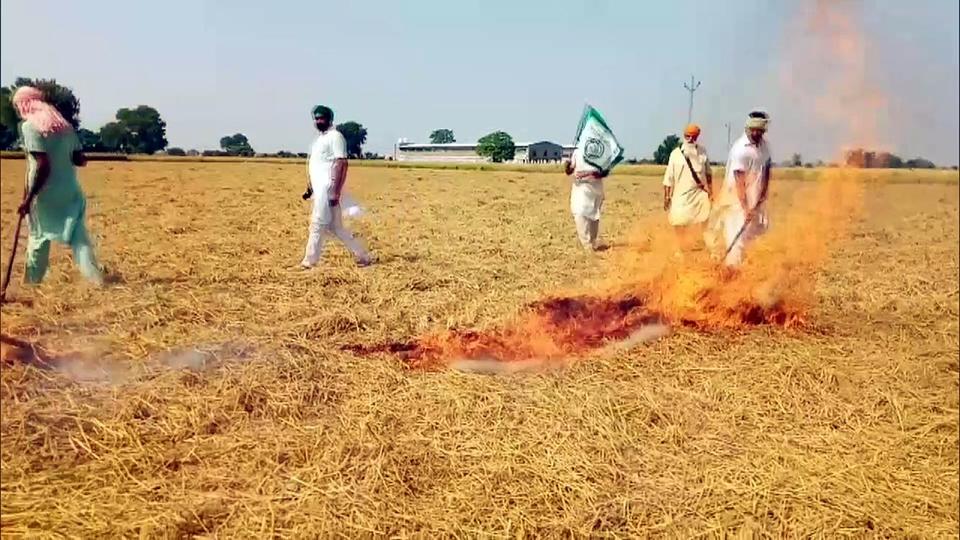
As the district has witnessed nearly 200 stubble-burning cases so far, the air quality deteriorated to 205 on October 12 and later on, the AQI remained over 100, with particulate matter 2.5 being a prominent pollutant.
The agriculture department claims that the number of stubble-burning cases is less as compared to last year, but the projection of pollution level shows otherwise.
According to Prabhjyot Kaur Sidhu, head, department of climate change and agricultural meteorology, currently, the airspeed is less than 2 km per hour.
In such a situation, the suspended particulate matter in the air gets locked at and leads to an increase in the pollution level. She said as the rain was expected in a few days, the mercury was expected to dip.
“Under such weather when the cold conditions set in and moisture levels are high, vehicular, industrial and smoke caused by stubble burning are going to increase the pollution level,” said Dr Kaur.
Chief agriculture officer of the district Narinder Singh Benipal said in order to encourage stubble management, farmers were being given machinery free of cost. He said after the use, these machines could be returned to cooperative societies.


