
 E-Paper



Monday musings: Pune’s Covid case count begins to flatten... will fatalities follow
Daily positivity rate in Pune district has been under 25%, with numbers being reported close to the 10,000-mark, every day, for the past two weeks


With cautious optimism, we can say Pune’s Covid positive cases are on the downward march. The graph plateaued more than a week ago and the trend consolidated further this week.
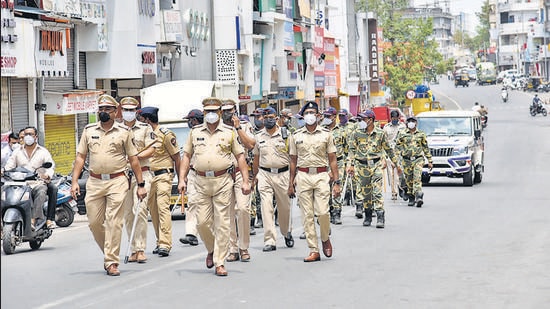
The daily positivity rate in Pune district has been under 25%, with numbers being reported close to the 10,000-mark, every day, for the past two weeks.
The daily positivity rate throughout the past week has been: 24.21% on April 24; 24.53% on April 23; 22.78% on April 22; 25.28% on April 21; 27.94% on April 20; 25.28% on April 19 and 28.82% on April 18.
Since the Covid-wave hit Pune and Mumbai a month before rest of the country, its subsidence is being noticed early in these cities as compared to other parts of India, where the peak may come later.
Fatalities, too, appear fewer as compared to the first wave, thanks to early intervention, ramped up health infrastructure and a better evolved treatment protocol.
However there’s big mismatch between number of bodies coming in for cremation and numbers reported by both, the state health office and the Pune Municipal Corporation (PMC).
As reported by Hindustan Times in its Monday (April 26) edition, an official coordinating cremation at all 21 crematoria in the city claimed over 170 bodies are coming in for final rites each day since the past one week.
However, there’s hope – and cautious optimism. With the graph for fresh cases flattening, fatalities may see a similar trend within a week; the previous wave in Pune has shown fatalities peaked around 10 days after Covid cases.
During the first wave, it took 202 days – starting from March 9, 2020, to September 16, 2020, - for cases to peak. The graph of fatalities begun its downward move by September-end, as some positive patients later became critical, and a few of them couldn’t survive.
During the second wave, the graph for Covid positive cases began moving upward from early February, crossing the previous peak of 5,048 on September 16 last year, with 5,098 cases on March 21.
It hit its peak on April 4, when the day’s positivity rate was 41.2%. Positivity rate reflects the spread of the infection and the number of positives reported for every 100 tests.
So what worked to bring down these numbers?
The answer can be both – curbs and vaccination. The inoculation drive on weekend was almost crawling due to a shortage of vaccine doses. However, overall, Pune has so far inoculated close to 2 million people, of which 1.724 million have received only the first dose, while 2.69 million have been administered both the doses. This means almost one-fifth of Pune district’s overall population has received a partial shield from Covid, at least from its severity.
With the centre’s permission for inoculation of everyone above the age of 18 and aggressive local stakeholders, Pune will continue to vaccinate its population faster than rest of the country.
The administration estimates by June 15, entire Pune will be vaccinated if supply of doses is constant and uninterrupted.
If vaccination has offered a partial shield, then curbs or lockdown - as the government preferred to call it last week – turned out to be an efficient way of containing the spread of Covid. The restrictions mandated people to stay inside their homes. Roads became deserted and markets empty. This prevented even small congregations, something that the virus loves, as it feasts on gatherings.
Earlier in March, the government had imposed a strict lockdown in places like Amravati and Yavatmal, where the tally had substantially risen. Through restrictions, the administration managed to contain the march of Covid after a strict lockdown for two weeks. This brought the positivity rate of Amravati and Yavatmal to 12% and 9%, respectively, on March 17, from 50% and 41%, respectively, a month before that.
The harsh restrictions, currently in force till May 1, may be extended further. They have been effective even it has been a heavy price to pay. Had there been no restrictions, the already overstretched health system would have come under further burden and fatalities would have grown far more. When the matter is between life and death, curbs over opening-up is certainly an option worth considering.


