
 E-Paper



NGT panel fails to address woes over biomedical waste plant: Govandi residents
The Maharashtra Pollution Control Board (MPCB) earlier this year had also said that particulate matter concentration from plant’s chimney has reduced from 277ug/Nm3 (micrograms per cubic nanometre of air) in September 2022 to 47ug/Nm3 in December 2022. The standard is 50ug/Nm3. Other key pollutants like dioxins and furans are also within the permissible limits


Mumbai: A joint committee set up by the National Green Tribunal (NGT) to inquire into allegations against the Brihanmumbai Municipal Corporation’s (BMC) biomedical waste treatment plant in Govandi has found no evidence to suggest that the incinerator is causing air pollution in the vicinity or leading to a higher than usual prevalence of respiratory ailments among the nearby population.
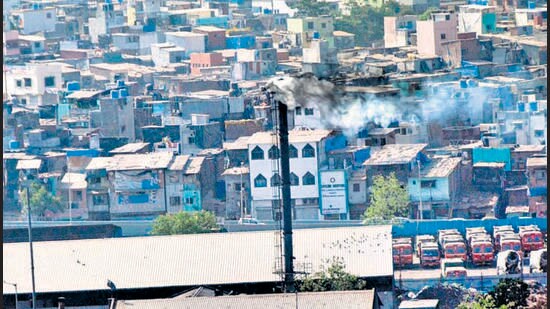
The report was submitted to the NGT on July 25, 73 days past due, as part of a petition by Govandi resident Saif Alam which seeks to relocate the plant outside city limits. The facility receives at least 17,000 tonnes of biomedical waste (BMW) from 12,877 healthcare facilities in Greater Mumbai everyday.
Contrary to what has been alleged in Alam’s petition, the NGT-appointed committee —comprising officials from the Central and State pollution control bodies and a representative of the district magistrate — concluded that the plant does not violate prescribed parameters for pollution.
The Maharashtra Pollution Control Board (MPCB) earlier this year had also said that particulate matter concentration from plant’s chimney has reduced from 277ug/Nm3 (micrograms per cubic nanometre of air) in September 2022 to 47ug/Nm3 in December 2022. The standard is 50ug/Nm3. Other key pollutants like dioxins and furans are also within the permissible limits.
However, the inquiry found that “workers engaged in the handling of BMW were provided with ordinary masks and ordinary disposable plastic gloves, except the workers engaged in incinerator operations. These workers were not provided with adequate N-95 masks, acid/alkali proof rubber gloves, and safety goggles.” The committee has said proper safety gear needs to be distributed to the workers.
“Members of HCFs are not segregating BMW as per colour coding. There were instances when recyclable plastic wastes and glass bottles were sent in yellow-colored bags, and incinerable wastes were sent in red-coloured bags. It is gathered that members of HCFs are not following the guidelines issued by the CBMWTF for proper source segregation of BMW,” the report noted.
Residents expressed their outrage over the report. According to a 2022 intervention application filed by the civil society group Govandi New Sangam Welfare Society, the plant is directly responsible for the rising number of tuberculosis cases in the locality.
Citing health department data, the group pointed out that M/E Ward alone has seen 1,877 TB-related deaths since 2013 and reports around 5,000 individual cases annually, with most cases concentrated in Shivaji Nagar, Mankhurd and Baiganwadi areas, close to the plant.
“The Tata Institute of Social Sciences (TISS) Mumbai had undertaken a baseline survey of socioeconomic conditions of M East Ward in Mumbai in 2015 titled “Social Economic Conditions and Vulnerabilities” which, in no unclear terms, reported the following concerning overall health status of people residing in M East Ward,” the application states.
“The committee has, at least, admitted that the plant cannot be located in such a dense residential area as per rules. But it does not consider all the years of pollution it has caused or suggest any remedy for the public. It recommends that the plant be shifted at the earliest, but that is old news, and no one is being held accountable for the public health crisis the plant has caused,” said GNSWF president, Faiyaz Alam.
In 2020, the state environment department instructed the plant to shift to Khalapur by February 2022. It was then pushed to May 2022, then June 2023, citing issues in obtaining environment clearance for the alternative site. “It seems the plant is going to remain in Govandi for the foreseeable future at least,” said a BMC official.
“This plant is owned by BMC, and the contractor is just an operator, hence BMC should provide a legal remedy. They should never have built such a hazardous facility in the middle of a human settlement,” said Govandi resident, Uzair Khan.


