E-Paper



Odisha begins training of master trainers for its tiger census
Odisha said it will count tigers in the state after the ‘All India Tiger Estimation’ report estimated the state has only 20 tigers, down from 45 in 2006

 Prefer HTon Google


BHUBANESWAR: The Odisha government on Friday took the first step to re-count the state’s tigers by starting the training of 20 master trainers at Chandaka Godibari in Bhubaneswar. The camp is being attended by divisional forest officers.
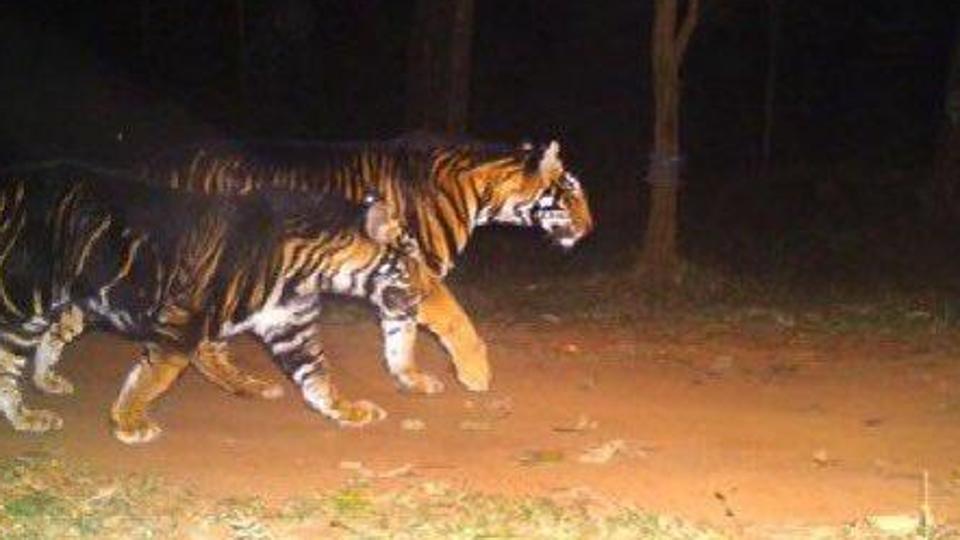
Odisha announced its decision to carry out its own headcount after the ‘All India Tiger Estimation’ report in released in July this year put the number of tigers in the state at 20, down from the 45 estimated in 2006.
Odisha’s chief wildlife warden SK Popli said the latest figure may not be a true reflection of the presence, habitat occupancy and numbers of tigers in Odisha as the sampling intensity was relatively low.
“Though the All India Tiger Estimation protocol mandates that Phase I have to be carried out in all tiger reserves, protected areas, reserve forests, protected forests, revenue forests in all wildlife and territorial divisions and Phase III in all potential tiger bearing forest blocks, in Odisha it has been carried out only in limited areas in the last cycle of the estimation. Though the forests of Odisha account for 39.31% of the state’s total geographic area, only 733 camera traps were also deployed, which is relatively low compared to 6,894 and 4,872 in the states of Madhya Pradesh and Maharashtra respectively, all from the same Central Indian landscape,” said Popli.
No tigers were reported in the Satkosia tiger reserve, where the country’s first interstate tiger translocation exercise was attempted in June 2018 with the transfer of a tiger and tigress from Madhya Pradesh.
Popli said the latest tiger estimation by the National Tiger Conservation Authority (NTCA) did not take into account large inviolate areas and suitable habitats in south Odisha districts such as Gajapati, Rayagada, Koraput and Malkangiri as well as areas adjoining Chhattisgarh such as the forests of Khariar.
“Though the Similipal Tiger Reserve in Odisha is the only known source of tiger population, there have been recent instances of movement of tigers in various areas such as Hirakud wildlife division, Keonjhar wildlife division and Sundargarh. Most of such tigers are possibly dispersing individuals, mostly immature males moving in a transient fashion across the landscape either in search of mates or a disturbance-free habitat with a good prey base. It is important that these tigers are detected, identified and tracked. Our estimation would also take note of sub-adult tigers which the All India estimation missed. The need of the hour is to have a more realistic estimation of the number of tigers in the state as well as the forest blocks/habitats occupied by them so that tigers and their habitats can be more closely monitored and protected,” he said.
Officials said after the training programme of the forest staff is completed, the laying of pugmark impression pads and survey of tiger signs will continue between October 15 and October 31. Between November 1 and January 15, camera traps would be deployed for intensive camera trapping across forest divisions. By January 31 next year, the results would be compiled for an announcement on the total number of tigers.
Officials said both, the Pugmark Impression Pads/Pressure Impression Pad method as well as camera trap would be used apart from scats, spray and scratch marks on trees, rake marks, animal kills and the alarm call by prey animals and birds.
Once beats having tiger presence have been identified from the confirmed presence of tigers (as validated by indirect evidence during sign survey), it would be followed up by deployment of camera traps. The unit of camera trap deployment shall be an area of 25 square km.
NTCA officials did not respond to queries about the Odisha government’s move.
Former NTCA member secretary Anup Nayak said deploying more camera traps will not lead to any dramatic increase in the number of tigers.
“I fail to understand why the state forest department officials failed to raise objection to NTCA’s tiger estimation procedures in 2021 when they themselves were involved. One just can’t put up a pair of camera traps anywhere in the forest as they have to be deployed in grids. The grids are chosen based on the probability of the presence of tigers based on scats, rake marks and other such signs. In MP and Maharashtra, more camera traps were used because there was a likelihood of more tigers being present in the tiger reserves there as compared to Odisha. In Odisha, except Similipal there is no other area which has a good prey base for tigers,” said Nayak
Wildlife conservationist Biswajit Mohanty also supported Nayak. “Satkosia has been finished with poachers running amok there. Similipal is also on the same path. How will tigers survive without prey? By the next tiger census, there would be no tiger left in the state,” he said.