
Sign in

Odisha CM writes to PM Modi for increasing NREGA labour budget

Patnaik requested the Union rural development ministry to increase the labour budget for the state to 25 crore person days for 2021-22

Updated on: Nov 2, 2021, 24:32:31 IST
By
Share
Share via
  • facebook
  • twitter
  • linkedin
  • whatsapp
Copy link
  • copy link

Odisha chief minister Naveen Patnaik on Monday requested PM Narendra Modi to increase the labour budget for the state under the Mahatma Gandhi National Rural Employment Guarantee Scheme reasoning that it was necessitated as migrants who had returned to their homes during the second wave of the pandemic have stayed back due to reduced level of economic activities.
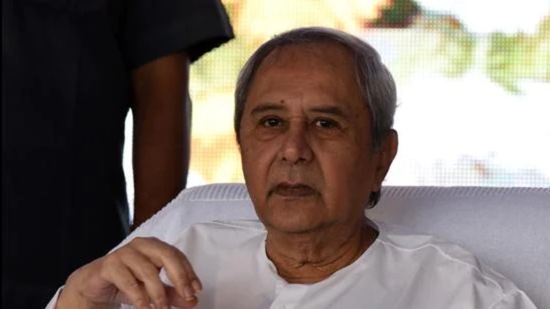
Odisha chief minister Naveen Patnaik (File photo)

In a letter to the PM, Patnaik requested the Union rural development ministry to increase the labour budget for the state to 25 crore person days for 2021-22. “As demand for wage employment under the MGNREGS in villages jumped, there is a need for an increase in the labour budget for Odisha,” Patnaik wrote while pointing out

that the state was yet to receive 1,088.72 crore - 377.91 crore as wage component and 710.81 crore as material component - under the MGNREGS.

“Timely payment of wages to poor jobseekers is the fundamental guarantee under the MGNREG Act. Similarly, timely release of payment for material is critical for the creation of tangible and durable assets under MGNREGA,” he wrote. Last week, hundreds of MGNREGA workers in Sambalpur district staged a rally at Keshaibahal demanding quick payment of their wages.

While the daily wage fixed by the RD ministry for MGNREGS work per person is 207, the Odisha government pays 308 per day in 20 migration-prone blocks in the state. Additional 200 days of works have also been approved for these 20 blocks.

In 2020-21, Odisha generated 20 crore person days’ of works, 81 per cent higher than the total person days of work created in 2019-20 financial year on account of migrants who had stayed back following the Covid lockdown. In 2019-20, 11.14 crore person days’ of works were generated under the rural job scheme which provides for livelihood security by providing at least 100 days of guaranteed wage employment in every financial year to every rural household whose adult members volunteer to do unskilled manual work.

In 2018-19, about 8.30 crore person days’ of works were generated.
  • Debabrata Mohanty
    ABOUT THE AUTHOR
    Debabrata Mohanty

    Debabrata Mohanty is a senior assistant editor of Hindustan Times who works as state correspondent from Odisha covering the state's politics, governance, public policy, natural disasters, environment and its society for close to three decades. With his long years of reporting from the state capital of Bhubaneswar, Mohanty has been known as one of the most experienced and credible journalists covering Odisha for the national English dailies. His reporting combines on-ground detail with deep institutional knowledge detailing the state's changing politics, governance issues, administrative reforms and the functioning of its public institutions. He has regularly reported on issues ranging from legislative developments and public policy implementation. Politics is his core areas of expertise as he closely tracks Odisha's political landscape, including the rise and transformation of the Bharatiya Janata Party (BJP), the Biju Janata Dal (BJD), the two principal political parties in Odisha. His long association with the state's political establishment enables him to write on contemporary developments in a larger political context. Mohanty takes a deep interest in writing human interest stories, environmental issues and documenting the impact of cyclones, floods, heatwaves, and other climate-related events in one of the most disaster-prone states. His coverage extends to public health, governance reforms and stories on accountability of government institutions. Before joining Hindustan Times, Mohanty worked with The Indian Express, Mail Today, and The Telegraph, where he covered at least six general elections and as many assembly elections. In 2007, he was selected for the prestigious Chevening Young Indian Print Journalist Programme at the University of Lincoln, United Kingdom, where he received advanced training in print journalism. In 2009 he won the Press Institute of India-International Committee of Red Cross award on conflict reporting for his on-ground reportage of 2008 Kandhamal riots.Read More