
 E-Paper



On Chhattisgarh’s election pitch, politics over paddy procurement
The incumbent Congress, and the BJP, which is looking to regain power after a five-year hiatus, have laid out a competitive buffet of agricultural schemes before farmers in Chhattisgarh

 Prefer HTon Google


SHAKTI/KORBA: With a sickle in his hand, 52-year-old Kushal Rathia stands under a mango tree, staring at his four-acre paddy field. He is alone; the sun has only just risen. His family, part of the Kanwar tribe, will follow in a few hours, once the morning chores have ended. He has time to think. But with days to go before the second phase of Chhattisgarh’s assembly elections, Rathia is not contemplating from where to begin cutting his fields; he is wondering which political party will give him the best return on his crop.
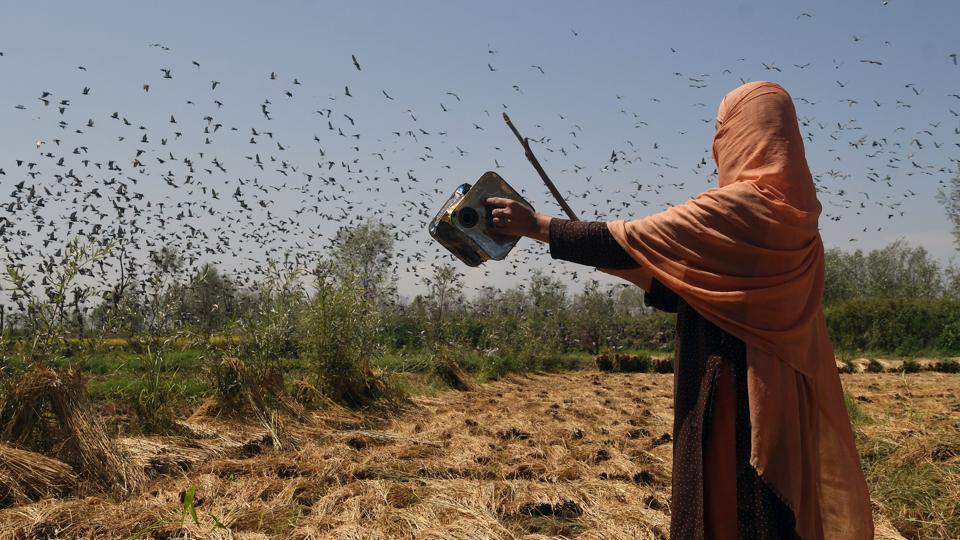
Rathia’s constituency is Chandrapur, a predominantly agrarian constituency that abuts the districts of Raigarh and Sakti, in the rural plains of Chhattisgarh. With twenty seats going to the polls in the first phase of the state elections on November 7, the other seventy will vote on November 17. And in the calculations of the two main political parties, the issue of paddy affects at least 50 of these seats.
It is not surprising then that both the incumbent Congress, and the BJP, which is looking to regain power after a five-year hiatus, have laid out a competitive buffet of agricultural schemes before farmers like Rathia.
On November 3, the BJP announced that they would procure paddy at ₹3,100 per quintal, up to 21 quintals per acre. On November 5, the Congress responded with a counter promise - ₹3,200 per quintal up to 20 quintals per acre, up from the current 15. The Congress procurement will happen in instalments; the BJP’s in one fell swoop. But the Congress has promised a loan waiver; the BJP has not.
In Chandrapur, the two principal contenders in the fray are the BJP’s Sanyogita Judev, the daughter-in-law of the late Dilip Singh Judev, fighting against Ramkumar Yadav, the sitting Congress legislator. Asked which party he would vote for, Rathia said there was still time to think. “In my village, people will vote for both parties. I have not decided yet. There is still time,” Rathia said.
He expected frenetic activity over the next few days. The candidates will arrive; party workers will do the rounds. “Like every year, outsiders will come and distribute money and chicken to the villagers to tempt them to vote for them,” Rathia said.
But the cost-benefit analysis in Rathia’s mind is clear, and he is arriving at a conclusion. “Whoever waives my farm loans will get my vote. I don’t know who the candidate is, but I have been told that is what the Congress promised. Even last time, when the Congress came, ₹80,000 of my loads were waived off,” Rathia said.
But barely a few kilometres away, Ramesh Sahu has done the same analysis and arrived at an altogether different conclusion. “The BJP gives the money in one instalment while the Congress gives it to us in four. That is why in our village, we will vote for the BJP,” the resident of Tundri village said.
40 kilometres away from Tundri, in the small town of Jaijaipur which is an assembly constituency by itself, Jaduram, a Dalit, says he will now shift his political loyalties. Jaijaipur is one of the two constituencies that the Bahujan Samaj Party won in 2018. But Jaduram is now clear. There is little point in voting for a party that doesn’t make an offer, juxtaposed with those that do. “I have decided to change and we are all considering what the best option is. We are farmers and the best offer before us will get our vote,” Jaduram, who has three acres of land, and a debt of ₹80,000 said.
“People of the state know whom to trust in the present situation. We have made every possible attempt to strengthen farmers, the poor and tribals in the last five years and our 2023 manifesto has announcements for every section of society. From farmers to tribals and women we will work for the betterment of each and every section of the society,” said RP Singh, Congress spokesperson.
Senior BJP leader and spokesperson Sacchainand Upasane said the Congress was going on making promises without considering the impact on the public exchequer. “In 2018, they made similar announcements but didn’t fulfil many promises like the liquor ban. We are offering Modi ji’s guarantee and we will fulfill ours... People of the state have figured out the Congress and will never vote for them,” Upasane said.
Harsh Dubey, a Chhattisgarh-based political analyst said that the battle for paddy is the single biggest electoral factor in the second phase of the elections. “The BJP’s announcements mean that their core voter may not move to the Congress. But they are battling a perception that they have been forced to make these announcements because Congress has procured paddy at ₹2,500 for five years, and waived off loans in 2018. The Congress however has to deal with other issues like local anti-incumbency which they hope their paddy promises will be able to counter,” Dubey said.
-kW0H-U20214218012MgB-250x250%40HT-Web.jpg)


