E-Paper



SIR in Tamil Nadu to begin from November 4, ECI tells Madras HC
The SIR has been undertaken at least ten times in the past, he said, and was last conducted in Tamil Nadu in 2002 and 2005.

 Prefer HTon Google


The Election Commission of India (ECI) on Monday informed the Madras high court that the Special Intensive Revision (SIR) of electoral rolls in Tamil Nadu will begin on Tuesday, November 4, marking the start of a statewide exercise to prepare an entirely fresh list of voters.
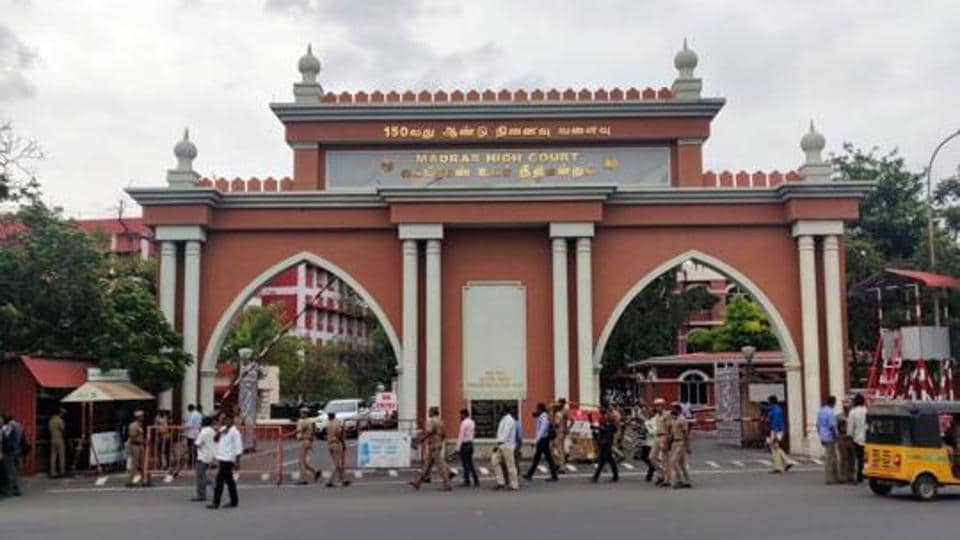
ECI told a bench of chief justice Manindra Mohan Shrivastava and justice G Arul Murugan that unlike the routine Special Summary Revision (SSR), this SIR will require every existing voter to submit a new enumeration form to retain their name on the rolls and such exercise will thus, lead to creation of fresh list of eligible voters in the State.
Niranjan Rajagopalan, the standing counsel for ECI, said that while SSR merely updates the existing rolls by adding or deleting names upon request, SIR begins from scratch. Every voter will have to fill out an enumeration form, which can either be downloaded from the ECI website or obtained from Booth Level Officers (BLOs).
BLOs will then collect the completed forms and issue an acknowledgment to each voter. No documents need to be attached unless there is a mismatch between the voter’s details and the existing records. The BLOs will also conduct door-to-door verification to identify those who fail to submit their forms, ECI told the court.
For first-time voters and those who have migrated to Tamil Nadu from other states, a separate declaration form must be submitted along with proof of age and identity, ECI submitted.
Rajagopalan assured the court that BLOs will carry sufficient copies of all forms for distribution. He noted that the Constitution and the Representation of the People Act, 1950, empower the Commission to conduct both SSR and SIR exercises.
The SIR has been undertaken at least ten times in the past, he said, and was last conducted in Tamil Nadu in 2002 and 2005. The objective, he stressed, is to ensure that “no eligible citizen is left out and no ineligible person remains on the rolls.”
According to the ECI’s schedule, training of officials concludes on November 3, with enumeration running from November 4 to December 4. The draft electoral rolls will be published on December 9, followed by a period for claims and objections until January 8, 2026. Inquiries into these objections will be completed by January 31, and the “final voters’ list” will be published on February 7, 2026.
The submissions were made during the hearing of a petition seeking revision and “purification” of electoral rolls in Tambaram and T Nagar constituencies in Chennai. The petition was filed by former AIADMK MLA B Sathyanarayanan, who lost the 2021 Assembly election from T Nagar by just 137 votes.
In his plea, Sathyanarayanan alleged widespread irregularities, including deletion of genuine voters and inclusion of duplicate and deceased names. He accused BLOs of filing reports without field verification and urged the court to direct the ECI to conduct a transparent re-verification, warning that negligence could undermine electoral integrity and public trust.
ECI, however, submitted that the SIR will take care of all concerns raised in the petition.
The bench recorded ECI’s submissions and directed the High Court Registry to also list a related petition from Karur on November 13, so that all three cases can be heard together.