
 E-Paper



Smoggy days ahead, crackers will compound pollution, warns PAU
Diwali is the time to be cautious, as stubble burning and crackers compound pollution leading to smoggy days in Punjab; low wind speed contributes to the pollution and causes smog, PAU has found


Ludhiana With increasing incidents of stubble burning leading to a rise in pollution levels across the state, the state has another battle to fight. Punjab Agricultural University (PAU) has forecast smoggy days ahead, and bursting of crackers on Diwali will compound pollution woes.
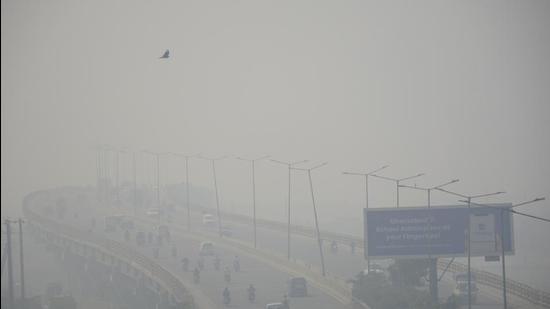
PAU department of climate change and agricultural meteorology head Prabhjyot Kaur Sidhu said, “The wind speed across the state is around 3km per hour since the last week of October, contributing immensely to worsening the pollution.”
She added, “Low wind speed and dip in temperature makes a closed-room condition in which hardly anything enters or goes out. So, the smoke becomes a suspended particle that just keeps hanging in the air.” On the possible remedy for this, she added, “The only possibility of improving air quality is due to western disturbance which brings rain or any climatic condition which leads to high-velocity winds, which is highly unlikely, at present.”
She added that on Sunday (October 31), the Air Quality Index (AQI) in Ludhiana was 254, on Monday it dipped to 261. The AQI of Amritsar was recorded at 245 on Monday; Patiala 231; Jalandhar 220. An AQI between 200 and 300 is classified as poor and causes breathing problems for most of the population. Firecrackers around Diwali worsen the problem, with smog witnessed for 12 days in 2020; 10 days in 2019 and 11 days in 2018 in November.
‘DELAYED CROPPING CYCLE TO BE BLAMED’
Prabhjyot added a delayed cropping cycle is also contributing to the pollution. Earlier, paddy crop was harvested by September, when the temperatures were high and the wind speed remained around 9km per hour. “High temperature and strong wind evaporate smoke. Conversely, when the weather remains still and chilly conditions, along with fog, envelop the state in October and the beginning of November. Under such a situation, setting stubble residue on fire could be hazardous,” she added.
DC CLAIMS 37% DIP IN STUBBLE BURNING
Even as the AQI is deteriorating each passing day, Ludhiana deputy commissioner Varinder Kumar Sharma on Monday claimed that Ludhiana has witnessed 37% reduction in stubble burning cases over the past year. Addressing farmers during a Kisan Mela organised by the agriculture and farmers’ welfare department, the DC said, “ The district has witnessed a dip in stubble burning incidents by 37% this time from September 15 to October 31 to 826 from 1,316 cases.”


