
 E-Paper



How fasting became a weapon of India’s freedom struggle
The news that Babu Harendranath Munshi had died on hunger strike inside Dhaka Jail sparked widespread public grief and political indignation in India

 Prefer HTon Google


Humanity has forever turned to fasting to connect with the divine, clear the mind, or heal the body. In modern Indian history, however, it evolved into a powerful instrument of political resistance.
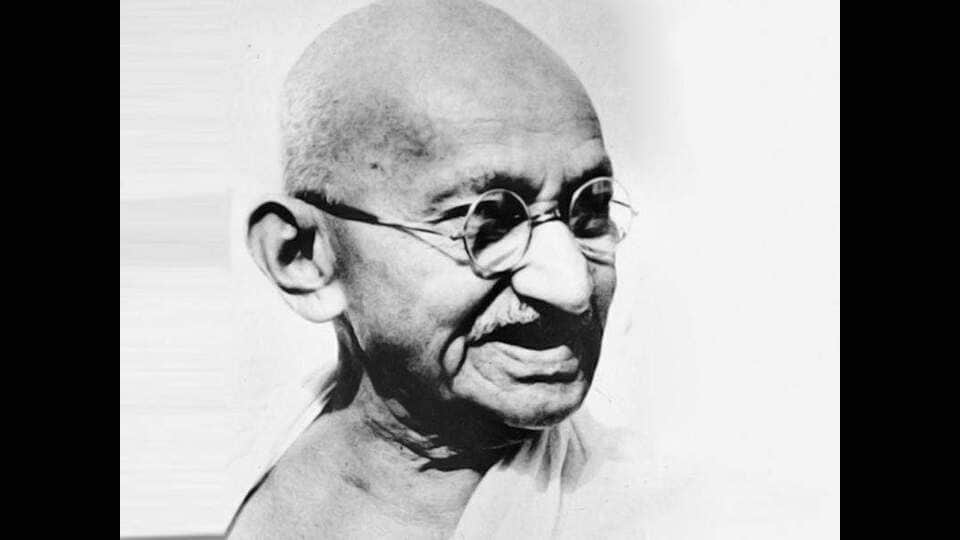
The news that Babu Harendranath Munshi had died on hunger strike inside Dhaka Jail sparked widespread public grief and political indignation in India.
To honour his memory, public memorial meetings were convened in Pune on February 1, 1938 and under the chairmanship of Popatlal Shah, the City Congress Committee organised a gathering at the Reay Market grounds. At the same time, another public assembly was held in front of the historic Shaniwar Wada that was organised by the local branch of the Democratic Swarajya Party, presided over by VV Sathe. At both venues, prominent leaders delivered speeches condemning the policies of the provincial ministries and the Imperial Government of India.
Munshi was one of the accused in the Titagarh Conspiracy Case. This major sedition trial originated from a police raid on a revolutionary hideout in the Titagarh area, near Calcutta. The raid, conducted in the early 1930s, yielded explosives, bomb-making equipment, and revolutionary books and pamphlets. Authorities subsequently arrested 29 people. They were charged with conspiracy to wage war against the British Crown.
Munshi commenced his hunger strike on January 21, 1938, joining fellow revolutionary Prafulla Sen, who had initiated the fast on January 11. The strike was a protest against the inhuman treatment of political prisoners, their classification as common criminals, and specific local grievances against jail officials in Dhaka Central Jail.
When news of the hunger strike spread through Pune’s Marathi newspapers, Govind Vaman Puranik, a twenty-two-year-old living near Shanipar, joined the fast along with his wife. According to a report published on January 24, 1938, in the Marathi newspaper “Kaal”, Puranik announced that he and his wife would survive on only water until the imprisoned freedom fighters ended their hunger strike.
As “Kaal” noted, Puranik was a Gandhian who had fasted on previous occasions. He was drawing on a tradition that Mahatma Gandhi had built into a core weapon of anti-colonial resistance, turning self-denial into the ultimate expression of Satyagraha, a relentless, nonviolent insistence on truth.
Satyagraha was never meant to be a political stunt or a tool of manipulation. As Gandhi clarified in the pages of “Young India”, “Satyagraha is literally holding on to Truth, and it means, therefore, Truth force. It excludes the use of violence because man is not capable of knowing the absolute truth and, therefore, not competent to punish.”
For Gandhi, this truth force demanded an almost superhuman level of inner peace and goodwill toward one’s oppressor. Writing later in his journal, “Harijan”, he emphasised the radical tenderness required of this method, stating that it “excludes every form of violence, veiled or unveiled, and whether in thought, word or deed. It is a breach of Satyagraha to wish ill to an opponent or to say a harsh word to him or of him with the intention of harming him. Satyagraha is gentle; it never wounds. It must not be the result of anger or malice. It is never fussy, never impatient, never vociferous. It is the direct opposite of compulsion. It was conceived as a complete substitute for violence.”
As Gandhi popularised Satyagraha, hunger strikes spread rapidly across prisons, regional movements, and student protests.
When Gandhi launched the Civil Disobedience Movement in 1930, Professor Kothare went on a fast, sitting at the gates of the Science College in Nagpur to urge students to abandon their academic courses and join the national struggle.
Even earlier, in April 1927, accused members in the famous Kakori Conspiracy case initiated a hunger strike inside prison, demanding to be recognised and treated as political prisoners rather than common criminals.
In July 1930, Subhash Chandra Bose embarked on a fast to express solidarity with fellow striking prisoners inside Alipore Jail. In September that very year, a satyagrahi named Parvatidevi launched a hunger strike at Lucknow Central Jail after prison authorities confiscated her charkha (spinning wheel). Her fast concluded three days later, only after her charkha was returned. In the same month, inmates at Bijapur Jail went on a hunger strike after the jailer forcibly confiscated a prisoner’s Gandhi topi (cap) and refused to return it. In 1931, Appasaheb Patwardhan went on a hunger strike inside Ratnagiri Jail after prison officials prohibited him from spinning yarn on his charkha.
Defiance over basic living conditions remained a recurring theme. In June 1930, eighty prisoners, among them Sardar Vallabhbhai Patel, went on a fast in Sabarmati Jail to protest filthy, inedible food. In June 1932, Yerwada Jail became a battleground when nearly thirty-five Karnataka and Sikh political prisoners undertook a three-week fast because the prison food was utterly alien to their native diets. They ended their strike only after a direct appeal from the Congress leadership.
For others, the fight was against outright abuse. Women political prisoners in Benares fasted in 1932 against deplorable custodial treatment, a method mirrored by Senapati Bapat, who struck against the harsh abuses he suffered after being transferred to Hyderabad jail in Sindh.
Jogesh Chatterji fasted inside Lucknow Jail in 1936, while that same year at Krishnanagar Jail, Prafulla Narayan Malik undertook a 120-day fast. It was only after a personal appeal from Pandit Jawaharlal Nehru that Malik finally ended his ordeal. Similar fasts were recorded in the 1930s all over India.
Hunger strikes were adopted across diverse sections of society. In 1936, students belonging to the so-called “lower castes” at the Normal School in Amravati observed a three-day fast to demand the fulfilment of their educational rights. The tactic extended to economic grievances as well, such as in the summer of 1935, when Kapurthala farmers fasted to protest unjust agrarian laws.
The moral weight of fasting also sparked intense debate among national leaders over its appropriate context. When Mrinaldevi of Bengal’s Nadia district launched a fast outside prison to protest the mistreatment and poor food given to political prisoners across India, Subhash Chandra Bose wrote to her urging her to stop. Bose argued that while a hunger strike was the ultimate weapon for a helpless prisoner inside a cell, those on the outside should not resort to such extreme measures. Instead, he maintained, citizens on the outside must relentlessly campaign and battle authorities to redress the prisoners’ grievances.
Puranik and his wife, however, had decided to fast outside the jail. I do not know if they gave up the fast after Munshi’s death. The archives and newspapers remain silent about what ultimately happened to the couple.


