
 E-Paper



SUIT developed by IUCAA set to launch onboard ISRO’s Sun mission on Sep 2
The Solar Ultraviolet Imaging Telescope (SUIT) is one of the payloads in this mission developed by a team of 50 scientists, researchers and research students from the Inter-University Centre for Astronomy and Astrophysics (IUCAA), Pune

 Prefer HTon Google


Pune
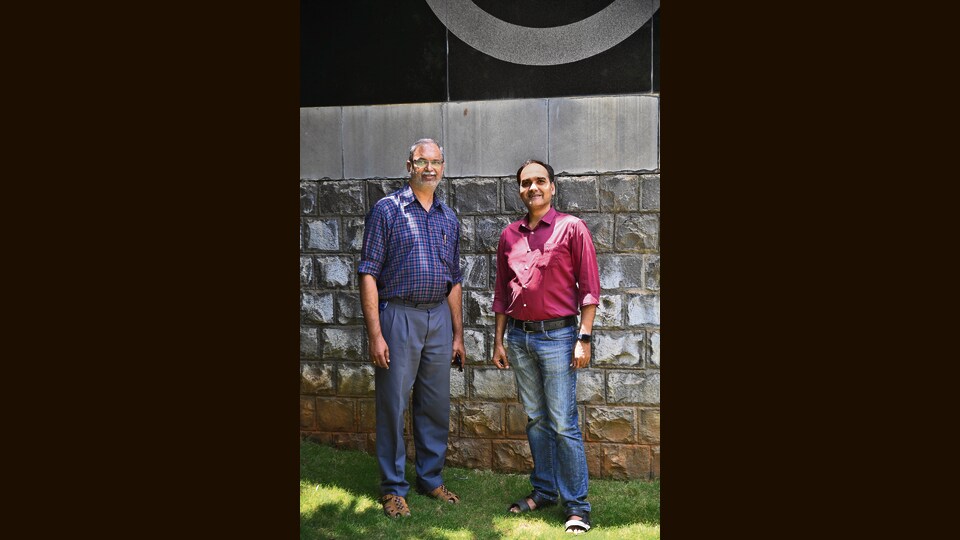
Come Saturday, September 2, the Indian Space Research Organisation (ISRO) will launch ‘Aditya L1’, its Sun mission, to study various activities taking place on and around the Sun. The Solar Ultraviolet Imaging Telescope (SUIT) is one of the payloads in this mission developed by a team of 50 scientists, researchers and research students from the Inter-University Centre for Astronomy and Astrophysics (IUCAA), Pune. Hindustan Times spoke with senior scientists from the SUIT team involved in the development of the telescope that was handed over to ISRO in June this year.
Recalling the 10-year journey, professor Durgesh Tripathi, principal investigator of SUIT at IUCAA Pune, said, “In 2013, there was this announcement opportunity from ISRO about the Aditya L1 mission to study the Sun. So, along with professor A N Ramaprakash, principal investigator, Instrumentation and dean, Visitor Academics Programmes, IUCAA Pune, and other senior scientists, we wrote a proposal to ISRO after which it went through a number of reviews and was approved in 2015. We then started working on this project from 2016. After years of hard work, research and dedication, we delivered SUIT to ISRO in June 2023.”
SUIT will be launched onboard India’s maiden Sun mission on September 2 and is one of the seven instruments of the mission. Through SUIT, scientists will be able to know the dynamics and complex processing occurring on the outer layers of the Sun.
“The SUIT payload is very unique; it is going to inspect a wavelength range which has not been fully looked at from anywhere in the world. We found a niche area where this wavelength range has not been exploited completely; so, we planned for this telescope. It is going to look at 2000 Angstrom to 4000 Angstrom, so the beauty of this is that it will provide information on two fronts, one of which is the solar atmosphere or the lower and middle solar atmosphere. It will play an important role in how ozone forms, how oxygen forms, and how they dissociate,” professor Tripathi said.
“Also, we have these explosions happening all the time on the Sun and these are important because our life is so dependent on technology. These explosions create something called ‘space weather hazard’. So, we really need to understand when these explosions occur so that we can reduce their impact by switching off all the satellites for a while rather than letting them get burned,” professor Tripathi said.
About the challenges faced by the IUCAA team in the development of SUIT, professor Ramaprakash said, “The main challenge was to develop such a unique payload which can look at the Sun comprehensively at these wavelengths. Since contamination is a big challenge at such wavelengths, we had to carry out several experiments…”
“The other challenge was to have an ultra-clean lab to conduct these experiments, in which payload had to be put together, tested and made to work properly. Such ultra-clean labs are not easily accessible, so we constructed a lab at ISRO where they provided us the space. It took us more than two years just to develop such a lab,” professor Ramaprakash said.
“The Sun is a very active star, so to study various processes and activities happening on the Sun means that the payload is not just taking images but also reacting to these activities. For this, intelligence has to be built into the payload; a decade has been spent in building such a payload,” he said.


