
 E-Paper


Karnataka seeks 7 TMC water from Ujani dam amid drought in Maha
The Solapur district administration last week received a letter from the Vijayapura district collector (DC) in Karnataka, seeking water for villages along the Bhima River

 Prefer HTon Google


The Karnataka government has sought the release of seven thousand million cubic feet (TMC) of water from Ujani dam, prompting the Maharashtra government to assess the request against its own drinking water requirements amid conditions of drought and water scarcity.
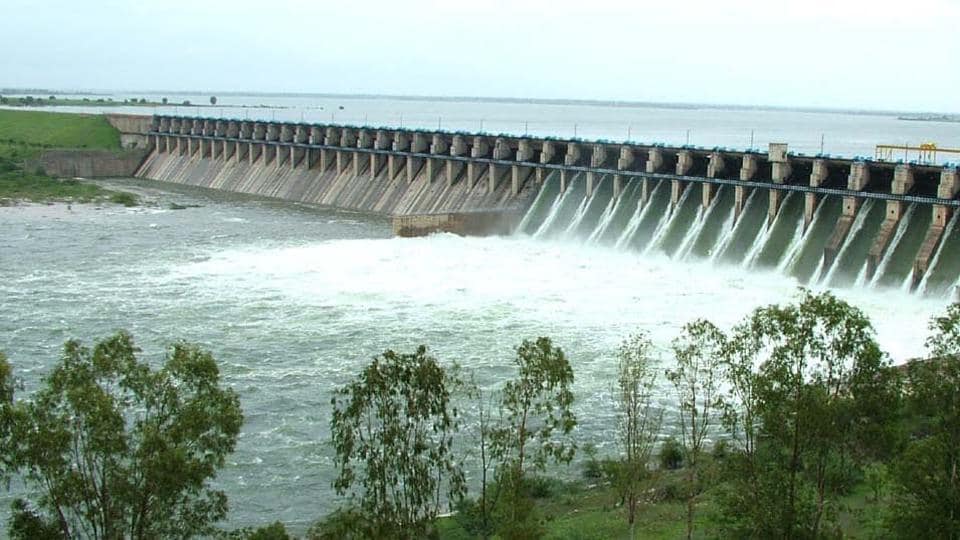
The Solapur district administration last week received a letter from the Vijayapura district collector (DC) in Karnataka, seeking water for villages along the Bhima River; officials said. The Maharashtra irrigation officer said that the request will be examined at the state level, with the two states expected to assess water availability and their respective requirements before a decision is taken. S S Khandekar, superintending engineer, Bhima irrigation division, told Hindustan Times, “Yes, the Vijayapura DC wrote to us last week seeking 7 TMC of water which may be used for a water supply scheme for villages along the Bhima River. Since the issue concerns two states, the decision will be taken at the state level.” Hindustan Times attempted to contact Vijayapura DC Dr Anandh K for comment but he was unavailable.
Ujani dam is a key source of water for Solapur city and the surrounding areas. According to the Maharashtra water resources department, the reservoir had 73.58% of its water stock on October 27 as compared to 100% on the corresponding date last year. The reservoir’s total storage capacity is around 117 TMC, approximately 54 TMC out of which is live storage.
These capacity figures and the reported current stock need to be verified against official reservoir data before publication. The Solapur district administration is expected to assess the reservoir’s current storage, anticipated inflows, and the district’s drinking water requirements before making a recommendation.
Officials said that the final decision with regard to the request will be taken at the state level after the governments of the two states assess their respective needs and available water resources. Significantly, the request comes at a time when Maharashtra is grappling with the consequences of deficient rainfall during the 2026 monsoon.
The state has declared drought in 265 of its 358 talukas, with crop losses and concerns over drinking water and fodder availability reported in several regions. The state government has also directed local bodies to implement a minimum 10% water cut from October 16 and prioritise drinking water supplies. Industrial units have been asked to recycle at least 30% of the water they use.
Tanker dependence continues in Solapur
The scale of water shortage is evident in Solapur district, where 3.37 lakh people and 98,959 livestock across 165 villages and 853 hamlets are being supplied water through as many as 178 tankers as of October 26; according to the district administration.
“The administration has also acquired 70 water sources, including 44 wells and 26 borewells, to address the shortage and ensure supplies to affected areas,” said V D Rathod, executive engineer in the Zilla Parishad’s water supply department. Tanker supplies are continuing regularly in scarcity-hit areas, he said.
At 45 tankers supplying water to 42 villages, Mangalwedha has the highest number of tankers; followed by Sangola, where 39 tankers serve 28 villages; Madha, where 19 tankers serve 15 villages; and north Solapur, where 16 tankers cover nine villages. Mangalwedha and Sangola together account for 84 of the district’s 178 tankers, underlining the severity of water shortage in these areas. Whereas Akkalkot has 13 tankers serving 18 villages; Malshiras 11 tankers supplying 11 villages; Mohol 11 tankers covering seven villages; Karmala 10 tankers supplying 13 villages; south Solapur 10 tankers serving seven villages; and Barshi four tankers supplying 15 villages. Pandharpur is the only taluka in the district where no tankers have been deployed.
With tanker supplies continuing across affected villages and hamlets, the administration faces the challenge of meeting local drinking water needs while assessing the implications of Karnataka’s request for additional water from Ujani dam.


