
 E-Paper



Maharashtra introduces balloon tamponade in govt hospitals to curb maternal deaths from haemorrhage
Pune: To reduce maternal deaths caused by severe bleeding during pregnancy, the Maharashtra govt has introduced use of balloon tamponade at all govt hospitals

 Prefer HTon Google


Pune: To reduce maternal deaths caused by severe bleeding during pregnancy, the Maharashtra government has introduced the use of balloon tamponade at all government hospitals handling deliveries for the first time, officials said.

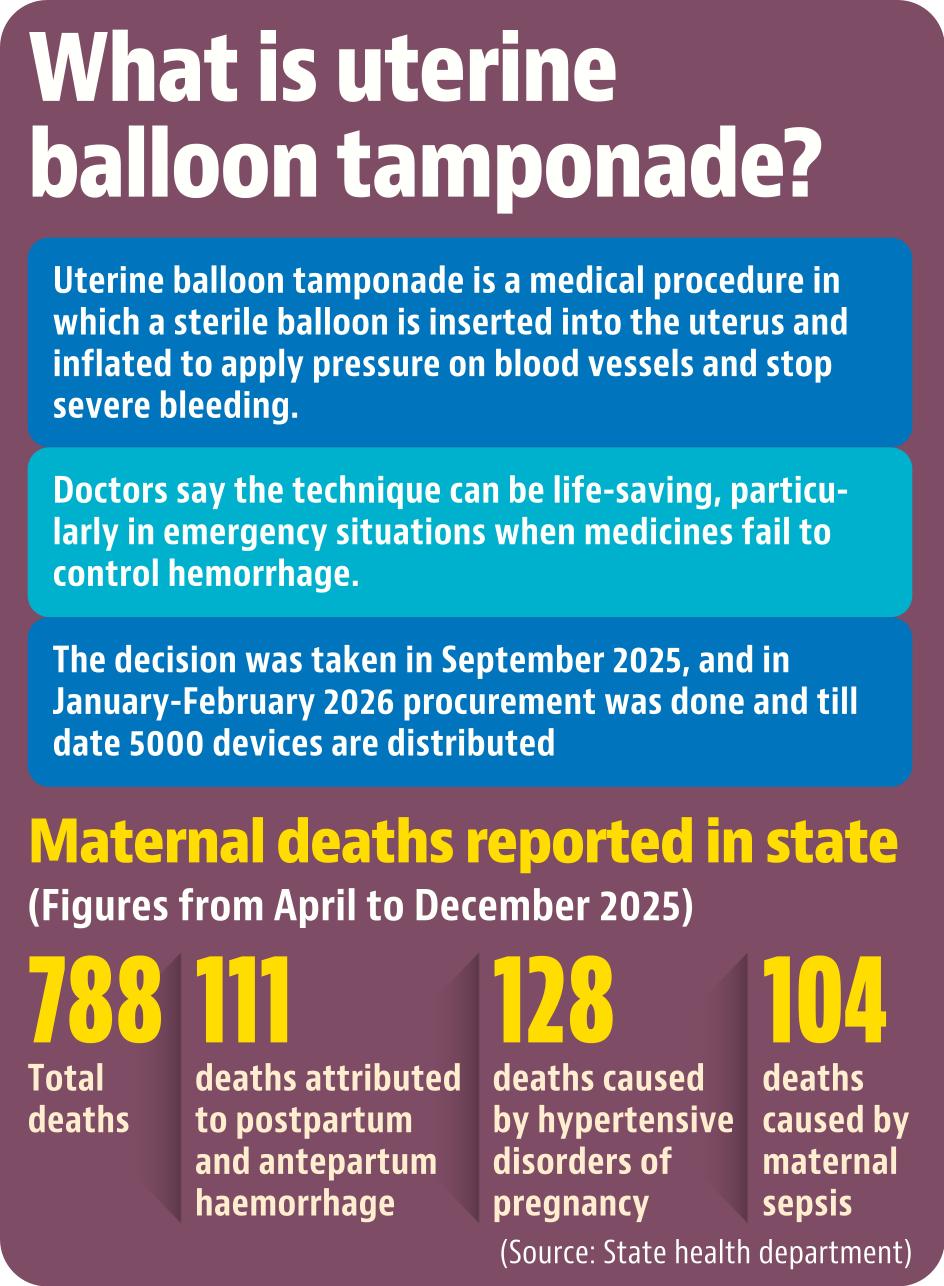
Uterine balloon tamponade is a medical procedure in which a sterile balloon is inserted into the uterus and inflated to apply pressure on blood vessels and stop severe bleeding. Doctors said the technique can be life-saving, particularly in emergency situations when medicines fail to control hemorrhage, officials said.
According to officials, the decision was taken because Postpartum Hemorrhage (PPH), severe or excessive bleeding after childbirth, is the leading cause of maternal mortality, contributing to a large number of maternal deaths. PPH can occur after delivery or up to 12 weeks postpartum, they said.
The decision was taken in September 2025, procurement was done in January-February 2026, and to date, 5000 devices have been distributed, said officials.
Dr Sandeep Sangale, joint director, State Family Welfare Bureau, said the devices have already been distributed to district hospitals, sub-district hospitals and rural hospitals across all 36 districts. “Healthcare staff and doctors have been trained in using uterine balloon tamponade. It is an effective and globally recognised method to control haemorrhage and reduce maternal deaths and complications,” he said.
As per officials, the uterine balloon tamponade device, designed specifically for managing postpartum haemorrhage, has been introduced as part of the initiative. Postpartum haemorrhage is defined as blood loss of 500 ml or more after childbirth and is the leading cause of maternal mortality in India. As many as 5,000 devices have been distributed to all facilities handling deliveries, and most have started using them.
Another senior official said the health department will soon start a training-of-trainers (ToT) at the circle level in a couple of months. “The trainers will then train the gynaecologists, medical officers, nurses and auxiliary nurse midwives (ANMs) to ensure how safely and effectively the device must be used. Master trainers will be appointed at the regional and district levels, and repeat training sessions will be held to strengthen emergency response at delivery centres,” said the official, requesting anonymity.
According to data provided by the health department, the state reported as many as 788 maternal deaths from April to December 2025. Of this, the state maternal death audit committee has reviewed 732 maternal deaths. Of these, 111 deaths were attributed to postpartum and antepartum haemorrhage (PPH and APH), while 128 deaths were caused by hypertensive disorders of pregnancy (HDP) and 104 by maternal sepsis, according to the report.


