
 E-Paper



Pune district collector orders removal of encroachments from district flood lines
The expert panel has mooted that the PMC put in place a mechanism to keep constant check on encroachments along with commissioning a stormwater drainage system for evacuation of rainwater


Pune district collector Dr Suhas Diwase has directed the Pune Municipal Corporation (PMC) and irrigation department to remove encroachments from riverbeds and flood lines as part of the preparedness for disaster management. The district collector, who is the president of the district disaster management authority, issued orders to the heads of the PMC, irrigation department and Pimpri-Chinchwad Municipal Corporation (PCMC) during a review meeting on ‘disaster management preparedness’ at the District Collectorate on Wednesday.
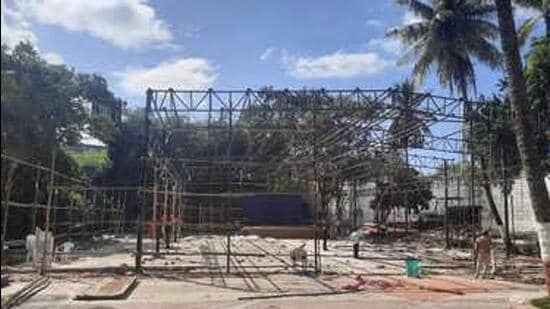
According to disaster management experts, unchecked construction and encroachments on nullahs and river beds have caused flooding in several parts of Pune city after heavy rain. The expert panel has mooted that the PMC put in place a mechanism to keep constant check on encroachments along with commissioning a stormwater drainage system for evacuation of rainwater. According to the panel, there is heavy encroachment not just on nullahs but also rivers, obstructing the free flow of water and leading to massive flooding in many areas.
Dr Diwase in his order stated, “The encroachments and shanties in the flood line areas of the Pune Metropolitan Region (PMC, PCMC, PMRDA) and other places must be removed to prevent flooding and flood-like situations. During disaster-like situations, detailed planning must be carried out to provide relief to those staying in the remotest corners of the district. The simple language of communication must be used to disseminate information related to weather and disaster management.”
“Major works related to the Pune Metro in the PMC and PCMC areas are underway, which has resulted in large-scale dumping of waste in the riverbed area and along the roadside. Pune Metro authorities must immediately remove the rubble. At the same time, encroachments in the Pawana riverbed must be immediately removed by the PCMC administration. Also, garbage accumulated due to rain, trees uprooted due to heavy rain, and overflowing garbage in slums must be removed at the earliest,” Dr Diwase said.
The district collector further urged all stakeholders to get manpower trained in disaster management before the onset of the monsoon. “National Disaster Response Force (NDRF) headquarters in the district make an important contribution towards preparing in advance for disaster management and all concerned departments must train their staff by taking the expert help of NDRF authorities,” he said.
The district collector further directed the health department to prepare a taluka-wise list of hospital beds in government-run hospitals and ready the health infrastructure including medical officers, ambulances, blood banks and medicines to cater to citizens during disasters.
The review meeting was attended by Zilla Parishad chief executive officer Santosh Patil; resident deputy collector (RDC) Jyoti Kadam; IMD chief (Pune) Krushnanand Hosalikar; scientist Medha Khole; National Disaster Response Force (NDRF) officer Deepak Tiwari; and all heads of concerned departments.
Former chief commissioner of income tax A J Khan, who has been petitioning the state government for carrying out large-scale civic reforms, said, “The nullahs have been reduced to garbage dumping sites because of years of neglect. Illegal shops and slums have mushroomed along the nullahs. Neither the elected representatives nor the civic body show the resolve to crack the whip on encroachers in time. Everybody seems to wake up once a tragedy, like flooding, strikes. It’s time to remove all encroachments and debris from the nullahs. Flooding takes place due to the lackadaisical approach of the civic bodies that lack training, competence and will in providing civic services to the citizens despite recovering crores of rupees in taxes.”
Flood line norms
The irrigation department of the Government of Maharashtra uses a ‘blue line’ to demarcate the area along Pune’s rivers that is likely to be inundated by the highest flood that can be expected during any 25-year period.
The irrigation department uses a ‘red line’ to demarcate the area that is likely to be inundated by the highest flood expected during any 100-year period.
Obstructing or encroaching upon any natural flow of water such as rivers or nullahs is an offence.
For all building permissions along riverbeds, or any other water bodies, it is necessary that the builder or the owner obtains a no-objection certificate from the irrigation department. It is the prime duty of the civic body giving permissions for constructions to ensure that the NOC is in place.
The flood lines of the nullahs or rivers are finalised by the irrigation department. When any dumping of construction debris or any other material occurs, it results in flooding.
Before the monsoon sets in, rivers and nullahs must be desilted to prevent flooding.
As for the constructions that already exist, a proper survey is necessary so that remedial measures can be framed and implemented.
It is the responsibility of everyone to ensure that the natural waterflow is not obstructed.


