
 E-Paper



Dhol-tasha practice sessions not music to the ears of citizens
The dhol-tashas, a combination of percussion instruments, have gained popularity among youngsters in the last two decades during the 10-day Ganeshotsav


Pune: Ahead of the festival season like Ganeshotsav and Gokulashtami, the practice sessions of Dhol Tasha Pathaks has been underway in full swing across the city. However, citizens are upset with the noise generated at the practice sessions, haphazard parking of vehicles and violation of the 10 pm deadline to use loudspeakers and loud noise. While the police are yet to receive any written complaint, residents have expressed their disappointment over the authorities’ failure to ensure the norms are followed by the dhol-tasha groups.
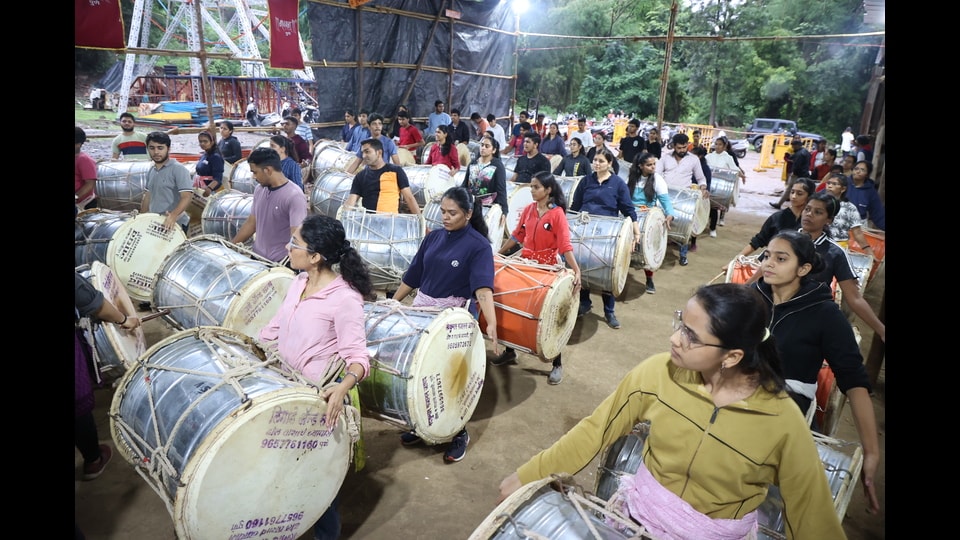
The dhol-tashas, a combination of percussion instruments, have gained popularity among youngsters in the last two decades during the 10-day Ganeshotsav. Every year, thousands of youngsters participate in the Dhol Tasha Pathaks (troupe) and perform during the immersion processions. They have also started performing during the Dahihandi festival in recent years.
The practice sessions of the dhol-tasha troupes that begin almost 45 days in advance pay scant regard to noise-related rules, said Manali Shinde, a resident of Katraj.
“Earlier, these instruments were considered as an eco-friendly option for noisy loudspeaker systems during the festival season. However, the rise in number of such pathaks over the years in the city has turned the pleasant experience into menace and public inconvenience,” said Shinde, a banker.
At most locations, the noise levels were beyond permissible limits set by the pollution control board.
Mahesh Shindikar, head, environment department, COEP Technical University said, “Every year, we conduct a study on noise pollution levels at different areas before, during, and after the Ganesh and Diwali festivals. We have observed that the noise level is higher than the set limit this year.”
At Katraj, various troupes conduct practice sessions near Rajiv Gandhi zoo posing risk related to loud noise to animals, birds and reptiles.
Those living along the Mutha riverbed at the central and peth areas of the city complain of loud noise due to the practice sessions in the evening. People staying on the outskirts like the Sinhagad Road, Wadgaon, Bharati Vidyapeeth and Dhankawadi areas face violation of basic norms like practicing beyond said time limit, parking issues, verbal arguments with residents.
Akshay Shotile, a resident of Hingne area, said, “In our area, almost 3 to 4 groups practice together on the school premises during the evening. Sometimes they practice beyond 10 pm and we have to suffer the noise pollution.”
Deepika Warpe, another resident said, “I have regularly used the riverbed road for travel. Over the years, I have found a rise in such groups practising by the roadsides. Apart from loud noise, the participants do not park vehicles properly and cause traffic issues.”
Shailaja Deshpande, founder, Jeevitnadi Living River Foundation, said the noise pollution affects mammals, and small birds like kingfisher, sparrow, wire-tailed swallow, wagtail who get extremely scared and lose their habitats as they fly away.
“Bird lapwing, who lay eggs on the ground, do not reproduce. Water hens are naturally shy birds, they too move away. Noise also creates vibrations in water disturbing the aquatic fauna,” Deshpande said.
Authorities say
Abhay Mahajan, inspector, Sinhagad Police Station, said, “A month ago, residents from Wadgaon Budruk came with a complaint about the practice by Dhol Tasha Pathak in the area. However, the issue was solved mutually. The police laid some conditions for the group and advised them to follow traffic and noise pollution norms.
Mangesh Dighe, environment officer, PMC said that it is the responsibility of the police department to permit Dhol Tasha Pathaks. “The police department has the authority to take action against violation of noise norms,” he said.
Vipin Hasbanis, inspector, Deccan Police Station, said, “We have held a meeting with dhol-tasha groups practicing in the areas under our jurisdiction a few days back. We advised them to follow the norms and have not yet received any public complaint.”
Parag Thakur, president, Dhol-Tasha Mahasangh, said, “There are 179 practicing groups registered with us. Each group has a limit of 100-500 members. Every year 3-4 new groups enroll, however, the same amount of groups leave as well. I think it’s not that the number of practicing groups is increasing, instead the vacant spaces are reducing, therefore, the groups need to practice together at same places. Groups that are creating problems need to be disciplined and authorities should take action agains them. However, it would be wrong to judge all groups with the same criteria.”
No system in place
Civic activist Vivek Velankar said, “Earlier, the groups used to practice only for 8-10 days, but now it’s increased to a month or two. If the Pune Municipal Corporation (PMC) and police administration can implement permission systems for Ganpati mandals, then why there is no such system for dhol-tasha groups? The authorities execute a proper system to keep a check on these groups.”


