
 E-Paper



Sharad Pawar’s politics without Ajit Pawar
Ajit Pawar's sudden death creates a void in Maharashtra politics and the NCP, challenging Sharad Pawar's leadership and party dynamics.

 Prefer HTon Google


The sudden death of Ajit Pawar on Wednesday leaves a striking gap not only in Maharashtra’s politics, but within the Nationalist Congress Party (NCP) universe built by his uncle Sharad Pawar.
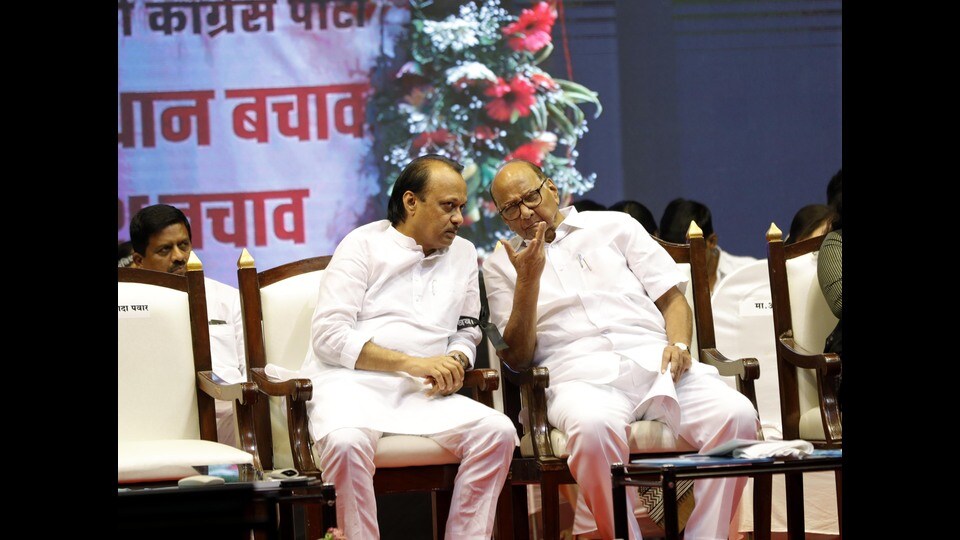
For nearly four decades, Sharad Pawar and his nephew Ajit Pawar were a defining political duo — mentor and protege — and later as rival and reinforcer — whose dynamic shaped the party’s strategy, factional balance and bargaining power with allies in Delhi and Mumbai.
Ajit Pawar entered politics in the late 1980s under Sharad Pawar’s direct guidance. After a brief stint in the Lok Sabha, he shifted to state politics and quickly rose through the ranks, becoming a minister in 1991. Over time, he emerged as a leader with strong grassroots networks in western Maharashtra, particularly in Baramati and Pune district, areas Sharad Pawar had traditionally anchored.
Their relationship was never simply hierarchical. Ajit Pawar was both a challenger and an insurance policy for the senior Pawar. When internal dissent or external pressure mounted, Sharad Pawar often used his nephew’s rising profile as leverage in negotiations with coalition partners or rival factions. Ajit’s ambitions — sometimes at odds with, and at other times complementary to, Sharad Pawar’s own — created an internal counterweight that senior Pawar could deploy tactically.
The most significant example came in July 2023, when Ajit Pawar led a split in the party, taking a majority of MLAs and the party symbol with him into the ruling alliance with the BJP and Shiv Sena. The move reconfigured Maharashtra’s political arithmetic and underscored Ajit Pawar’s ability to be both kingmaker and challenger. While the split was a rupture with the NCP founded by Sharad Pawar, it was also a demonstration of the utility — and threat — Ajit Pawar posed within the broader Pawar political ecosystem.
With Ajit Pawar gone, several questions arise for Sharad Pawar and his faction’s political strategy. First is the matter of who will lead the party after him. Ajit Pawar’s role as a mass leader — someone who could cut deals across party lines and alliances — will be hard to replicate. His experience dealing with successive chief ministers from Congress, Shiv Sena and BJP testified to his ability to navigate power structures.
Second, the internal balance within the Pawar political universe now lacks its primary counterweight. Where Sharad Pawar once had a built-in challenger within his own circle — a leader who could parry demands, test strategies and at times rival his own standing — that internal dynamic has disappeared.
The consequence may be a consolidation of authority around Sharad Pawar himself, but with age - he is 85 - he is unlikely to retain it.
Third, loss for the party’s grassroots base complicates organisational coherence. Ajit Pawar’s connection with rural networks and cooperative institutions — particularly in Pune and western Maharashtra — made him a linchpin of electoral mobilisation. His absence may force Sharad Pawar’s faction to lean more on a wider set of leaders, diluting the concentrated influence the duo once wielded.
In the short term, figures such as Supriya Sule and other senior leaders in the NCP (SP) are likely to carry the party’s negotiation efforts with allies in NDA if they incline towards each other.
For Sharad Pawar, the task ahead is to recalibrate. Without Ajit Pawar, both factions’ strategic posture in a fragmented political landscape will have to be redefined. The coming months will show whether Supriya Sule in the presence of Sharad Pawar’s influence adapts to this new reality or diminishes without the presence of his most formidable internal rival.


