
 E-Paper



‘Sir Leslie Wilson’ among railway artefacts gathering dust outside Lonavla station
The 123-tonne locomotive, named after the then governor of Bombay, arrived in Mumbai in 1928 and later hauled iconic trains such as the Deccan Queen before being withdrawn from service in the 1950s


India’s first electric locomotive known as ‘Sir Leslie Wilson’ and other railway heritage items have been lying around outside Lonavla railway station for the past over one-and-a-half years. While these historic engines and equipment lie covered with protective sheets, heritage experts and citizens warn that prolonged exposure, inadequate storage and the absence of proper conservation measures can lead to irreversible damage. The irony of the situation is stark given that the Indian Railways marks 101 years since the first electric train ran in the country on February 3, 1925, between Bombay Victoria Terminus (now Chhatrapati Shivaji Maharaj Terminus/CSMT) and Kurla.
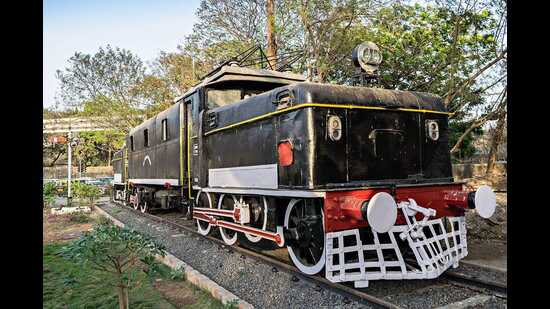
Among the artefacts lying around, ‘Sir Leslie Wilson’ - an EF/1 class electric locomotive built by Swiss Locomotive Works, Winterthur, with electrical equipment supplied by Metropolitan Vickers – is the most representative of an era gone by. The 123-tonne locomotive, named after the then governor of Bombay, arrived in Mumbai in 1928 and later hauled iconic trains such as the Deccan Queen before being withdrawn from service in the 1950s.
In 2018, when the Central Railway (CR) inaugurated the ‘Heritage Gully’ at the CSMT, Mumbai, on World Heritage Day, officials announced plans to develop a railway heritage museum at Lonavala. The ‘Heritage Gully’ showcased rare artefacts, including British-era steam engines, heritage wagons, rail buses, cranes, and early electric and diesel locomotives. It soon became a popular destination for railway enthusiasts and history lovers. However, with the redevelopment of CSMT gathering pace, the ‘Heritage Gully’ was dismantled and the artefacts were shifted out of Mumbai. While the move to Lonavala around one-and-a-half years ago was supposed to be temporary (till such time the museum was ready), the project never really took off the ground.
Railway heritage enthusiast Kiran Pisal said, “Keeping these engines covered in the open for months together is not preservation. Metal, wiring, and mechanical parts deteriorate even when wrapped. ‘Sir Leslie Wilson’ is not just another locomotive; it represents the birth of electric traction in India.”
Kedar Mane, a concerned citizen, noted, “The announcement of a museum created hope that these priceless objects would be protected properly. Instead, they are lying unattended near the station. Celebrating electrification anniversaries feels hollow when the physical history is treated in this manner.”
Amid growing criticism, a railway board team from Delhi visited Lonavala a couple of weeks ago to examine the condition of these heritage items and take the project forward. The team inspected the covered locomotives and other artefacts and reviewed the existing arrangements. Heritage experts are now waiting for concrete action to follow the visit.
On his part, Swapnil Neela, chief public relations officer, Central Railway, said, “A railway board team from Delhi visited Lonavala to review these artefacts, and they have finalised a plan as in how the museum will come up at the Lonavala site. The alignment of the museum building has also been finalised and they are working on it actively. It will take around one-and-a-half years to complete the project, as we have to recreate Mumbai’s ‘Heritage Gully’ here in Lonavala.”
Photo caption: Railway heritage items gather dust outside Lonavala railway station


