
 E-Paper



Taste of Life: Food rumours in 20th century
Rumours provide an insight into the structure of the community, its divisions, and its innermost concerns. They speak volumes about the collective beliefs, values, and distress of the society

 Prefer HTon Google


The mornings of August 29 - 31, 1932 saw lanes and streets around the bazaars of Pune buzzing with unusually heightened activity. Most shops were crowded. People were scrambling to buy groceries, vegetables, and clothes. Taking advantage of the situation, shopkeepers increased the prices of their goods. Some people fought with them, others did not care. They wanted to celebrate the festival of Diwali on “Shravan Amavasya” or the New Moon Day of the month. A couple of days earlier, someone had told someone that someone had met a woman who ordered the people of Pune to celebrate Diwali on “Shravan Amamasya”. The woman wore a lock in one ear and a lamp in the other.
Rumours provide an insight into the structure of the community, its divisions, and its innermost concerns. They speak volumes about the collective beliefs, values, and distress of the society. They thrive on anxiety and threats and epitomise shared hopes and fears. They are powerful. Once the seed is planted, a slightly credible rumour gains momentum and becomes self-contained. As the participation increases, the story is validated making society complicit in spreading the rumour.
In idyllic Pune of the twentieth century, spreading rumours was an effective tool to kill time. Even though many written and oral records treat women as gossip – and rumour mongers, men in Pune were instrumental in creating and spreading rumours. Women were confined to their houses and had no agency to project their hopes or fears through rumours. They were meant to comply and follow rules set by men. Colonial Pune, uncertain and ambiguous, provided a fertile ground for rumours to flourish and men, threatened and bullish due to the new rulers, found solace in setting the rumour mill chugging now and then.
Hari Raghunath Bhagwat, in his book “Pune Shaharache Varnan” (1924), narrated that in 1915, someone wrote a letter to the editor of the Marathi newspaper “Maharashtra”, published from Nagpur, informing him about the demise of Ramchandra Vishnu Phadtare, the editor of “Sudharak”. “Maharashtra” not only published the news but also held a condolence meeting at Nagpur. Phadtare was alive and healthy in Pune.
Food is a potent political and moral tool. It is a shared experience like rumours. During Colonial times, rumours related to food – to the cause and extent of shortages, to hoarding, to profiteering – were common. In January 1896, pandemonium broke out in the local vegetable market after a rumour circulated that a ship carrying vegetables from Calcutta to Pune had sunk in a storm. Half the city rushed to the market to buy vegetables in the fear that they would not be able to buy any for the next few days. Had they paused a bit to think, they would have realised that there was no waterway connecting Calcutta and Pune and that the city did not source its vegetables from Calcutta in the first place.
There had been a rumour, in 1892, that certain “Irani” tea – housekeepers put poppy heads in their tea to darken its colour. It was rumoured among the Hindus that yeast contained powdered animal bones and drinking brandy cured the plague.
Several rumours that gained popularity in the twentieth century Pune were related to religion and food. According to Bhagwat, Pune embraced religious rituals with fervour at the beginning of the twentieth century. This could be attributed to the fear of losing touch with one’s religion or even conversion to Christianity, the “English” education, the colonial rule, and the little disposable income the newly emerging middle class possessed. This newfound love for rituals like “Satyanarayan Pooja”, “Shravani”, and “Shraddha” was conducive to rumours and exposed anxieties around the attack on religion and faith.
In September 1934, a rumour spread that a massive earthquake was going to hit Pune soon. The earthquake was supposed to last for an hour and destroy the entire city. People panicked. Another rumour provided the solution too. Men and women were asked to worship the “Bhoomata”, the Goddess Earth.
“Bhumi”, the personification of earth, was considered a consort of Lord Vishnu and also the mother of Goddess Sita. Many families, Brahmin and non-Brahmin, worshipped her by offering a morsel of food every day. “Santeri” and “Bhumka”, the local goddesses in Konkan, were forms of the Goddess Earth and were offered food by those who had migrated to Pune from Konkan. Some farming communities sacrificed cocks or goats before ploughing the soil.
Bogie rumours are meant to raise anxiety and fear. They are precursors to panic and irrational behaviour. The fear of the impending earthquake made men and women rush to temples. They vowed to organise feasts if they survived the calamity. Women poured milk, curd, and honey on the ground to appease the Earth. Some cooked “puranpolis” and offered them to her.
A week later, the government announced that Pune did not face the threat of an earthquake and asked people not to believe any rumours.
Acceptance of rumours brought the community together; its rejection caused isolation. These wild fables were meant to manipulate crowds and possibly displayed tensions and mistrust between the colony and the colonizers.
When the news about the woman who wore a lock in one ear and a lamp in the other asking people to celebrate Diwali in “Shravan” spread, many families started making preparations immediately. They rushed to the markets and the grocers promised to keep their shops open on “Amavasya”.
Sunday was not recognised as a regular weekly rest day in the bazaars of Poona and if there was one day more than another which was recognised, as such, especially in the Hindu localities, it was the “Amavasya”. This day was observed as a holiday, not so much from the point of view of a rest day because of the apprehension that it was an inauspicious day for making transactions. In the grain bazaars, a particularly interesting practice regarding closure on “Amavasya” existed. Only a certain number of shops in the bazaar were allowed to remain open for the convenience of the public and they were required to pay an amount decided upon at auction on the previous day by way of charity.
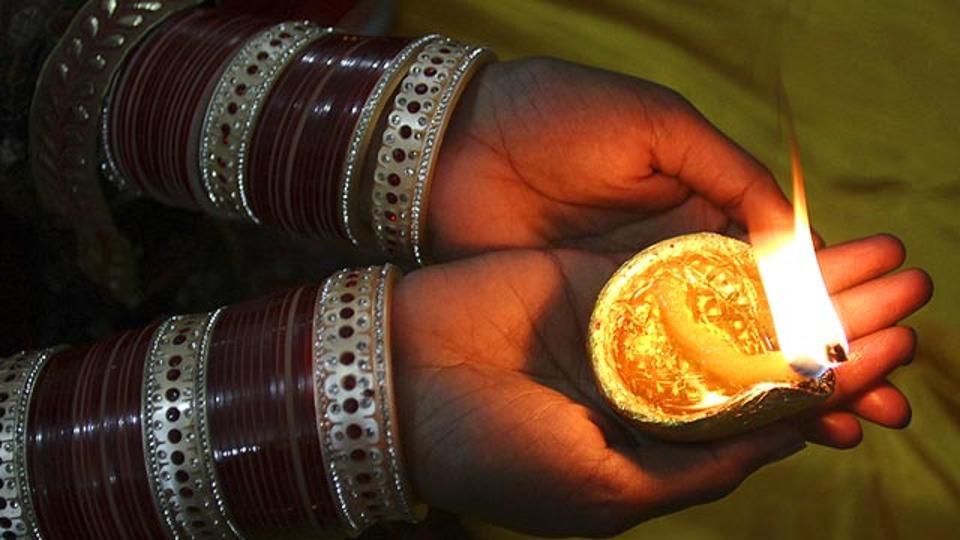
The Marathi newspaper “Dnyanaprakash” reported on September 2, 1932, that women drew rangoli in front of their houses and firecrackers were made available in shops. A fortnight later, “Vartanidhi”, a newspaper published from Mumbai, reported the event too. According to it, shopkeepers ran out of flattened rice and semolina. Most lanes in Poona were lit up with lamps. Children made paper lanterns and families treated themselves with sweets. Women, worried about the wrath of the woman who wore a lock in one ear and a lamp in the other, visited temples and offered sweets to the deities.
Newspaper reports tend to leave out certain details. I wonder if the people of Pune were perplexed about squeezing five days of Diwali celebration into one. How did men and women manage the sudden expenses? The children must have been happy. Did they make any demands? Women usually did not cook sweetmeats on “Amavasya”. Did they hesitate while making “karanjis” and “laddoos”? Did anyone try to question the families celebrating Diwali in “Shravan”?
Nobody had seen the woman who wore a lock in one ear and a lamp in the other. Nobody knew who the woman who wore a lock in one ear and a lamp in the other had spoken to. But people celebrated Diwali in “Shravan” because the lady who wore a lock in one ear and a lamp in the other asked them to.
Why did people believe these stories? The stories seem implausible now, but they did create panic and unsettled a large population. These rumours were probably meant to enforce religiosity in the minds and bodies of people. Or they might have been circulated by a shopkeeper who wanted to get rid of his stock of firecrackers in the monsoon. Or maybe somebody just wanted to celebrate Diwali in “Shravan” and have fun.


