
 E-Paper



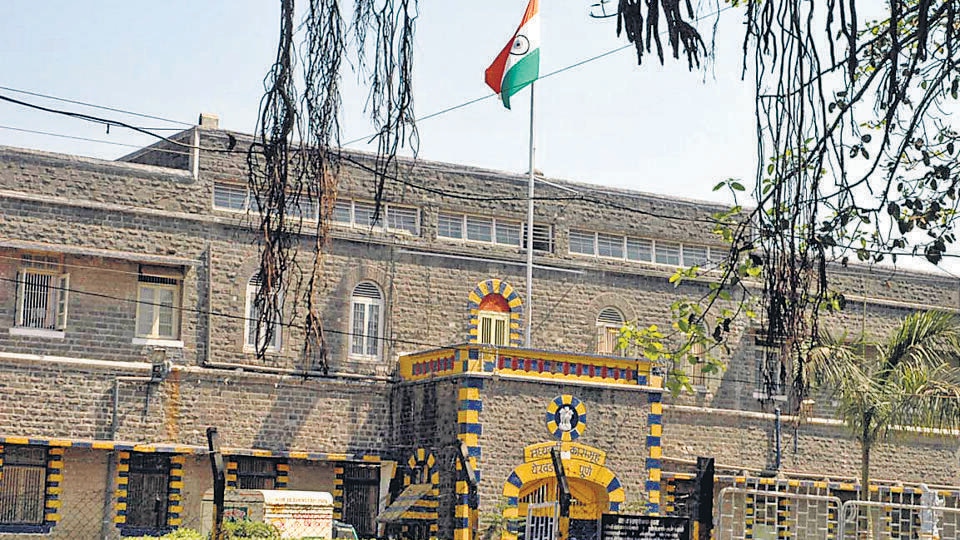
Taste of life: The diet of Poona jail inmates during British rule
The first prominent mention of the necessity for a careful revision of the diet scale in jails in the Bombay Presidency was made by Dr Ogilvie, the inspector general of prisons, in 1859

 Prefer HTon Google


The subject of diet, its influence on health and disease, the proportionate quantity of its component parts and its quality and mode of preparation was considered to be of such extensive range and universal importance, that it had secured the laborious research and the ablest physiologists and chemists in the British colonies in the 19th century.
In a country like India, where its immense population was divided by the restrictions and prejudices of caste into numerous communities, each guided by its caste regulations, and scrupulously limited to certain descriptions of food, where rice and ghee, wheaten flour and milk, formed the wholesome food of the one, and meat, eggs and offal constituted the relished meal of the other, there was ample scope for curious and profitable inquiry.
From the early 1920s, daily meals and rations provided to the convicts in Yerawada jail became a topic of discussion in Marathi newspapers when freedom fighters started protesting about the quality of food. While the British government kept promising to implement reforms in prisons year after year, there was a slight outrage when it became known that diet charts in the prisons in the Bombay Presidency had rarely been modified after 1862.
The records of the prison department are so meagre on the subject of diet that not much information can be gathered from them. It appears that on August 6, 1831, the court of the Sadar Faujdari Adalat in Bombay issued a circular fixing the food of convicts from the circular, which ran thus – “The following daily ration for each full–grown person has been accordingly determined upon – of beaten rice or of bajree, jowaree, or wheat flour, one and a – half a pound; and one–half a pound of dhall of any kind; the dhall being furnished to each individual, and the rice or flour substituted according to the class and habits of the individual, so that in all cases the food in the Jail may assimilate to that he would use in his own family. In the Southern Konkun, to the classes who receive naglee, wurree, and the coarse grains now, it should be continued, a quantity proportionate to the above being substituted for the rice or flour, one pice being also allowed for vegetables, and one pice for firewood.”
The court also directed to introduce the system of messes as far as practicable amongst different castes of convicts in the jail, one or two persons of a caste (depending on the number of inmates of that caste in jail) being allowed to prepare the food for all others of the same caste, they, when so engaged, being relieved from other day labour. It is interesting to note that the court directed the department to choose “from the most deserving” for this job, and if necessary, the jail officials could ask the “candidates” to demonstrate their cooking skills.
In October 1839, for reasons unknown, another circular was issued in supersession of that of August 6, 1831, by which the quantity of food then sanctioned was directed to be reduced by one-fourth. The next year, a third circular instructed the jail authorities to modify the diet scale and introduce tur dal, fresh green vegetables, and condiments, salt into the diet. The prisoners were to be provided with firewood if they wished to cook for themselves. The local jail authorities were given the power to regulate or modify the diet quota of prisoners after due discussion with the civil surgeon.
It is not difficult to comprehend that the diet scale introduced in 1831 was deficient in quantity. Physiologists and chemists in those days laid importance on a diet comprising starch, “nitrogenous matter” (to be found in pulses), vegetable matter, and “acids.” The diet scale prescribed in 1839 by the jail authorities, though abundant in “nitrogenous principle,” was deficient in vegetable matter and acids were excluded altogether. The doctors believed that scurvy, diarrhoea, dysentery, and other diseases resulted from defective nutrition.
The prisoners in the Poona Jail in the 1840s were in the habit of receiving rations according to their caste. The Brahmins and Chinese prisoners were allowed rice; convicts of all other castes, either jowar, wheat, or bajra flours. A report published in 1862 mentioned that, in the 1840s, prisoners of the “Coonbee” (Kunbi) caste preferred bajra, while those of “Banyan” (Baniya) and “Koombhaar” (Kumbhar) preferred wheat.
In addition, each prisoner received, irrespective of caste, dal and vegetables (4 ozs each for prisoners sentenced to hard labour and 3 ozs each for prisoners without hard labour), condiments, tamarind, and salt. The Chinese and Malay convicts were allowed mutton or fish twice a week but this was always in addition to rice.
In 1846, the importance of “acids” in the diet was realised when on account of the prevalence of scurvy, it occurred to Dr Leith, then a civil surgeon in Poona, to introduce “kokum,” the dried fleshy part of the fruit Garcinia Purpurea into the daily diet. The results were so prompt and satisfactory, that it was permanently incorporated into the daily ration.
The quantity of food supplied to the native prisoners that year amounted to 29 ounces per diem, being about 6 ounces below the average quantity consumed by the free population of the same class. The amount supplied to the European prisoners was 35 ounces, being about 5 ounces less than was consumed by Jews and Muslims, 7 less than by Parsees, and 16 than the quantity which Brahmins were reported to indulge in.
In March 1861, Gilbert Maitland, a civil surgeon in Poona, noticed that the Brahmin inmates in the Poona jail were weaker as compared to the inmates of other castes. Hence, from that month till May 1862, the diet roll for Brahmins was somewhat modified; instead of a daily supply of rice, they were ordered to have rice, wheat, jowar, and bajra alternately throughout the week.
Between the modifications in the early 1840s and 1862, no systematic attempt was made to remedy the evils of former dietaries by substituting a standard diet for the whole Presidency. Most of the jail doctors agreed that the defects of the then dietaries were deficiency in vegetable matter, oil, pulses, and too unvarying sameness in the general character of the food.
The first prominent mention of the necessity for a careful revision of the diet scale in jails in the Bombay Presidency was made by Dr Ogilvie, the inspector general of prisons, in 1859. In a report he sent to the government, he mentioned that owing to the absence of a sufficiently comprehensive dietary table, a system of exchanges was in force, which necessarily lead to much confusion, and opened the door to all manner of irregularities, where prisoners relinquished their share of wheat or bajra, or dal or rice for oil or ghee, and bartered rice for bajra, and vice versa. He wished that a dietary system existed in prisons that suited those who ate rice and those who did not; those accustomed to wheat, and those whose habitual food had consisted of the inferior cereals; to those who from habit required a certain number of fish, and to those who regularly ate meat.
This suggestion was approved by the secretary of state for India and CG Wiehe, inspector general of prisons, who had his office in Poona, was entrusted with surveying the Presidency and submitting a report to draw a suitable diet table for prisoners.
On June 20, 1863, Wiehe completed his report sitting in his office in Poona and submitted it to the chief secretary of the government, judicial department of Bombay.
More about Wiehe’s survey and report next week.
Chinmay Damle is a research scientist and food enthusiast. He writes here on Pune’s food culture. He can be contacted at chinmay.damle@gmail.com


