
 E-Paper



Taste of Life: When salt became a powerful symbol to unite the nation
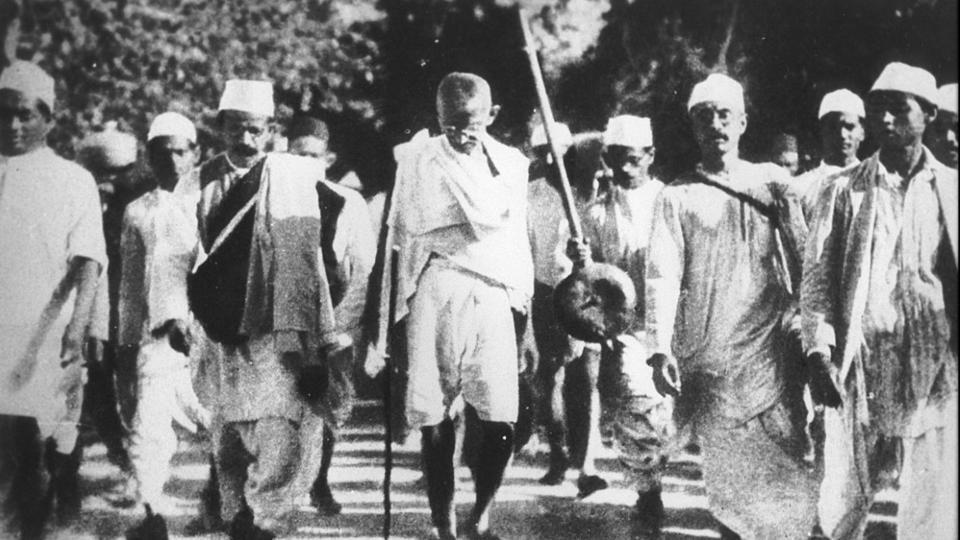
Mahatma Gandhi led the 1930 Salt March. The march allowed him to rouse the people in the villages through which he passed

 Prefer HTon Google


Pune: Food has played a crucial role in resistance, protest, and mutual aid. As an effective weapon of resistance, it can take many forms – from hunting and foraging to acquiring food out of colonialist, and sometimes, capitalist hands. It is vital in a time when many feel their freedoms are being taken away.
On April 19, 1930, three women were arrested by the police near the Nana Wada in Budhwar Peth area of Poona, reported the Marathi newspaper “Jnanaprakash”. Two of them were carrying small earthen pots with seawater in them. The pots were being taken to their homes in Sadashiv Peth where they intended to make salt from the water. They refused to divulge who had given them the pots. The women were at once sent to the Yerawada jail for violating the “salt laws” and taking part in the “salt satyagraha”. The “salt satyagraga” stands out as a unique and incredible form of revolution in human history.
Taxation of salt was greatly increased by the British East India Company in the late eighteenth century. In 1835, special taxes were imposed on Indian salt to facilitate its import. This paid huge dividends for the traders of The East India Company. Subsequently, the government set up a monopoly on the manufacture of salt by the Salt Act.
The Salt Act was a racist law under which Indians were forbidden from harvesting their own salt and instead required to purchase it from British sellers at inflated costs. The salt tax represented 8.2% of the British Raj tax revenue and hurt the poorest Indians the most.
The first riots in protest against the salt tax happened in 1844 in Surat district. The tax was criticised at the inaugural session of the Congress in 1885, and over the years was severely condemned by Dadabhoy Naoroji and Gopal Krishna Gokhale.
Mahatma Gandhi too was a vocal opponent of the tax. While planning the first act of Civil Disobedience against the British Rule, he sought a symbol that could unify the entire country. He decided that salt, being a basic necessity, fit the cause. It was a powerful symbol of resistance. As a substance of common use, it cut across religious, caste, and class differences. It could make a deep emotional appeal.
On March 12, 1930, he began his march to Dandi, a village in Surat district, with seventy-eight Congress volunteers, where he aimed to violate the salt laws. The “Dandi March” had political, ethical, and moral dimensions. The march allowed Gandhi to rouse the people in the villages through which he passed.
When Gandhi broke the salt laws on April 6, 1930, it sparked large-scale acts of civil disobedience against the said laws by millions of Indians. British cloth and goods were boycotted. Mass civil disobedience spread throughout India as millions broke the salt laws in many ways – manufacturing salt, selling and buying it, and exhorting to buy and sell salt, were breaches of the salt law.
The British government arrested over sixty thousand people in April 1930. On April 14, 1930, Jawaharlal Nehru was arrested near Allahabad for breaking the salt law. He was sentenced to an imprisonment of six months on the same day. The magistrate ordered the authorities to treat him like a common prisoner. The news of Nehru’s arrest spread like fire through the entire country. Shops in Bombay and Pune were shut down immediately and several merchant associations declared they were on strike.
A day later, members of the Seed Brokers Association met near the Mangaldas Market in Bombay and sold packets of salt, which was against the law. The packets carried the names of Nehru, Jamnalal Bajaj, and Khurshed Framji Nariman. A packet of “Jawahar salt” was sold for ₹35, while “Bajaj salt” and “Nariman salt” fetched ₹25 and ₹15 respectively. The next day, packets of “Jawahar salt” appeared in Pune, where people thronged to buy a pinch of the salt.
On April 16, 1930, the Wadala Salt Depot was looted by hundreds of satyagrahis. The “Jnanaprakash” reports that some of the salt was brought to Poona by unknown people and sold near Appa Balwant Chowk.
People living in coastal towns like Karachi, Bombay, Mangalore, and Ankola would visit the sea shores to make salt. They would quickly assemble a portable stove or a “chulha”, light the fire, put a pan on the fire, and vaporise seawater to make salt. The police kept a constant vigil on the shores, but people found ways of evading them. They were not afraid of the police. They carried out morning processions and gathered salt and brine at sea shores.
Some people in Poona wanted to make salt in the city. But there was a small problem. Pune did not have sea and, hence, there was no seawater readily available to make salt. The “Jnanaprakash” reported on April 19, 1930, that some ingenious gentlemen brought seawater to Poona in sealed pots and sold them to the “satyagrahis”. The police then started apprehending and searching anyone carrying earthen pots near the railway station.
While Gandhi wanted only men to take part in the “satyagraha”, soon thousands of women actively began making and selling salt. He successfully transformed salt into a powerful tool for communicating with the Indian masses, the British government, and the international audience. Salt became a symbol of patriotism, rebellion, and sacrifice.
After the march, when Gandhi met Viceroy Irwin for negotiations, he took out a bag of salt and dropped a pinch into his cup of tea, saying – “To remind us of the famous Boston Tea Party”.
While food could be a totem of power and its usurpation, it gives strength to people clamouring for a better world. Food was used to oppress African Americans in the segregated South, but it was also used as a tool of resistance during the Civil Rights Movement.
When the Transatlantic Slave Trade began, enslaved Africans would braid seeds and rice into their hair. It was a tangible act of rebellion and resistance and a necessary means of survival in a world unknown to them.
In South African jails, “black” prisoners were served water and corn porridge, while “white” prison workers were given fresh fish. Nelson Mandela organised a hunger strike to protest the conditions.
The Arab Spring started with two baskets of apples and the watermelon has long been an emblem of Palestinian solidarity and resistance in the occupied territories where displays of the Palestinian flag are often restricted or banned by Israel.
Food can mend a broken social contract. It can reaffirm our social bonds. Feeding others is an act of love and compassion. “Langars” have fed thousands at protest sites, meals were distributed to the hungry throughout the world during Covid and potlucks are routinely organised after Pride Parades.
Jean Anthelme Brillat-Savarin claimed in 1825 that “The destiny of nations depends on how they are fed”. Nations thrive depending on how well their populations are fed.
This New Year, may the world see less hunger and violence; may food give strength to people fighting injustice and oppression.
Chinmay Damle is a research scientist and food enthusiast. He writes here on Pune’s food culture. He can be contacted at chinmay.damle@gmail.com


