
 E-Paper



There will be drastic changes in the new COEP curriculum, says V-C Sutaone
Prof Sutaone spoke extensively to HT about various new academic changes, new courses, and implementation of the new education policy (NEP) in the university curriculum


Professor Mukul Sutaone was recently appointed the first vice-chancellor (VC) of the College of Engineering Pune (COEP) technological university. In June this year, the Maharashtra government awarded ‘unitary technological public university’ status to the COEP. The college had been trying to get this status for several years since being granted autonomy in the year 2003-04.
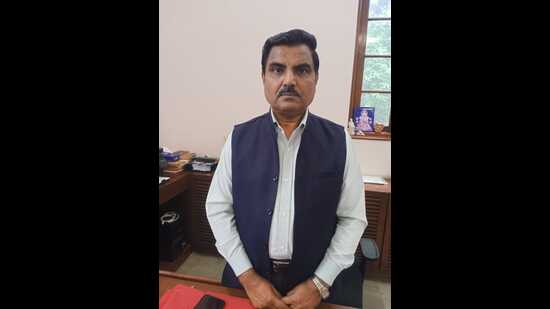
Prof Sutaone spoke extensively to the Hindustan Times about various new academic changes, new courses, and implementation of the new education policy (NEP) in the university curriculum.
The COEP has now become a technological university. How are you looking at taking this university to the next level?
Earlier when it was an educational institution, it had an altogether different administrative structure and now as a public university, it is going to witness 180 degree change in all aspects. Hence, there will be different positions and hierarchies and naturally, the first priority will be to set up the administrative structure as per the Act. Then, various bodies, committees and councils will be formed in the university.
The major objective of the COEP has always been academic excellence, aggressive internationalisation and aggressive academic collaboration. Till now, we were not a ‘degree awarding’ body and hence, there were limitations and four different regulatory authorities monitoring us. Now we can independently take decisions; it will be quick and what we could immediately do is to take advantage of our ‘degree awarding’ status. There will be many options open to us now for academic decisions and collaborations.
Are there any plans of starting new courses for students?
Certainly, we are going to start new degree courses in new emerging areas with new titles for these courses. But this process will take time and we are working on it and from the next academic year, we will introduce these new courses. Under this, we are planning to start machine learning, data science, artificial intelligence (AI) as undergraduate courses. For post-graduation, we already have AI and robotics but we will be starting data science as a PG course as well.
While introducing these new courses, we will blend the courses with new titles, namely, Masters in Technology (M. Tech) in ‘machine learning with decision support’ or Masters in Clinical Engineering for surgeons. Apart from this, we want to aggressively start our Ph. D programmes, and want to increase them by 100 seats for admissions. Currently, there are around 300 Ph. D students but due to limitations with respect to guides, it is limited. The rankings are dependent on Ph. D programmes or how many young research scholars you have, so we are going to increase the number. Also, we will be reducing the fees of our Ph. D programme.
How are you planning to implement the NEP in the curriculum?
The NEP-compliant curriculum is getting ready at the COEP and many of my colleagues, including me, are on the AICTE committee for the model curriculum and soon, it will be out. That is NEP-compliant and we are also contributors to it. Not from this academic year but once it is also announced at the national level, we too will introduce it at our university from the next academic year. There will be drastic changes seen in this new curriculum, and it will be difficult in terms of implementation as well.


