
 E-Paper



Two new transit treatment centres to become operational in Western Maharashtra in April
Once operational, these facilities will provide timely medical treatment to injured and rescued wild animals from the region

 Prefer HTon Google


Of the 11 new transit treatment centres (TTCs) proposed to be set up across Maharashtra by the forest department, two TTCs – one in Satara and the other in Ahilyanagar – are nearing completion and are expected to start functioning from April this year.
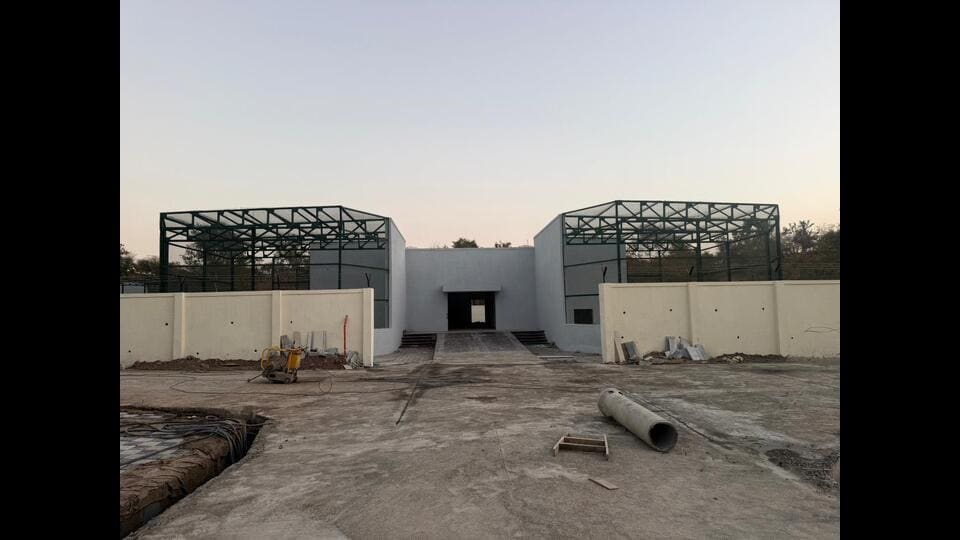
Once operational, these facilities will provide timely medical treatment to injured and rescued wild animals from the region. They will also act as rescue centres in human-wildlife conflict situations and are expected to reduce the response time as well as ease the burden on the existing TTC in Pune. A TTC is a specialised wildlife facility where rescued, injured or confiscated wild animals are given immediate medical care and temporary shelter before being released back into the wild or shifted to a long-term rescue and rehabilitation centre. In Maharashtra, TTCs are usually managed by the forest department and serve as first-response centres during wildlife rescue operations. When animals are injured in road accidents, trapped in human settlements, affected by habitat loss, or involved in human-wildlife conflict, they are first brought to a TTC for stabilisation, veterinary treatment, observation and short-term care.
About the TTC set up at Karad in Satara, Amol Satpute, deputy conservator of forests, Satara forest division, said that the new TTC is in the final stages of completion and is expected to become operational from April 1. The forest department has initiated preparations for running the facility by appointing a veterinarian on a contractual basis to ensure that rescued and injured wild animals receive timely treatment. “At present, the facility will be completely managed by the forest department. However, we will soon issue an expression of interest (EOI). If any non-governmental organisation (NGO) is interested in managing or supporting the operations of the centre, we would be happy to collaborate with them,” Satpute said. He further explained that apart from providing temporary care and medical treatment to injured or rescued animals, the facility has also been designed to handle human-wildlife conflict situations. “The centre has the capacity to accommodate up to eight leopards if required, especially in cases of human-leopard conflict or rescue operations,” Satpute said.
As regards the new TTC set up at Bargaon-Nadur village in Rahuri taluka of Ahilyanagar, Dharmaveer Salvitthal, deputy conservator of forests, Ahilyanagar forest division, said that the forest department has spent nearly ₹13–14 crore on developing the facility aimed at strengthening wildlife rescue and treatment infrastructure in the district. Salvitthal explained that despite a relatively high incidence of human-wildlife conflict, particularly involving leopards, Ahilyanagar district currently does not have a dedicated facility to house or treat captured leopards. “In most cases, we have to send the captured leopards to the Manikdoh Leopard Rescue Centre for captivity and care,” he said. Recently, the Manikdoh centre faced overcrowding following mass capture of leopards from different parts of the state. “Due to the limited space at Manikdoh during that period, we had to temporarily keep some of the captured leopards in small cages at various forest nurseries,” Salvitthal said. He further noted that apart from leopards, the district frequently gets cases of injured or rescued wild animals and birds, especially species associated with the grassland ecosystem that also require medical attention. “In the absence of a local facility, such animals had to be transported to the TTC in Pune or Nashik for treatment. With the new TTC becoming operational in Ahilyanagar, we will be able to provide timely medical care to these animals locally and also accommodate at least eight leopards in captivity when required,” he said.
The existing TTC in Pune, inaugurated in 2023, has emerged as the most important facility in western Maharashtra for the rescue, treatment and rehabilitation of injured or rescued wild animals. Over the years, the Pune TTC has handled an array of wildlife including leopards, deer, reptiles and several species of birds. The facility has played a crucial role in reducing mortality among rescued wildlife by ensuring timely medical intervention, and has also supported rescue operations across multiple districts in the state.


