
 E-Paper



Why sandalwood is getting wiped out of forests in southern India
Sandalwood spike disease (SSD) has almost wiped out the sandalwood population from the forests of southern India, found a recent study conducted by scientists from the National Centre for Cell Science (NCCS)

 Prefer HTon Google


Sandalwood spike disease (SSD) has almost wiped out the sandalwood population from the forests of southern India, found a recent study conducted by scientists from the National Centre for Cell Science (NCCS). The study also revealed that SSD is spreading through seeds and therefore posing a threat to the commercial distribution of sandalwood seedlings.
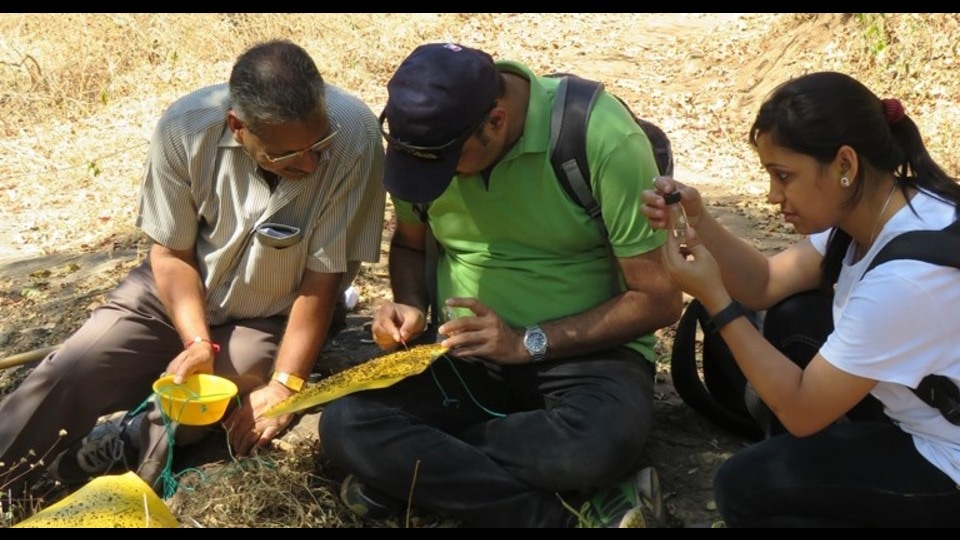
The study was published on October 12 in the international research journal ‘Biology’ by Amit Yadav and his team at NCCS in collaboration with R Sundarraj, Institute of Wood Science and Technology (IWST), Bengaluru.
Yadav said that the over 200 seeds from SSD-affected trees and over 500 seedlings generated using commercially purchased seeds were screened for the presence of SSD phytoplasma to understand the vertical transmission in an insect-free environment. The SSD is caused by phytoplasmas, a pathogenic bacteria transmitted by leafhoppers and planthoppers.
“These seedlings are primarily raised by the seeds obtained from the sandalwood trees growing in the Marayoor Sandalwood Reserve (MSR) situated in the southern Kerala. The MSR is known for hosting a large population of sandalwood trees free from SSD infestation compared to other sandalwood growing areas; therefore, it is trusted in the seed market. This study was initiated after finding the phytoplasma-positive seedlings raised using seeds from MSR, collected randomly from the commercial nurseries, and reports of the unknown reason for their mortality,” said Yadav.
“The real-time nested PCR-based screening revealed an alarming rate of 38.66% and 23.23% phytoplasma positivity in one-month and four-month-old seedlings, respectively. Usually, embryos, which give rise to seedlings, are considered sterile. These results were further validated by visualizing the phytoplasma cells in sandalwood tissues using scanning electron microscopy,” he added.
He added that the presence of phytoplasmas in the seeds and seedlings is a concern for the commercial distribution of sandalwood seedlings.
“This also poses a fear of spreading the disease to newer areas where efforts to reestablish the healthy sandalwood population are underway. These findings strongly recommend the accreditation of commercial production of sandalwood seedlings and paradigm shifts in policies handling sandalwood seedlings for commercial or government plantations. Additionally, a new assay developed in this study proved valuable for the rapid screening of phytoplasma in many plant samples at a time to detect phytoplasmas,” he said
He added that it was seen that the SSD also infects other plants like Ziziphus and sugarcane , which may stand as reservoirs to the pathogen.
Box
As per the study
- 20% decrease in sandalwood production in India since 1995
-27,930 kg of sandalwood oil was exported in 1997–98, which was reduced to 10 kg in 2015-16
-The decline in natural population pushed sandalwood into the International Union for Conservation of Nature (IUCN) ‘red list’ of threatened species in 1998 and listed as ‘vulnerable (vu)’ in 2019.


