
 E-Paper



With increased average annual temperatures since 2000, Maha faces serious climate vulnerability threat
According to IMD, rise in average annual temperature is one of the serious indicators of climate change and Maharashtra is facing a serious threat of climate vulnerability


PUNE: For over 24 years now, the average annual temperature in Maharashtra has been recorded as above normal level. According to the India Meteorological Department (IMD), the average annual temperature in Maharashtra has risen one degree above normal level. According to a senior meteorologist from IMD, this is one of the serious indicators of climate change, and Maharashtra is now facing a serious threat of climate vulnerability.
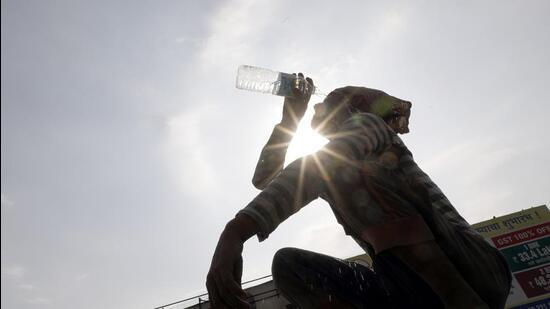
Recently, the year 2023 was officially declared as the warmest year globally with average temperature higher than the average of the 1850-1900 pre-industrial level by 1.48 degrees Celsius, and 0.17 degrees Celsius higher than 2016. Going with this global trend of temperature rise, Maharashtra, too, has recorded an increase in temperature since before 2000. As per the IMD data, between 1875 and 1970, average temperature in Maharashtra was recorded below normal level by one degree except for a few incidents. However, this situation began to change gradually and the number of incidents where average temperature was recorded above normal level increased between 1970 and 2000. The change was seen significantly post 2000 when average temperature in Maharashtra was constantly above normal. By 2022, the temperature was recorded as one degree higher than normal in Maharashtra.
Multiple reports from private and government bodies published in the last three years have highlighted that Maharashtra is among the most vulnerable states in India with regard to climate change including extreme weather events such as heat waves, flooding, lightning, cyclones etc. The recent temperature trend has only served to reinforce the same.
K S Hosalikar, head of climate research and services in Maharashtra, recently tweeted that in the last 20 to 30 years, the temperature in Maharashtra is showing a positive anomaly namely above normal temperature trend, leading to warming in the state which could be one of the reasons for the extreme weather events in the state. Hosalikar stressed that there is an urgent need for climate action, and that a separate ministry or department needs to be set up in Maharashtra for climate science and planning to understand the climate impact and develop climate resilience in various sectors including water, agriculture, power, health and allied sectors. Special funds need to be allocated for the same.
Meanwhile in Pune, average temperature this year has been constantly recorded as one or two degrees above normal level. In his recent tweet, Vineet Kumar, scientist, Indian Institute of Tropical Meteorology (IITM), said that a comparison of the average maximum temperature in Pune/Shivajinagar in the first week of April over the past four years shows that except for the year 2023 when the average temperature was recorded as 35.8 degrees Celsius, average temperature for the rest of the years was recorded as 1.5 to 2.5 degrees Celsius above normal level.
As per the United Nations, climate change refers to long-term shifts in temperature and weather patterns. Such shifts can be natural, due to changes in the Sun’s activity, or large volcanic eruptions. But since the 1800s, human activities have been the main driver of climate change and global meteorological agencies have observed a serious change in temperatures worldwide.
IMD to initiate communication with state
The temperature trend is said to be part of climate change, and Maharashtra is experiencing a slow but strong change in climatology and hence, it is high time that strong steps be taken towards policy decisions and implementation with regard to climate action plans. Although there is a climate cell established at the state level and the majority of districts have a climate action plan, there needs to be a wider plan for the state as a whole. Considering this, the IMD will soon initiate communication with the state government for establishing a separate ministry for climate in the state. This ministry will help in catering to sector-specific as well as ground-level requirements for the climate action plan, said Hosalikar.


