
 E-Paper



Jharkhand IAS officer pens eight-book series on Artificial Intelligence
IAS officer Manish Ranjan has written an eight-book series on AI, blending global insights with India's aspirations to transform governance and opportunity.

 Prefer HTon Google


Senior Indian Administrative Service (IAS) officer Manish Ranjan has authored an eight-book series dealing with different facets of Artificial Intelligence (AI), providing the reader a book for each of the ways this technology touches a life — and written each one with such research, such current data and such freedom from jargon that the general reader is never once left outside the room.
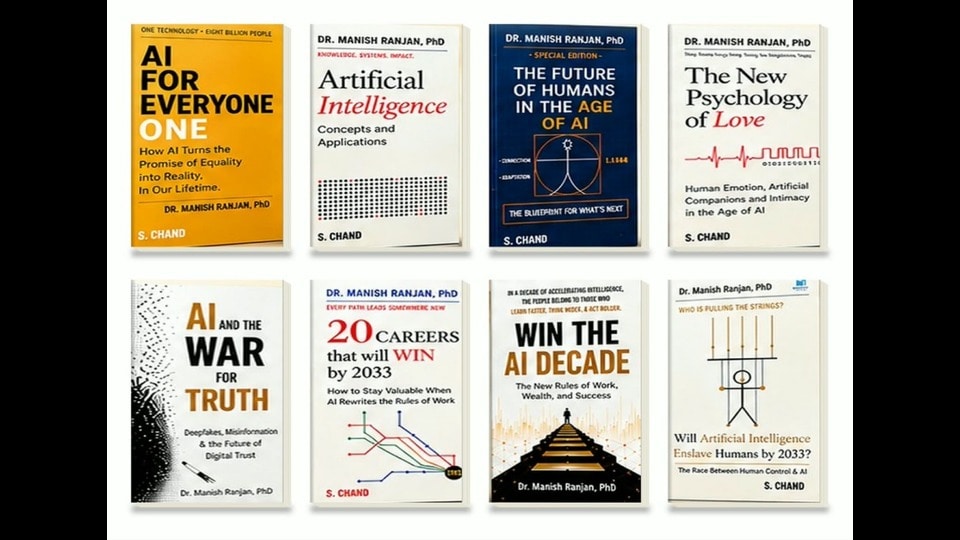
The eight books by the IAS officer, who trained at Berkeley and Oxford, is the first series to balance global research with Indian aspirations—the initiatives underway in Indian states, the shape of India’s AI future, and, with a serving administrator’s inside view, the coming transformation of governance and public services.
Commenting on the inspiration to write on technology for someone who has served in public policy and brought change in society through implementing development programmes for public welfare, Ranjan said that as a civil servant, he has seen how opportunity can transform lives - and how its absence can hold generations back.

“My time at the University of California, Berkeley, and the University of Oxford strengthened my conviction that Indian students possess the same brilliance as their peers at the world’s finest institutions. What helps talent flourish is access to opportunity, a research-driven academic environment, and a hunger for excellence,” Ranjan said.
As AI began reshaping our world, I felt compelled to demystify it for India’s students, policymakers, and governance leaders - to inspire them to become creators of solutions the world can use. Above all, I wanted to show how AI could make governance more responsive, knowledge more accessible, and meaningful opportunity available to the last person in the queue.” he added.


