
 E-Paper



The antidote to insularity is respect and tolerance: Raguram Rajan
In conversation with Raghuram Rajan, former governor of the RBI, about his role as advisor on the governing council of the private university, Krea.


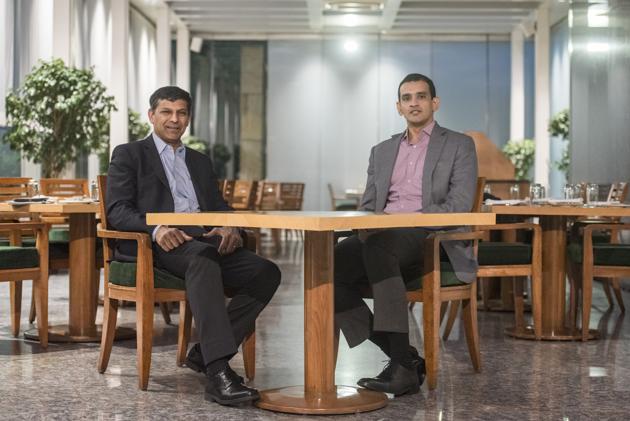
Raghuram Rajan, former governor of the Reserve Bank of India, was recently in Mumbai, along with Kapil Vishwanathan, vice-chairman of the private Krea University — which admitted its first undergraduate batch in August. He and Rajan, who is advisor on the governing council at Krea, spoke to Hindustan Times about the changing role of the educational institute, preparing students for an unknowable future, and what sets their varsity apart.
How do you prepare students for an ever-changing world? How is Krea doing it?
Raghuram Rajan (RR): At Krea, the idea is to give students the capacity to think and to understand that changing world. Not only should students masters their own discipline, they should understand how it ties in with everything else. That’s why the emphasis at Krea is on interwoven learning. What we teach them will at some point be dated. So the attempt is to teach them how to teach themselves too.
Kapil Viswanathan (KV): I think in India there is a fixation on ‘university leading to first job’. We’re trying to think of what a student will need in an unpredictable world. So, broadly speaking, preparedness for an unpredictable future is what we’re hoping students will leave Krea with.
Your approach to education fosters and rewards the ‘thinking individual’. Are there enough avenues in today’s India for such individuals to flourish?
RR: To some extent, these students will create room for themselves in society as well. We’ve had a history of free-thinking individuals. The Father of the Nation was as free a thinker. His ideas were new to the world. Part of what we’re trying to impart is also how to sell your ideas. You can’t just have an idea in a vacuum. The best ideas in the world are no good if you can’t tell other people about them.
Economies the world over are becoming increasingly insular. How do you see the role of Indian higher education institutes (HEIs) changing as a result?
RR: I see this insularity as a temporary phenomenon. Because too many of our problems and challenges require global cooperation. Climate change, ageing populations in the West, the need for capital in a country like ours. Technology will be a great integrator. It will also be divisive, and so my sense is that we need to prepare children for such a future. We need to foster in them a sense of openness and respect for one another. The antidote to insularity is a sense of respect and tolerance for differences. That’s what we hope to impart at Krea too.
Are there simple steps that traditional HEIs could take to offer their students some of the advantages offered by today’s private universities? Or does the change have to begin far earlier?
RR: If you had all the tools in the world, you’d start first with early childhood. At-home learning, child nutrition. Schooling. But I would say that it’s not too late to start giving students a different way of thinking even at the college level. When it comes to traditional universities in this country, a lot of them were formed in the past, are pretty fixed and to make changes is very difficult. In a new university, you have a blank slate.

Stay updated with all the Breaking News and Latest News from Mumbai. Click here for comprehensive coverage of top Cities including Bengaluru, Delhi, Hyderabad, and more across India along with Stay informed on the latest happenings in World News.


