
 E-Paper



Yourspace: More insects than residents, thank you hyacinth
What is the long-term answer to this perennial problem? Are the civic authorities doing enough? Or anything at all? Can residents do anything to improve the situation?


Summer of water hyacinth beckons on Pune’s rivers
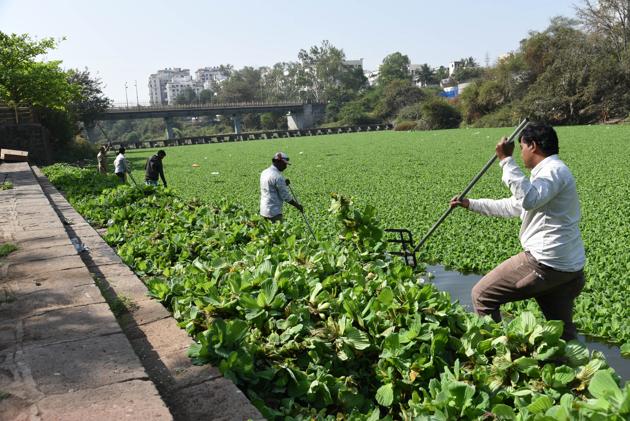
According to environmentalists, the dangerous growth of water hyacinth in the rivers of Pune has caused the breeding of two types of mosquitoes. There is a definite rise in the density of Armigeres and Culex species of mosquitoes as its larvae species grow in pools with dirty water or high organic content, found in rivers and lakes covered with hyacinth. Armigeres is a non-disease transmitting mosquito, but its bites are painful. The bites can cause small red welts on a child’s skin, besides continuous itching. Scientifically, the weeds are to be destroyed at the time they start growing, but the Pune and Pimpri-Chinchwad municipal corporations have no mechanism to tackle this ugly menace. Hence, it leads to rise in mosquito-borne diseases among residents. Citizens are also allergic to water hyacinth and strong steps need to be taken at the earliest.
Sharad Kolte
Hyacinth carpets an impending health hazard
Hyacinth affects the environment. Water hyacinth carpets the rivers giving rise to mosquitoes, flies and various insects among other health hazards. Civic authorities should understand the issue and take responsibility. For civic authorities it takes longer to take decisions as tenders are asked and allegations of corruption also begin. Thanks to the blame game between politicians and civic authorities, the work is far from done.
Anoop Panjwani
A plausible solution
Regarding the Pavana river hyacinth problem, I would like to offer a research I have done in Agnihotra, a Vedic procedure. The procedure helps in disintegrating water hyacinth. The procedure also helps in reducing water pollution. I have published papers on Agnihotra and its effects. I would like to try this procedure for removing water hyacinth.
Vasanti Limaye
Heights of civic apathy
The residents of Old Sangvi, Pimpri-Chinchwad have been facing a severe mosquito problem due to the rising hyacinth problem in Pavana river. Clearing of this nefarious weed has been long overdue. The Pimpri Chinchwad Municipal Corporation (PCMC) has turned a blind eye to the issue. We are facing a health hazard that has been brewing for a long time, yet the civic body has the audacity to not take cognisance of the issue. The Pavana river basin is covered with hyacinth. Residents of Pavannagar, Mamtanagar, Priyadarshaninagar and Dhorenagar are having sleepless nights due to the rising menace of mosquitoes.
Amol Bhalekar
Take action against civic authorities
Both Pune Municipal Corporation (PMC) and Pimpri Chinchwad Municipal Corporation (PCMC) must come up with a concrete solution for the hyacinth problem. The menace affects both the young and the old. The health workers never fumigate the area or take steps to clear the area of mosquitoes. Residents are forced to keep their doors and windows closed despite it being summers. The civic body does not care for the lives of the citizens as long as they are able to mooch off taxes from them. A lot of residents have stopped letting their children out to play in the evenings for fear of exposing them to mosquitoes. Residents, particularly those living along the river banks, have to face the menace every time hyacinth proliferates. There has been a rise in the number of dengue and malaria cases within the PCMC area, but the civic health department is not concerned about citizens. The civic bodies must be booked under relevant sections of the Indian Penal Code (IPC) for doing a disservice to the citizens.
Anita Porlekar
Agent of deadly diseases
The breeding spots of mosquitoes where hyacinth grows can spread dengue, malaria and chikungunya. These spots spike during monsoon season as stagnant rainwater gets collected at those particular location. The number of breeding sites has increased over the years. Most of these spots were found in slum areas where people store water in large containers and leave it uncovered. To curtail mosquito breeding, municipal health workers must actively inspect areas where they found most number of dengue cases. Hyacinth is the main cause of deadly diseases and steps must be taken to ensure that they are weeded out so that the dense mat of the creeper does not become a threat to the lives of citizens. Water hyacinth is the single largest contributor for the cause of mosquito menace.
Sandesh Jamuwalkar
The world’s worst weed
Hyacinth, a weed that is commonly found in the Mula-Mutha river, is highly invasive and commonly considered as the worst weed in the world. Residents of Mundhwa, Bopodi, Keshavnagar, Kalyaninagar, Aundh and Mundha have been severely affected by mosquito-borne diseases. The hyacinth that is being pushed from the city areas flows and gets accumulated in the river near Mundhwa , Manjari Budruk, Kalyaninagar, Bopodi, Khadki and other areas of Pimpri-Chinchwad. People living in housing societies on both sides of the river are badly affected due to the weed which is the sole contributor for the growth of mosquitoes and other termites which bite citizens residing near the rivers, day in and day out. The health department which has been given the task of clearing the sites are not doing their job properly.
Sanjeevani Kothari
Administration has failed to act
PMC officials from Hadapsar-Mundhwa ward office had promised to remove hyacinth, but nothing has happened so far. How long we will wait to see effective ground results? We will be left with no other option but to launch an intensified agitation against the administration that has failed its citizens. Housing societies along both sides of the river flowing under the Mundhwa bridge face a major threat because of mosquito menace. Apart from residents of Manjarainagar, those living in Keshavnagar, Mundhwa, Sharadnagar, Hanumannagar, Jaygangangar, Kodrenagar, Sairaj Residency, Ganraj Apartments and River View society are facing the worst ordeal of their lives.
Aman Shaikh


