
 E-Paper



Opinion| Mobs can’t be allowed to run amok in India
Political hatred doesn’t spread only along predictable lines, it unwittingly spreads to engulf ordinary people


An inebriated man poured kerosene over him and the matchbox was provided by Delhi Police sub-inspector NK Kaushik. My father was set afire. His entire body was aflame and all I could do was watch helplessly from a distance. Desperate to save his life, my father jumped into a drain. But the rioters pulled him out and set him on fire once again.
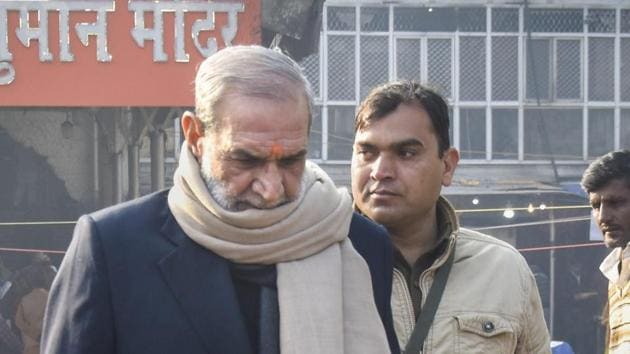
This shocking incident was narrated to the court by Nirpreet Kaur, the daughter of Narendra Pal Singh, who was killed at Delhi Cantonment on November 1, 1984. As a consequence, the Delhi High Court pronounced a verdict sentencing former Congress MP Sajjan Kumar to life imprisonment.
I want to salute the spirit of the Sikhs who’ve been fighting for justice for the last 34 years without being deterred by intimidation or inducement. It is their courage that has led to Sajjan Kumar going from ‘honourable’ to ‘convicted criminal.’ Courts have sentenced close to 450 people connected to these riots. The fight for justice is continuing because a verdict is awaited in a number of cases. As an old saying goes, justice delayed is justice denied. But as a habit, I would like to shine a light on the positive aspect of this struggle. Like they say, the long arm of the law doesn’t spare anyone. It ultimately catches the criminal by the neck. The violence that took place in many parts of the nation those days was different in a number of ways. Not just were Sikhs murdered, those riots were a blot on India’s civilisation and culture. Let me narrate a first-hand account.
On the ominous afternoon of October 31, 1984, I was standing in the balcony of my office located on Allahabad’s Leader Road. There were a few shops owned by Sikh businessmen a little ahead of our office. The news of the prime minister being assassinated at her own residence had already made the afternoon gloomy. This was Indira Gandhi’s home city and there was an unclear and unspoken tension in the air. Suddenly dozens of people, who emerged from the streets of Jansenganj, began looting the shops owned by the Sikhs. Shouting, raising slogans and drunk on their own savagery, the people were running astray carrying televisions, cassette players and radios looted from the shops over their heads. One man was stumbling as he carried bicycles on each of his shoulders.
Clearly, the police were missing in action as these barbaric acts of rioting and loot continued. I had myself made my crime correspondent call them up a number of times and this was the case when the police headquarters were not very far away. A station of the Railway Police was close to the office and a battalion of the Railway Protection Force just a few hundred metres away. Still, a naked dance of anarchy was playing out on the streets of Allahabad. When it comes to maintaining law and order, our establishment ends up doing the opposite.
I came to witness a poignant scene in these oppressive moments. I saw a girl— she must have been five or at the most seven— running in one direction with some books and notebooks looted from a shop bunched up in her dress. Clearly, someone had helped her put these in the folds of her dress. Who was this person who had turned this innocent girl into someone who would loot a riot victim’s shop? Running barefoot with a purpose, the barbaric expressions on her face made her look like an adult. Today, 34 years later, when I revisit that moment, I am thinking that the girl would have grown up to be a woman of about 40. Do the memories of that day haunt her even today? Would that moment have affected a sensitive phase of her childhood? Would she have told her children about it?
Remember, riots and violence only divide people and never unite them. It is politicians who capitalise on these fissures. Members of every political party have to share the blame for this. It is 34 years since the Delhi riots of 1984. But what do the recent incidents of mob-led violence in Alwar, Noida or Bulandshahr prove? Political hatred isn’t spread only along communal, caste and regional lines, it unwittingly spreads to engulf ordinary people like you and I.
If you don’t believe me, then pay attention to these tragedies that unfolded in the national capital last week. A mob in Uttam Nagar publicly lynched a young man accused of battery theft. The second incident is from Aman Vihar where a minor was beaten to death on charges of theft. This is what will happen if we endow the mob with the power to dispense justice.
I am appealing to loudmouth politicians and fanatics littered across every religion to desist from this tendency. If you cannot promise us prosperity, at least don’t worsen our plight.
Shashi Shekhar is editor-in-chief, Hindustan
letters@hindustantimes.com


