
 E-Paper



Skits at a school function, and the lessons learnt
The writer wonders if we are just too cynical, exaggerating a situation in which the politics of exclusion wants to redefine a culture of compassion.


When you are invited to a school function as a guest of honour, you are not supposed to tell them that you are not fit for it. You are supposed to smile and be grateful. And, even if you tell them, they will smile at you and consider it mere modesty, fit for the occasion.
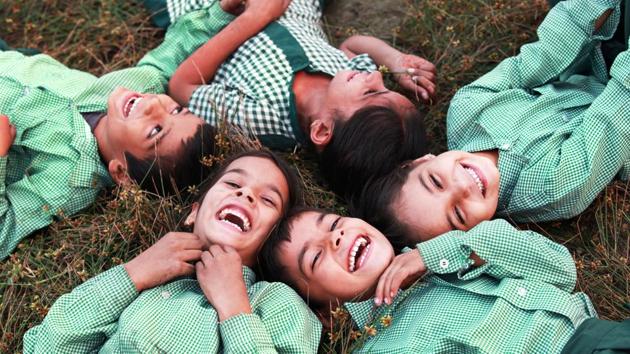
That kind of thing happened to me this week. The school is in Mohali, and the principal graciously thought that I was worthy of being invited, particularly after she attended the launch of my first book – which, by the way, is called ‘The Big Small Town’, a collection of my articles written for this column, and is available on Amazon, just sayin’!
Back to the school function. The last time I was at one, properly, was 17 years ago, when I was dressed like a clown and trying to copy Shiamak Dawar’s choreography as a backup dancer. And the last time I got anywhere near the front row was when we tried to plant some firecrackers under the chief guest’s chair but got caught and were suspended for a week. This was different. Or was it?
I checked under my chair. It was all clear. On the stage, there were kids in clown-like dresses, dancing to film songs. I should have been cringing at it. But I was enjoying it. And, trust me, it was not just nostalgia.
Here in a grassy patch of Mohali, there was something at play beyond mere dancing and acting. This whole show was to show us how we were, how we have been, and how we should be. Let me explain.
It began with a hymn by the tenth Sikh master Guru Gobind Singh — Deh Shiva bar Mohe — and it was not sung merely by Sikhs. I didn’t notice this until the next performance. That was Shiv Vandana. I must admit that I was expecting a prayer (vandana), and not a dance performance to a medley of songs that included the title song of Ajay Devgn’s ‘Shivaay’. But that’s not the point. The point is that this was not some Hindu ritual alone.
But, wasn’t it always like this in our schools? Well, pardon me for being cynical and noticing religion, but the contrast was too stark a day after religious extremists celebrated murder at a Rajasthan court where the murderer – who had videoed and flaunted the brutal killing in the name of saving religion – was to be presented.
Here, in Mohali, the children were busy talking of issues that no longer find a place in our politics of hatred. In a skit on farmer suicides, there was the essential articulation of the agricultural distress, but also a pragmatic reference to loans taken for fancy weddings under social pressure to show off.
Nuance and reason were alive and kicking.
More so, when the migrant labourer was not reduced to a caricature or a footnote, but was made part of the family and shown as much a victim as the landowner. Much better than anything you would watch on TV or WhatsApp for eons.
In another skit that talked frankly about a ‘dhongi baba’, or a fake fakir, it was enlightening to watch little kids reduce this whole business to the joke that it is. Who’s laughing now?
In yet another act, a prime character was played by a tall fellow who was visibly more confident than the others. The principal, when asked, told me that he is on a full scholarship and that his mother is a housemaid. This was blasphemy. How dare they admit such kids alongside those who are picked and dropped in Audis and Jeeps! But, well, maybe this school was different. Or was it?
If any doubt lingered, the next performance blew it away. It was gatka, the traditional Sikh martial art, and there were kids of all sizes displaying their skills with sticks and swords. I was told they were not all Sikhs. And that the school made it a point to keep religious activities secular.
What does that mean? What was this place? How could it be so different from the world outside? Or are we just too cynical, exaggerating a situation in which the politics of exclusion wants to redefine a culture of compassion? In theory, culture should define politics, and not the other way around. It’s hard to yet be sure if we are in dire straits, but I do hope you were all there at this function, to know how we were, to learn how we ought to be.


