Live Score
 Teams
Teams Players
India vs Australia: R Ashwin-Jasprit Bumrah shine as pair, Australia on the ropes
Australia were wobbling at 133 for six at stumps on the third day of the Boxing Day Test at the Melbourne Cricket Ground, bringing India on the doorstep of what promises to be a famous win.

 Prefer HTon Google


First Ishant Sharma was unavailable for the tour, then Mohammed Shami was out of the series with a fractured arm. Therefore, ahead of the second Test against Australia, the big concern for India’s bowling attack – now used to firing as a unit – was who would team up with Jasprit Bumrah?
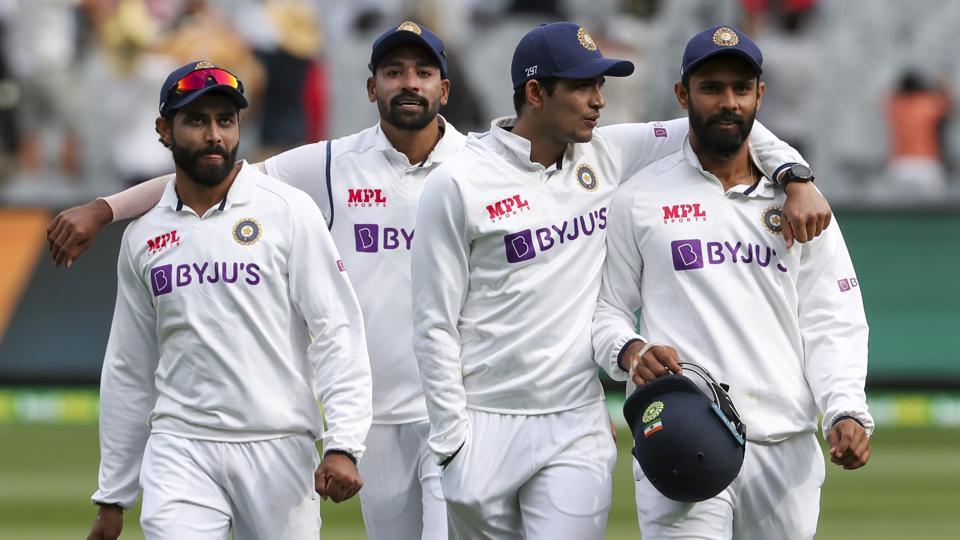
Those fears were allayed by R Ashwin on Monday. Midway through just the second Test, the long-standing impression of Ashwin being a subcontinental specialist has changed. He has backed Bumrah admirably. If the spinner can maintain this form, India may well have a lethal pace-spin pair - quite like Abdul Qadir backed Imran Khan in the 1980s, or Shane Warne and Muttiah Muralitharan formed strike partnerships with Glenn McGrath and Chaminda Vaas respectively, in the 1990s.
Though Ashwin and Bumrah have played seven previous Tests together, it was only on Monday that fans got a proper look at how effective they can be in tandem. Led by their fine showing, India took control of the Melbourne Test. After conceding a first innings lead of 131, Australia were 133 for six at the end of Day Three, ahead by just two runs with two days left to play.
Individually, both Bumrah and Ashwin have already made their mark in the Test series, until the third day that is. Then, after Umesh Yadav also limped out after having bowled just 3.3 overs in the second innings (he has had a calf scan and results are awaited), skipper Ajinkya Rahane leaned on his two lead bowlers to apply the pressure. They did.
Of the 66 overs bowled in the second innings, Ashwin and Bumrah did all the heavy-lifting. The spinner was in operation for 23 overs (1/46), while Bumrah for 17 (1/34). Between them, they got both of Australia’s most dangerous batsmen, Steve Smith and Marnus Labuschagne.
Big blows
On Monday morning, India’s lower-order gritted it out to help take a sizeable lead. But, the pitch had eased out. It was well within the ability of Australia’s batting line-up to wipe away the deficit. To set a decent target, the onus was on their No 3 and 4 batsmen - Labuschagne and Smith - both with Test averages of 60 plus. Rahane turned to Bumrah and Ashwin for the breakthroughs.
During the opening session of this game on Saturday, the spinner had made excellent use of the early moisture in the surface to extract bounce and scalp three key wickets. Day Three provided a stiffer challenge. To the delight of his teammates, Ashwin adapted impressively. He gave the ball more air, while constantly varying his pace and line to keep the batsmen on a leash.
Labuschagne has scored a couple of forties in this series, but he has been scratchy. In this innings, he arrived at the crease looking calmer and more assured. He was middling it from ball one, looking very much like a traditional Australian No.3. But after easing his way to 28 runs, Ashwin sprung a surprise to set him up from round the wicket. With a well tossed up ball that held its line, the offie caught the edge of a backfooted Labuschagne’s blade.
This brought Smith to the wicket. Rahane kept the pressure on from both ends, employing his pace and spin aces together from overs 24 to 37.
Having got out twice to Ashwin in the past, Smith was more watchful, playing with soft hands, killing the turn. Ashwin continued to probe his defensive play with a leg-side cordon. Soon, there was a close shave when the ball fell short of Cheteshwar Pujara at leg-slip.
Smith’s battle with Bumrah was equally fascinating. The batting great always moves inside the line of the ball and exposes his leg stump. But bowlers have found it hard to target this narrow window, thanks to the distracting movements of the unconventional batsman. Bumrah, however, delivered, with Australia’s score on 71. Smith thought he had the line covered and looked back in disbelief at the dislodged bail. Expected to be the most dominant batsman against India, Australia’s No. 4 now has a total of 10 runs in three innings, at an average of 3.3. Australia’s scoring rate had been reduced to a crawl. Bumrah followed that with a first ball snorter to new man Travis Head - it clipped the handle of Head’s bat and squirted over the slip cordon. Next over, opener Matthew Wade got the treatment as well when he was hit flush on the side of the helmet with another mean bouncer.
Paine’s pinch
Mohammed Siraj and Ravindra Jadeja provided excellent support. Between them, they picked up three wickets for one run to reduce Australia to 98 for six - with the pacer removing Head and the left-arm spinner striking a double blow, which included the wicket of top-scorer Wade. This capped off a great day for him on the field, after reaching a fine half-century in the morning.
Opener Wade had come out attacking in the previous two innings to upset the rhythm of India’s bowlers. When the attack remained unfazed by his tactics, Wade looked to grind it out. He stuck around for 137 balls before Jadeja trapped him leg-before for 40.
With only four wickets left, captain Tim Paine will hope that the tail can bail him out. Paine is already under immense pressure for not forcing his bowlers to bowl more short stuff at Rahane, the overnight centurion when the day started. On the last ball of Day Two, a bouncer had the Indian captain in visible trouble and lucky to survive thanks to a dropped catch.
More of the same was expected to welcome Rahane on Day Three. But to the pleasant surprise of the Indian batsmen, the Aussie pacers were much too full and India easily stretched the lead from 82 to 131 runs. The Australian fast bowlers didn’t pitch it short until Mitchell Starc went round the wicket to Jadeja. Once the barrage began, the end of India’s innings was quick.